The 6kW Tube laser cutter: A Technical Guide for Brass Processing in Queretaro
The industrial landscape of Queretaro has undergone a radical transformation over the last decade, evolving into one of North America’s most sophisticated manufacturing hubs. Central to this evolution is the adoption of advanced fiber laser technology. Among the various configurations available to modern machine shops, the 6kW tube laser cutter stands out as a critical tool for processing non-ferrous metals, particularly brass. As the aerospace, automotive, and electrical sectors in the Bajío region continue to demand tighter tolerances and faster turnaround times, understanding the engineering nuances of 6kW fiber systems is essential for competitive advantage.
The 6kW Advantage in High-Reflectivity Metal Processing
laser cutting brass presents unique challenges compared to carbon or stainless steel. Brass is a copper-zinc alloy known for its high thermal conductivity and, more importantly, its high optical reflectivity. In the early days of laser technology, CO2 lasers struggled with brass because the material would reflect the infrared beam back into the resonator, causing catastrophic equipment failure. The advent of fiber laser technology, specifically at the 6kW power level, has solved this issue.
A 6kW fiber source operates at a wavelength of approximately 1.06 microns, which is absorbed much more efficiently by brass than the 10.6-micron wavelength of a CO2 laser. At 6,000 watts, the energy density is sufficient to instantly vaporize the metal, creating a stable “keyhole” for the cut. This power level provides a significant “process window,” allowing for high-speed cutting of thin-walled tubes while maintaining the capacity to pierce and cut thicker sections (up to 8mm or 10mm) without the risk of back-reflection damaging the optical fiber or the diode modules.
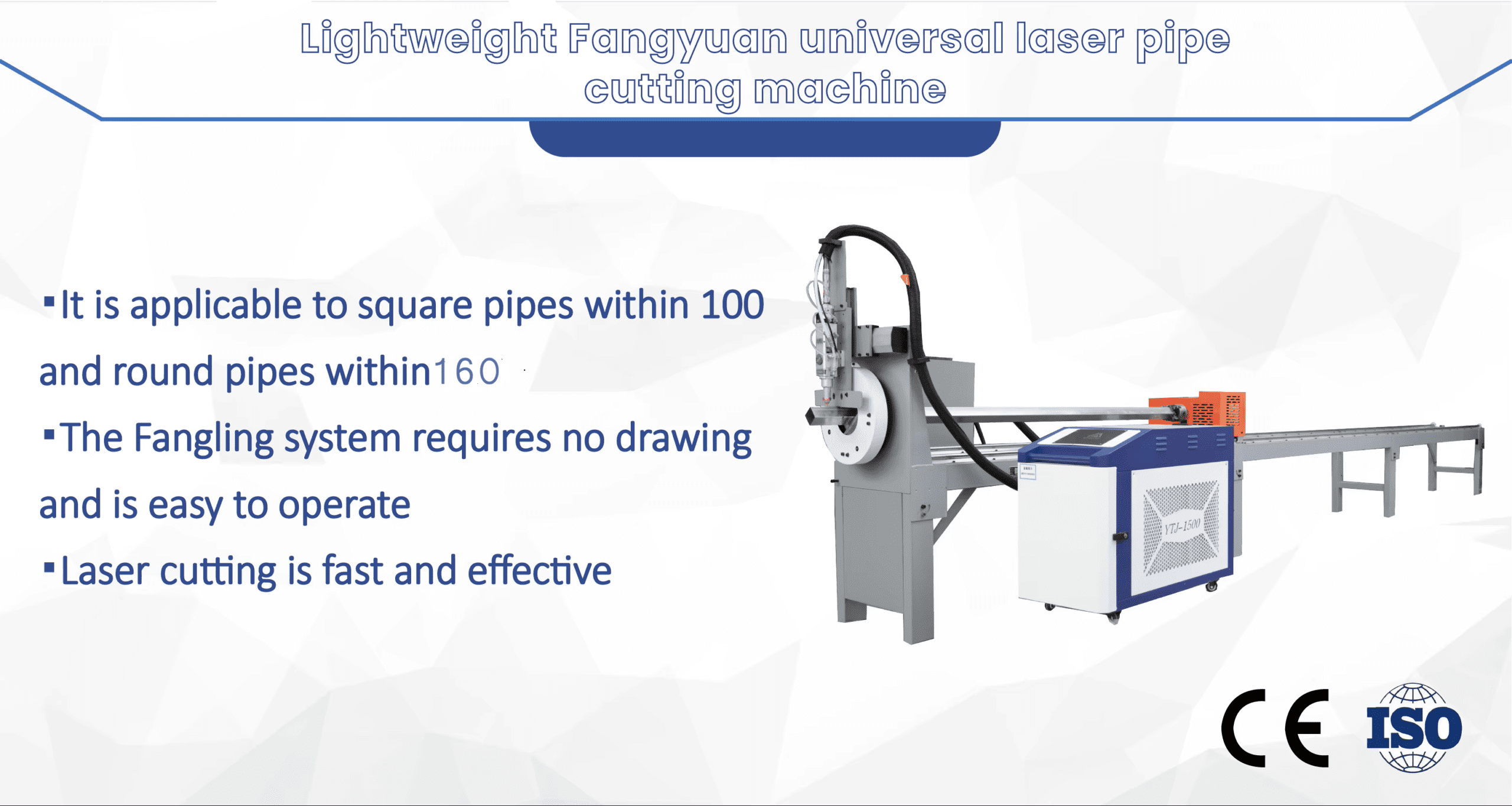
Specific Applications for Brass Tubing in Queretaro’s Industry
Queretaro’s industrial parks, such as Parque Industrial Querétaro and El Marqués, are home to diverse tiers of suppliers who utilize brass for its electrical conductivity and corrosion resistance. The 6kW tube laser cutter is particularly valuable for the following applications:
- Electrical Components: Busbars and tubular connectors used in high-voltage switchgear. The precision of laser cutting ensures that contact surfaces are burr-free, reducing electrical resistance.
- Aerospace Fluid Systems: Brass fittings and specialized tubing for hydraulic and pneumatic lines where non-sparking materials are required.
- Decorative Architecture: Queretaro’s growing luxury construction sector utilizes laser-cut brass tubes for high-end furniture, lighting fixtures, and ornamental railings, where the aesthetic quality of the cut edge is paramount.
- Automotive Heat Exchangers: Precise cutting of brass profiles for specialized cooling systems and sensor housings.
Technical Parameters for Optimizing Brass Cuts
Achieving a “dross-free” finish on brass requires a sophisticated understanding of the interaction between the laser beam and the material. When operating a 6kW system, several variables must be meticulously controlled:
Assist Gas Selection: Nitrogen vs. Oxygen
For most brass applications in industrial laser cutting, Nitrogen is the preferred assist gas. Nitrogen acts as a shielding agent, blowing the molten metal out of the kerf before it can react with atmospheric oxygen. This results in a clean, bright, and weld-ready edge that retains the natural color of the brass. Oxygen can be used for thicker sections to add exothermic energy to the process, but it often results in a darkened, oxidized edge that requires secondary finishing.
In Queretaro, where industrial gas supply chains are robust, sourcing high-purity Nitrogen (99.999%) is critical. A 6kW system cutting 3mm brass tubing typically requires gas pressures between 12 and 18 bar. The nozzle diameter must be precisely matched to the material thickness to ensure laminar gas flow, which prevents the formation of “beards” or dross on the underside of the tube.
 laser cutting machine“>
Beam Modulation and Frequency
The 6kW source is not just about raw power; it is about control. When cutting intricate patterns in brass tubes, engineers often utilize “pulse” mode or frequency modulation. By rapidly cycling the laser on and off (at kilohertz frequencies), the heat input into the material is localized. This is vital for brass because its high thermal conductivity causes heat to spread rapidly, which can lead to warping or “self-burning” in small features. A 6kW machine offers the headroom to maintain high peak power during these pulses, ensuring a clean pierce every time.
Mechanical Stability and Chuck Precision
The “tube” aspect of the laser cutter introduces mechanical complexities that flat-bed lasers do not face. A 6kW tube laser cutter typically employs a four-chuck system or a specialized pneumatic rotary axis. In Queretaro’s high-volume production environments, the speed of the laser often outpaces the mechanical loading system. Therefore, a machine equipped with an automatic bundle loader is essential.
For brass, which is softer than steel, the chuck clamping pressure must be adjustable. Excessive pressure can deform thin-walled brass tubes, while insufficient pressure can lead to slippage during high-speed rotations. Advanced systems use “intelligent” sensing to detect the tube’s profile—whether it is round, square, or a custom D-shape—and adjust the centering and clamping force dynamically.
Overcoming the Reflectivity Challenge
Even with fiber technology, brass remains a “high-risk” material for lesser machines. Professional-grade 6kW systems designed for the Queretaro market include multi-stage back-reflection protection. This involves optical isolators and sensors within the cutting head that can detect reflected light in microseconds. If a reflection is detected, the system automatically shuts down the beam before damage can occur. When cutting brass, it is also common practice to tilt the cutting head slightly (by 1 to 3 degrees) or use a “lead-in” strategy that avoids piercing directly perpendicular to the material surface, further reducing the risk of direct back-reflection.
The Economic Impact of 6kW Systems in the Bajío Region
From an investment perspective, the 6kW tube laser cutter represents a significant leap in ROI for Queretaro-based workshops. While a 3kW system can cut brass, it does so at a fraction of the speed and with a much higher risk of instability. A 6kW machine can often process 2mm brass tubing at speeds exceeding 20 meters per minute. This throughput allows local manufacturers to compete with international suppliers by reducing the “per-part” cost.
Furthermore, the versatility of the tube laser eliminates the need for multiple secondary operations. Traditionally, a brass component might require sawing, drilling, and milling. A 6kW laser performs all these functions in a single setup, with a kerf width as narrow as 0.1mm. This precision reduces material waste—a critical factor when dealing with expensive alloys like brass.
Maintenance and Environmental Considerations in Queretaro
The environmental conditions in Queretaro, characterized by a semi-arid climate and varying altitudes, can affect machine performance. High-power fiber lasers require rigorous chiller maintenance to ensure the resonator and the cutting head remain at a constant temperature. Dust management is also paramount; brass cutting produces a fine metallic dust that can be hazardous if inhaled and abrasive to machine guideways. High-efficiency dust extraction systems with HEPA filtration are a standard requirement for any 6kW installation in the region.
Regular calibration of the capacitive height sensor is also necessary. Because brass is non-ferrous, some lower-end height sensors struggle with signal stability. Professional 6kW systems use advanced sensors that maintain a constant standoff distance (usually 0.5mm to 1.0mm) even at high traverse speeds, ensuring consistent cut quality across the entire circumference of the tube.
Conclusion: Future-Proofing Queretaro’s Manufacturing
As we look toward the future of manufacturing in Mexico, the integration of high-power laser cutting into the production of non-ferrous components is no longer optional. The 6kW tube laser cutter provides the perfect balance of power, precision, and safety for processing brass. For engineers and business owners in Queretaro, investing in this technology means more than just faster production; it means the ability to tackle the most complex geometries and the most challenging materials with total confidence. By mastering the technical parameters of fiber laser interaction with reflective alloys, the region’s industry will continue to lead the way in global manufacturing excellence.













