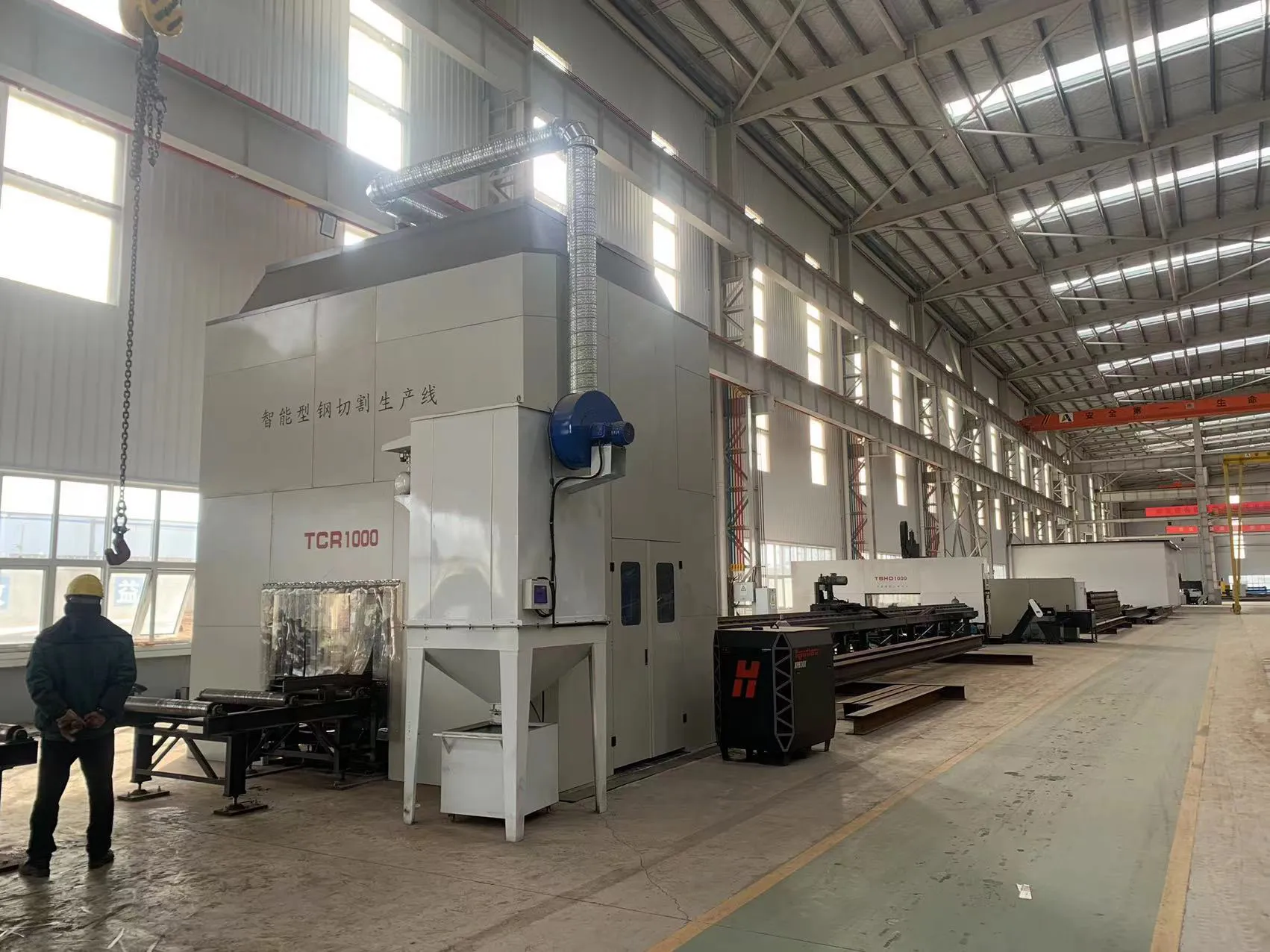
Field Engineering Report: Integration of 6000W Universal Profile Laser Systems in Houston Mining Machinery Fabrication
1. Executive Overview and Site Context
This report evaluates the deployment of 6000W Universal Profile Steel Laser Systems within the heavy-duty manufacturing corridor of Houston, Texas. The primary objective is to analyze the operational impact of high-power fiber laser integration on the production of mining machinery components—specifically frames, trusses, and structural supports for aggregate processing and subterranean extraction equipment.
Houston’s manufacturing landscape requires high-throughput capabilities for heavy-gauge ASTM A36 and A572 Grade 50 steel. Traditional methods, including mechanical sawing, drilling, and plasma cutting, are increasingly insufficient for the tolerances required in modern mining assemblies. The transition to a 6000W fiber laser platform represents a significant shift in metallurgical control and kinematic precision.
2. Technical Specifications of the 6000W Fiber Source
The 6000W fiber laser source serves as the critical energy delivery component for the system. Unlike lower-wattage oscillators, the 6kW threshold provides a power density sufficient to maintain a stable keyhole during the cutting of thick-walled structural profiles (up to 25mm for mild steel).
Beam Parameter Product (BPP) and Kerf Control:
The 6000W source utilized in these systems typically maintains a BPP of ≤2.5 mm·mrad. This high beam quality allows for a concentrated focal spot, resulting in a narrow kerf width and a reduced Heat Affected Zone (HAZ). In mining machinery—where components are subjected to high-cycle fatigue and extreme vibrational stress—minimizing the HAZ is critical to preventing crack initiation sites at the cut edges.
Gas Dynamics and Assist Gas Optimization:
At 6000W, the system utilizes high-pressure oxygen (O2) for exothermic cutting of carbon steels and high-pressure nitrogen (N2) for dross-free finishes on stainless components. The integration of intelligent gas pressure regulation ensures that the stripping of the molten pool is synchronized with the feed rate, preventing the formation of “beards” or dross on the lower edge of I-beams and channels.
3. Universal Profile Handling and Kinematic Synchronization
Mining machinery relies on complex geometries, including H-beams, I-beams, C-channels, and Rectangular Hollow Sections (RHS). The “Universal” designation of the system refers to its ability to process these varied cross-sections through a multi-axis kinematic chain.
Chuck Configuration and Structural Support:
The Houston installations employ a four-chuck system (typically two moving, two stationary or semi-stationary). This configuration is essential for handling the 12-meter lengths common in structural steel. The synchronization of these chucks allows for the rotation of heavy profiles with a high degree of concentricity (within ±0.05mm). This is vital for mining frames where bolt-hole patterns must align across multi-meter spans to facilitate modular assembly.
4. Analysis of Zero-Waste Nesting Technology
The most significant advancement in this system is the implementation of “Zero-Waste Nesting” algorithms and hardware. In traditional laser tube/profile cutting, the “tailing” or the scrap length held by the chuck can range from 200mm to 500mm. In the context of expensive Grade 50 steel, this represents a substantial material loss.
The Mechanical Logic of Zero-Tailing:
Zero-Waste Nesting is achieved through a “handover” mechanism between the primary and secondary chucks. As the laser head approaches the final segment of the profile, the chucks move in a synchronized sequence that allows the laser to cut within the footprint of the clamping zone. This is facilitated by a pull-through or push-through method where the cutting head gains access to the material that would otherwise be obscured by the machine’s own structural components.
Software-Driven Material Optimization:
The nesting software utilizes heuristic algorithms to arrange parts of varying lengths and geometries (e.g., bracing struts and main frame rails) along a single beam. By calculating common-line cuts and utilizing the zero-tailing hardware, the system effectively achieves a material utilization rate exceeding 98%. For a Houston-based facility processing 500 tons of steel monthly, the reduction in scrap provides a direct and measurable increase in EBIT.
5. Application Specifics: Mining Machinery and Structural Integrity
Mining equipment, such as vibrating screens and heavy-duty conveyors, requires precision that transcends mere aesthetics. The 6000W system addresses three specific engineering challenges:
I. Precision Hole Cutting for Bolted Connections:
Traditional punching or plasma cutting often creates tapered holes or work-hardened edges. The 6000W laser, with its high-frequency pulsing capability, produces perfectly cylindrical holes with a 1:1 diameter-to-thickness ratio. This ensures that high-strength bolts (Grade 8 or 10.9) achieve full bearing contact, reducing the risk of loosening under the extreme vibrations inherent in mining operations.
II. Complex Beveling for Weld Preparation:
Many mining components require “V” or “Y” type bevels for full-penetration welds. The multi-axis head of the Universal Profile Laser can perform these bevels in a single pass. This eliminates the need for secondary grinding or milling operations, which are labor-intensive and introduce variables in weld gap consistency.
III. Structural Weight Reduction:
The precision of laser cutting allows engineers to design “tab-and-slot” assemblies. In Houston fab shops, this is being used to create self-fixturing mining frames. This reduces the reliance on heavy jigging and ensures that the final assembly matches the CAD model within sub-millimeter tolerances, facilitating better weight distribution and structural efficiency.
6. Operational Efficiency and Throughput Metrics
Data from field operations in the Houston area indicate a significant throughput advantage. When comparing the 6000W laser system to a CNC saw/drill line:
1. Processing Time: A standard 10-meter H-beam requiring 20 holes and four miter cuts can be processed in under 8 minutes on the laser system. The traditional saw/drill/layout method requires approximately 35-45 minutes.
2. Secondary Operations: The laser-cut finish (Ra 6.3 to 12.5 µm) eliminates the need for de-burring.
3. Labor Reduction: The automated loading and unloading systems integrated with the laser require only one technician to oversee the operation, whereas a manual line requires a crew of three.
7. Metallurgical Considerations and Heat Management
A critical concern in Houston’s humid environment is the oxidation of the cut edge. The 6000W system’s high-speed processing minimizes the duration of heat exposure. We have observed that the Martensitic layer formed on the cut edge of A572 steel is significantly thinner (less than 0.1mm) compared to plasma cutting. This allows for direct welding without the risk of hydrogen-induced cracking, provided standard pre-heating protocols for thick-section steel are followed.
Furthermore, the “Zero-Waste” feature necessitates careful thermal management near the chucks. The system utilizes a water-cooled clamping mechanism to prevent thermal expansion of the profile during the final “tailing” cuts, ensuring that the dimensional accuracy of the last part is identical to the first.
8. Conclusion: The Future of Heavy Fabrication in Houston
The deployment of the 6000W Universal Profile Steel Laser System with Zero-Waste Nesting represents a maturation of fiber laser technology in the heavy industrial sector. For Houston-based mining machinery manufacturers, the synergy between high-power density and material-saving algorithms provides a competitive edge by reducing both raw material costs and labor cycles.
The ability to process universal profiles with zero scrap tailing is no longer an incremental improvement; it is a fundamental shift in the economics of structural steel fabrication. As mining equipment moves toward more complex, modular, and high-strength designs, the precision afforded by 6kW laser technology will become the baseline requirement for any facility aiming to maintain Tier 1 supplier status.
End of Report.
Authored by: Senior Laser Systems Engineer – Structural Steel Division.













