1.0 Technical Field Overview: Istanbul Stadium Infrastructure
In the high-seismic zone of the Marmara region, specifically within the metropolitan constraints of Istanbul, the fabrication of large-scale stadium steel structures demands an unprecedented intersection of structural integrity and geometric precision. This report examines the deployment of the 6000W Universal Profile Steel Laser System, integrated with automated material handling modules, for the production of complex lattice girders and cantilevered roof supports.
Traditional fabrication methods involving mechanical sawing, radial drilling, and manual oxy-fuel coping are no longer viable for modern Turkish stadium projects that adhere to Eurocode 3 and local seismic regulations. The shift toward 6000W fiber laser technology allows for the processing of high-strength structural steels (S355J2+N and S460) with a Heat Affected Zone (HAZ) significantly narrower than plasma or flame cutting, preserving the metallurgical properties required for dynamic load bearing.
1.1 Site Conditions and Material Specifications
The project environment in Istanbul presented specific challenges: high throughput requirements for massive tonnage, the need for millimetric precision in “bird-mouth” joints for tubular trusses, and the processing of heavy H-beams (HEA/HEB) and rectangular hollow sections (RHS). The 6000W power band was selected as the optimal equilibrium between electrical efficiency and the ability to maintain a high-velocity melt-ejection rate in wall thicknesses ranging from 12mm to 25mm.
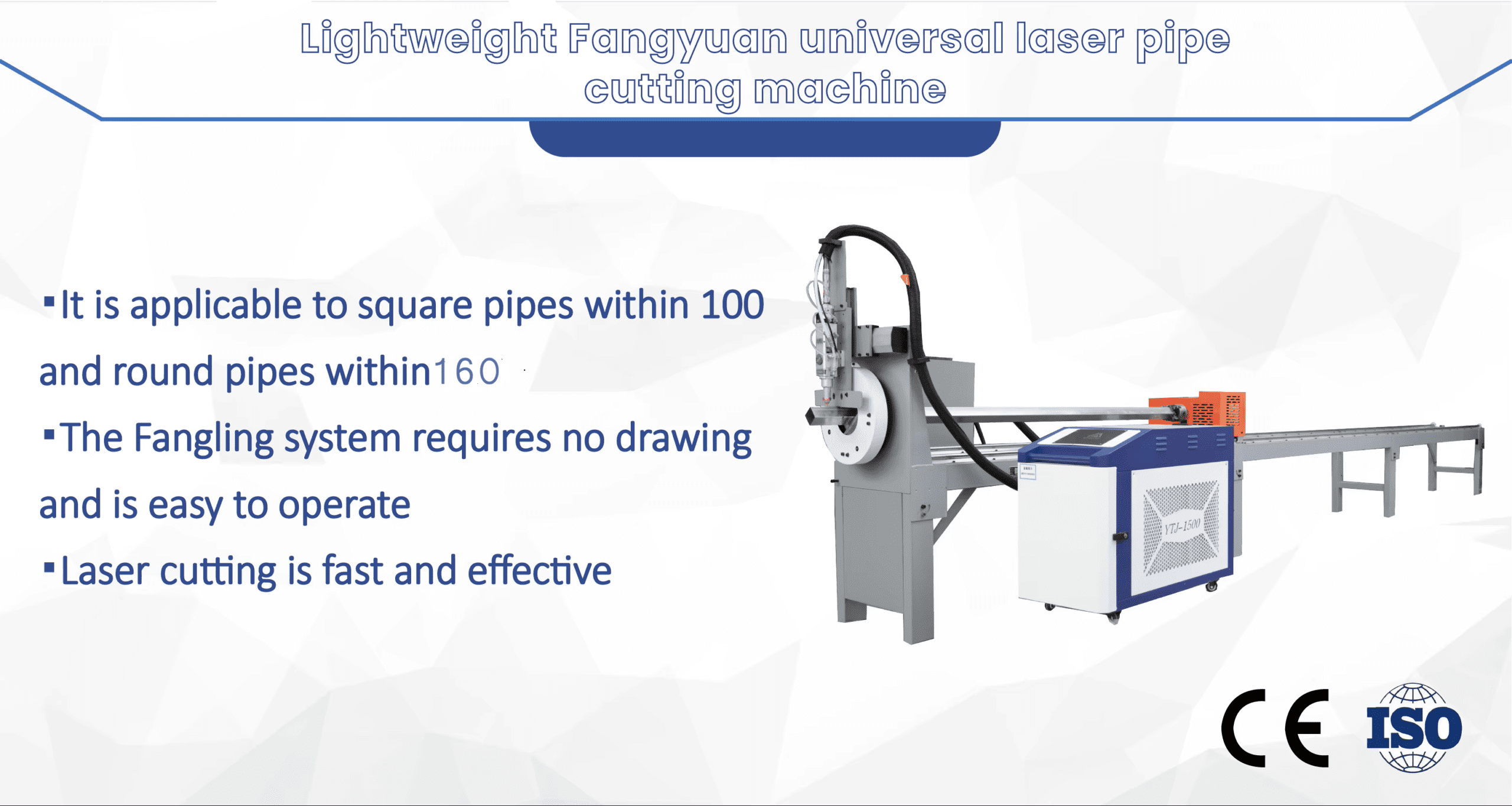
2.0 6000W Fiber Laser Synergy in Structural Processing
The 6000W fiber laser source serves as the “engine” of the Universal Profile system. Unlike flat-sheet lasers, profile processing involves constant variations in material distance and surface orientation. The 6000W density provides a robust power reserve that ensures consistent penetration during high-speed directional changes on the corners of RHS or the flanges of I-beams.
2.1 Kerf Quality and Heat Management
In stadium construction, the quality of the cut face directly impacts welding preparation. A 6000W source, when paired with high-pressure nitrogen or oxygen assist gases, produces a square cut with minimal dross. This eliminates secondary grinding stages. Furthermore, the localized heat input of the fiber laser prevents the macroscopic thermal warping often seen in heavy profiles when processed with plasma. For the Istanbul project, this was critical in maintaining the 30-meter span tolerances of the primary roof trusses.
2.2 The “Universal” Kinematic Advantage
The “Universal” designation refers to the system’s ability to transition between different profile geometries—circular, square, rectangular, and open profiles (C, U, L, I, and H)—without hardware reconfiguration. The 6000W system utilizes a 3D cutting head with ±45-degree beveling capabilities, essential for creating weld preparations (K, V, and Y joints) directly on the laser bed. In Istanbul’s stadium architecture, where diagonal bracing meets main chords at non-orthogonal angles, this 5-axis capability reduced fit-up time by 70%.
3.0 Automatic Unloading: Solving the Heavy Steel Bottleneck
While the cutting speed of a 6000W laser is impressive, the primary bottleneck in structural steel processing has historically been material handling. Heavy profiles (up to 300kg/m) present significant logistics and safety risks. The integration of “Automatic Unloading” technology transforms the system from a machine tool into a continuous production cell.
3.1 Mechanical Implementation of the Unloading Module
The automatic unloading system utilizes a series of synchronized hydraulic lifts and chain-driven lateral conveyors. Once the 3D laser head completes the final severance cut, the unloading module supports the finished part along its entire length to prevent “snapping” or “sagging,” which can damage the laser bed or the part itself. For the Istanbul project, where beams reached lengths of 12 meters, the system’s ability to gently lower and evacuate the finished component was vital for maintaining surface finish and dimensional accuracy.
3.2 Precision Maintenance and Deformation Control
Manual unloading of heavy steel often leads to micro-deformations or impact damage to the cut edges. The automated system ensures that the center of gravity of the profile is always supported. This is particularly relevant for the “T-joint” preparations used in the stadium’s cantilevered sections. Any deviation in the profile’s straightness caused by improper handling would lead to massive cumulative errors during site assembly. The automated system eliminates this human-error variable.
3.3 Cycle Time and Efficiency Metrics
Field data from the Istanbul site indicates that the Automatic Unloading module increases the “Beam-On” time of the 6000W laser by approximately 35%. By clearing the working area while the next raw profile is being loaded by the synchronized feeder, the system minimizes idle time. In a 24-hour production cycle, this allows for an additional 15-20 tons of processed steel compared to manual or semi-automated systems.
4.0 Application in Stadium Structural Dynamics
Stadiums are subjected to unique dynamic loads: wind shear, thermal expansion, and “crowd-induced” vibrations. The 6000W Universal Laser System addresses these through precise “Slot-and-Tab” designs and complex intersections that distribute stress more effectively than traditional bolted plates.
4.1 Seismic Joint Integrity
In Istanbul, seismic joints are the most critical components of the steel frame. The laser’s ability to cut complex apertures for “reduced beam sections” (RBS)—often called “dog-bone” connections—is essential. These connections act as fuses during an earthquake, deforming predictably to protect the main columns. The 6000W laser produces these geometries with a surface roughness ($Ra$) that meets strict fatigue-life requirements, reducing the risk of crack initiation at the cut edge.
4.2 Geometric Complexity of the Istanbul Stadium Roof
The roof design required a series of tapering RHS members with varying wall thicknesses. The Universal system’s software integrated directly with the project’s TEKLA BIM (Building Information Modeling) environment. This “Direct-to-Fabrication” workflow allowed for the 6000W laser to execute complex nesting patterns that minimized material waste in expensive high-grade steel, while the automatic unloading system categorized the parts for immediate transport to the painting or galvanizing bays.
5.0 Comparative Productivity Analysis
A technical comparison was conducted between the 6000W Laser + Auto-Unload configuration and the traditional multi-machine shop (Band Saw + CNC Drill Line + Manual Coping).
- Throughput: The laser system processed a complex 12m HEB-300 beam with multiple cope cuts and bolt holes in 8 minutes. The traditional line required 42 minutes across three stations.
- Labor Density: The automated laser system required one operator and one loader. The traditional line required four specialized technicians.
- Accuracy: Laser tolerances were maintained at ±0.2mm over 10 meters. Mechanical sawing tolerances fluctuated between ±2.0mm and ±5.0mm, requiring significant on-site shim work.
6.0 Conclusion: The Engineering Standard for Future Infrastructure
The deployment of the 6000W Universal Profile Steel Laser System with Automatic Unloading in Istanbul represents a paradigm shift for Turkish structural engineering. The synergy between high-wattage fiber laser sources and sophisticated material handling eliminates the “efficiency vs. precision” trade-off that has long plagued heavy steel fabrication.
For stadium construction, where the safety of tens of thousands of spectators relies on the integrity of every weld and joint, the laser’s ability to produce near-perfect geometries is indispensable. The automatic unloading technology further secures the ROI by ensuring the machine operates at its theoretical maximum capacity, free from the bottlenecks of manual labor. As Istanbul continues to modernize its infrastructure, this technical configuration stands as the benchmark for high-performance, seismic-ready steel fabrication.













