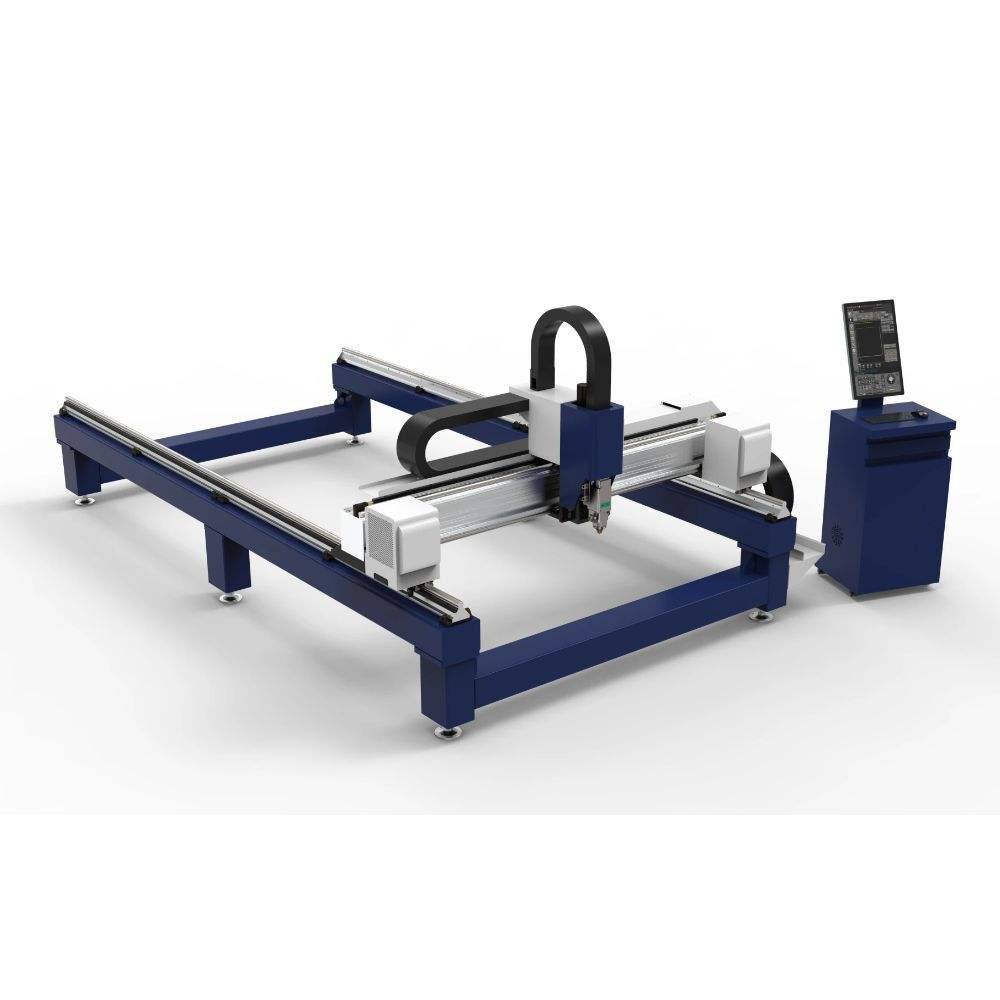
Technical Field Report: Implementation of 6000W Infinite Rotation 3D Laser Profiling in HCMC Modular Construction
1. Introduction and Regional Industrial Context
The industrial landscape of Ho Chi Minh City (HCMC) and its surrounding provinces (Binh Duong, Dong Nai) has seen a rapid shift toward high-efficiency modular construction. This evolution is driven by the demand for rapid urban infrastructure and the “Prefabricated Prefinished Volumetric Construction” (PPVC) model. Central to this shift is the transition from conventional plasma cutting and mechanical drilling to high-power fiber laser processing. This report evaluates the performance and technical integration of the 6000W Heavy-Duty I-Beam Laser Profiler, equipped with an Infinite Rotation 3D Head, within a Tier-1 structural steel facility in the HCMC industrial corridor.
The primary objective of this deployment was to resolve the chronic bottlenecks associated with the preparation of H-beams, I-beams, and C-channels used in load-bearing modular frames. Traditional methods required multiple stations for sawing, drilling, and manual beveling; the 6000W laser profiler consolidates these into a single-pass automated process.
2. 6000W Fiber Laser Oscillator: Power Density and Thermal Dynamics
The selection of a 6000W fiber source is strategic for the heavy-duty structural sector. While 12kW+ sources exist, the 6000W threshold represents the “sweet spot” for structural members ranging from 6mm to 25mm in thickness, which constitute the bulk of modular steel frames.
Energy Distribution: At 6000W, the laser achieves a power density capable of maintaining a stable keyhole in medium-to-thick carbon steel (SS400, ASTM A36). The beam quality (BPP) ensures a narrow kerf width, which is critical when cutting bolt holes that require H7-H9 tolerances for friction-grip bolts.
Gas Dynamics: In the HCMC climate, where ambient humidity is high, the integration of high-pressure nitrogen or filtered dry air is essential. The 6000W source allows for high-speed fusion cutting in thinner webs (up to 10mm) and efficient oxidation cutting in thicker flanges (up to 20mm+), maintaining a Heat Affected Zone (HAZ) significantly narrower than that of plasma-arc systems.
3. The Infinite Rotation 3D Head: Kinematics and Geometric Precision
The cornerstone of this technology is the Infinite Rotation 3D Head. Traditional 5-axis laser heads are often limited by cable-winding constraints, necessitating a “rewind” cycle that interrupts the cut and introduces mechanical lag.
Mechanical Advantage: The “Infinite” capability utilizes slip-ring technology or advanced rotational manifolds for the cooling and gas lines, allowing the head to rotate continuously around the C-axis. In the context of I-beam processing, this is vital for cutting “rat holes,” complex bevels for weld preparation (V, X, K, and Y types), and intricate web-to-flange transitions without stopping the laser.
3D Beveling Accuracy: Modular construction demands precise fit-up to ensure that volumetric units stack perfectly across 20+ stories. The 3D head compensates for the inherent “twist” and “camber” of hot-rolled sections. By utilizing integrated laser sensors, the head maps the actual geometry of the I-beam in real-time, adjusting the Z-height and torch angle dynamically. This ensures that a 45-degree bevel remains a true 45 degrees even if the beam flange is slightly deformed.
4. Application in Modular Construction: Solving the Fit-up Challenge
Modular construction in HCMC’s high-density zones requires high-strength connections. The heavy-duty profiler addresses three specific engineering challenges:
A. Bolt-Hole Integrity: Mechanical punching or plasma cutting often creates tapered holes or micro-fractures in the periphery of the hole. The 6000W laser produces perfectly cylindrical holes with a surface finish that eliminates the need for reaming. This is crucial for the “long-slot” holes used in seismic-resistant modular joints.
B. Complex End-Coping: Modular units require beams to be notched or coped to accommodate interlocking mechanisms. The 3D head allows for the simultaneous cutting of the web and the beveling of the flange in a single program. This reduces the part-handling time by approximately 70% compared to traditional band-sawing and manual oxy-fuel coping.
C. Tolerance Stack-up: In HCMC’s modular projects, a deviation of 2mm at the base beam can result in a 50mm misalignment at the top of a modular stack. The laser profiler holds a positioning accuracy of ±0.05mm per meter. By consolidating all features (holes, notches, cut-to-length) into one machine coordinate system, the cumulative error is virtually eliminated.
5. Structural Efficiency and Throughput Analysis
During field observation in the HCMC facility, throughput metrics were recorded comparing the 6000W Laser Profiler against a legacy CNC Plasma/Drill line.
Processing Speed: On a standard 300mm I-beam (12mm web), the 6000W laser achieved a linear cutting speed of 1.8 – 2.2 m/min. While plasma may compete on raw speed, the plasma-cut edges required 15 minutes of grinding per end to meet weld-prep standards. The laser-cut edges were “weld-ready” immediately after the process.
Secondary Operations: The “Infinite Rotation” head allowed for the cutting of circular apertures in the web for HVAC and plumbing pass-throughs, complete with 30-degree bevels for reinforcement collars. In a traditional workflow, this would require a separate station. The laser profiler reduced the total “part-in to part-out” time from 45 minutes to 8 minutes.
6. Synergy with Automatic Structural Software
The hardware’s efficiency is unlocked by the software ecosystem common in HCMC’s advanced engineering firms (utilizing Tekla Structures and SDS/2). The 6000W profiler integrates with these BIM (Building Information Modeling) tools via direct NC1 file imports.
Automatic Nesting: The system optimizes the layout of parts on a standard 12-meter I-beam, minimizing “short-end” scrap. In a city where steel prices are subject to global supply chain fluctuations, a 5-8% increase in material utilization significantly impacts the bottom line of large-scale modular projects.
Feature Recognition: The machine control system automatically identifies the required bevel angles from the 3D model, assigning the specific kinematics to the Infinite Rotation head without manual intervention from the operator.
7. Environmental and Operational Considerations in Vietnam
Deploying 6000W laser technology in Vietnam presents specific environmental challenges. The HCMC climate requires robust industrial chilling systems. The profiler observed utilizes a dual-circuit cooling system to maintain the oscillator and the 3D cutting head at a constant 22°C, despite ambient temperatures often exceeding 35°C in the workshop.
Furthermore, the stability of the heavy-duty bed is paramount. The profiler utilizes a reinforced, heat-treated gantry designed to withstand the vibration of loading 1.5-ton I-beams. The “Heavy-Duty” designation is not merely for the laser power, but for the material handling system—including hydraulic clamping and automatic centering—which must withstand the rigors of a 24/7 production cycle in a high-growth market.
8. Conclusion: The New Standard for HCMC Steel Fabrication
The deployment of the 6000W Heavy-Duty I-Beam Laser Profiler with Infinite Rotation 3D Head represents a paradigm shift for structural engineering in Ho Chi Minh City. By solving the precision issues inherent in heavy steel processing and eliminating the need for secondary manual labor, this technology provides the foundational accuracy required for modular construction.
The synergy of 6000W fiber power and infinite rotational kinematics allows for a level of design freedom previously considered cost-prohibitive. For the HCMC modular sector, this translates to faster project timelines, reduced onsite labor, and structures that meet international seismic and load-bearing standards with unprecedented reliability. Future upgrades will likely focus on even higher power densities (12kW+) and integrated AI for real-time kerf monitoring, but the current 6000W 3D platform stands as the most viable and efficient solution for contemporary structural requirements.













