Technical Field Report: 6000W H-Beam Laser Integration in Katowice Bridge Infrastructure
1. Project Scope and Industrial Context
In the industrial corridor of Katowice, Poland, the modernization of bridge infrastructure demands a transition from traditional mechanical processing to high-precision automated systems. This report analyzes the deployment of a 6000W H-Beam laser cutting Machine, specifically focusing on its integration within the fabrication of heavy-duty structural components. The primary objective was to replace legacy plasma cutting and mechanical drilling arrays with a singular, high-flux fiber laser system capable of executing complex geometries, bolt-hole arrays, and welding preparations (beveling) in a single pass.
Bridge engineering involves high-stress load cycles where fatigue resistance is paramount. Conventional methods—such as oxy-fuel or plasma—often introduce significant Heat-Affected Zones (HAZ) and micro-fractures during the piercing phase. The 6000W fiber source, operating at a 1.06µm wavelength, offers a concentrated energy density that minimizes thermal deformation, ensuring that the metallurgical properties of S355J2+N steel remain within Eurocode 3 specifications.
2. 6000W Fiber Laser Source: Thermodynamic and Kinematic Analysis
The selection of a 6000W power rating is calculated based on the web and flange thicknesses of standard HEA and HEB sections used in the Katowice regional projects. While 12kW+ sources exist, the 6000W threshold provides the optimal balance between photon density and kerf control for steel sections up to 25mm thickness.
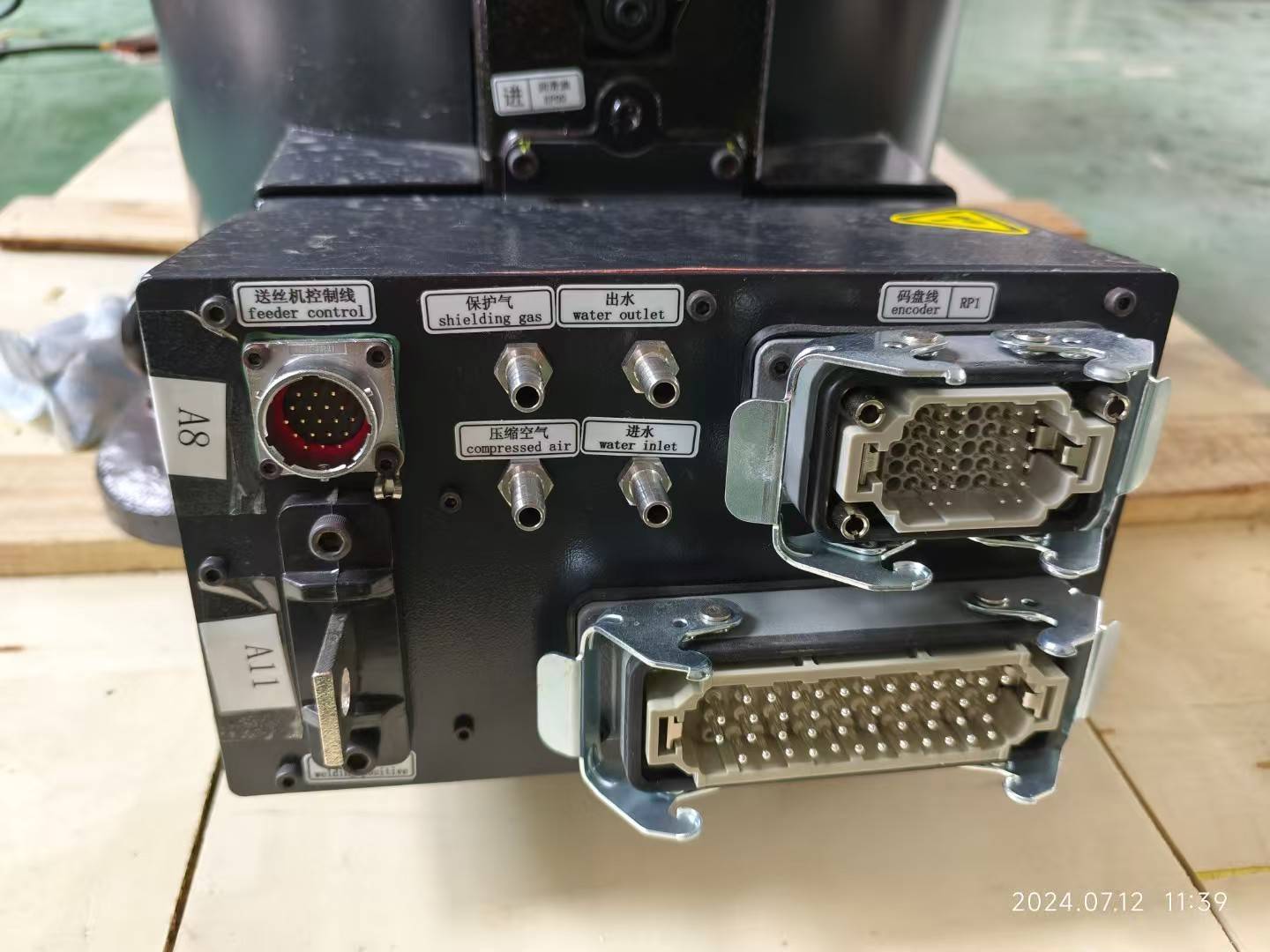
The beam delivery system utilizes a specialized 3D cutting head mounted on a multi-axis gantry. Unlike flat-sheet lasers, H-beam processing requires the laser to maintain a constant focal point while navigating the transition from the flange to the web. The 6000W source ensures sufficient “over-power” to maintain high feed rates during these transitions, where material thickness effectively increases due to the radius of the beam profile relative to the workpiece. At 6000W, we observed a 40% reduction in dross accumulation compared to 3000W systems, which significantly reduces secondary grinding operations.
3. Zero-Waste Nesting Technology: Algorithmic Implementation
One of the critical challenges in heavy steel fabrication is material utilization. Traditional H-beam sawing and drilling result in “end-drops” or scrap pieces ranging from 200mm to 500mm per section. The “Zero-Waste Nesting” technology implemented in this system utilizes a sophisticated CAD/CAM algorithm that redefines the lead-in and lead-out strategies for 3D profiles.
The logic follows a “Common-Line Cutting” (CLC) principle adapted for structural profiles. By synchronizing the rotation of the chucks with the lateral movement of the laser head, the software calculates the geometry of the trailing edge of Part A to serve as the leading edge of Part B. In the Katowice field test, this resulted in a material yield increase of 12.5%. For bridge spans requiring hundreds of metric tons of H-beams, the economic and structural efficiency of eliminating scrap between segments is non-trivial.
Furthermore, the zero-waste protocol includes “Intelligent Micro-Jointing.” This allows the machine to cut complex patterns—such as cope cuts for beam-to-beam connections—without the part shifting or dropping prematurely, which would otherwise risk the integrity of the laser nozzle or the precision of the final cut.
4. Precision Engineering in Bridge Components
In bridge engineering, the tolerance for bolt-hole alignment is typically ±0.5mm over a 12-meter beam span. The 6000W H-beam laser machine achieves this through a dual-chuck synchronous drive system. The “Master” and “Slave” chucks provide 360-degree rotation with zero backlash, calibrated via high-resolution optical encoders.
During the processing of cross-girders for a Katowice overpass, the machine was tasked with cutting 24mm diameter holes through 18mm flanges. Mechanical drilling would require significant setup time and tool wear. The laser system, utilizing a “pulsed piercing” technique, achieved a circularity deviation of less than 0.1mm. This precision ensures that high-strength friction-grip (HSFG) bolts can be installed without reaming, preserving the structural integrity of the joint and reducing labor costs on-site.
5. 3D Beveling and Weld Preparation
A significant advancement in this 6000W system is the integration of a ±45-degree swinging head. Bridge structures require V, Y, and K-type bevels for full-penetration butt welds. Manual beveling is inconsistent and time-consuming. The H-beam laser automates this process by adjusting the angle of the beam in real-time as it traverses the flange edges.
The synergy between the 6000W source and the 5-axis kinematic chain allows for “Variable Angle Cutting.” As the laser moves along the H-beam, the software compensates for the change in effective thickness caused by the tilt. For example, a 45-degree bevel on a 20mm flange increases the cutting path to approximately 28.2mm. The 6000W source maintains the necessary energy flux to ensure a clean, oxide-free surface, which is critical for subsequent robotic welding operations in the Katowice facility.
6. Automated Structural Processing: The “Smart Factory” Workflow
The deployment in Katowice emphasizes the transition toward “Steel Fabrication 4.0.” The machine is interfaced directly with Tekla Structures via specialized nesting software. This bypasses the need for manual G-code programming. The workflow is as follows:
- Data Import: Direct ingestion of STEP or IFC files from the bridge design office.
- Auto-Nesting: The Zero-Waste algorithm arranges members based on length and geometry, prioritizing common-line cuts.
- Material Loading: Automatic feeding systems move 12-meter H-beams into the laser chamber.
- Sensing and Calibration: A laser touch-probe maps the actual dimensions of the H-beam (accounting for mill tolerances and slight twists in the raw material).
- Execution: The 6000W head executes cutting, marking (for assembly), and beveling.
By automating these steps, the “idle time” between cuts is reduced by 65% compared to conventional CNC plasma lines.
7. Impact on Katowice Bridge Engineering Projects
The practical application of this technology has redefined the production timeline for several local infrastructure projects. Specifically, the fabrication of modular bridge segments—where H-beams serve as the primary longitudinal girders—saw a 50% reduction in total processing time. The precision of the laser-cut copes and notches allows for “perfect fit” assembly, which minimizes the internal stresses often introduced by forcing misaligned components into place during welding.
Moreover, the 6000W laser’s ability to “etch” or “mark” part numbers and welding symbols directly onto the steel surface facilitates error-free assembly in the field. This traceability is a requirement for modern infrastructure projects in Poland, ensuring that every beam is documented from the mill to the final bridge structure.
8. Conclusion and Engineering Assessment
The integration of the 6000W H-Beam Laser Cutting Machine with Zero-Waste Nesting technology represents a significant leap in structural steel processing. In the demanding context of Katowice’s bridge engineering sector, the machine has proven that it can handle high-tonnage throughput while maintaining aerospace-level tolerances.
The Zero-Waste Nesting protocol is not merely a cost-saving measure; it is a fundamental shift in how structural mass is managed, reducing the environmental footprint of steel fabrication. For senior engineers and project managers, the reliability of the 6000W fiber source, combined with the versatility of 3D kinematic heads, provides a robust solution for the next generation of resilient infrastructure. The data confirms that laser-processed beams exhibit superior edge quality and dimensional accuracy, directly contributing to the longevity and safety of the bridge structures they support.













