The Evolution of Structural Steel Fabrication in Dubai’s Shipyards
Dubai has long established itself as a global nexus for maritime logistics and ship repair. With facilities like Drydocks World and the various fabrication yards in Dubai Maritime City, the demand for high-strength structural steel components is constant. Historically, the fabrication of H-beams, I-beams, and channels relied on plasma cutting or CNC drilling and sawing. While functional, these methods often required significant secondary processing, such as grinding or edge preparation for welding.
The introduction of the 6000W H-Beam Fiber laser cutting Machine changes the mathematics of production. Fiber laser technology, characterized by its short wavelength and high absorption rate, allows for the cutting of thick-walled structural steel with a precision that plasma cannot match. For a shipyard, this means that the “fit-up” of large structural sections becomes seamless, reducing the man-hours spent on corrective welding and alignment.
Technical Prowess: Why 6000W is the Industry Standard
In the realm of fiber lasers, 6000W (6kW) is often considered the “sweet spot” for structural steel. While higher wattages exist, the 6000W source provides the optimal balance between capital investment and operational capability for H-beams.
At 6000W, the laser can effortlessly penetrate carbon steel beams with wall thicknesses up to 20mm–25mm at high speeds. More importantly, it maintains a narrow Heat Affected Zone (HAZ). In shipbuilding, maintaining the structural integrity of the steel is paramount. Excessive heat can alter the metallurgy of the beam, leading to brittleness. The high-density energy of the 6000W fiber laser vaporizes the metal so quickly that the surrounding material remains relatively cool, preserving the mechanical properties required by maritime classification societies like Lloyd’s Register or ABS.
3D Cutting Dynamics for H-Beams
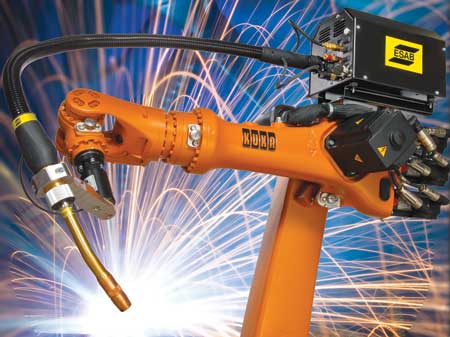
Cutting an H-beam is significantly more complex than cutting a flat sheet. It requires a machine capable of 3D movement. Modern 6000W machines utilize a rotating chuck system combined with a 5-axis or even a robotic arm-based cutting head.
This allows the machine to perform “bevel cutting.” In shipbuilding, beams are rarely joined at simple 90-degree angles. They require complex miters and bevels to create reinforced joints. The 6000W H-beam laser can cut V, Y, and K-shaped bevels in a single pass. This eliminates the need for a separate bevelling station, effectively doubling the throughput of the structural workshop.
The Game Changer: Automatic Unloading Systems
One of the primary bottlenecks in heavy industry is the handling of materials. An H-beam can weigh several hundred kilograms. Manual unloading using overhead cranes is slow, labor-intensive, and carries inherent safety risks.
The “Automatic Unloading” feature of these modern laser systems integrates a synchronized conveyor and hydraulic lifting mechanism. As the laser completes the final cut on a beam section, the unloading system supports the workpiece, preventing “drop-off” damage. It then automatically transports the finished part to a staging area while the machine immediately begins the next program.
In a 24/7 Dubai shipyard environment, this level of automation ensures that the laser source—the most expensive part of the machine—is active (cutting) for the maximum possible percentage of the shift. It transforms the machine from a tool into a fully autonomous production cell.
Adapting to the Dubai Environment: Heat and Humidity
Operating high-precision fiber lasers in the UAE presents unique environmental challenges. The ambient temperature in Dubai can exceed 45°C, and the coastal humidity is notoriously high. For a 6000W laser, thermal management is the difference between success and catastrophic failure.
The H-Beam machines deployed in this region must be equipped with dual-circuit industrial chillers. One circuit cools the laser source, while the other cools the cutting head and optics. Furthermore, the electronic cabinets must be air-conditioned and sealed to prevent the ingress of saline-rich air, which can cause corrosion on sensitive circuit boards.
Leading manufacturers now provide “Tropicalized” versions of their machines specifically for the Gulf market. These include enhanced dust extraction systems to handle the fine particulate matter common in desert environments, ensuring that the laser beam’s path remains unobstructed and the mirrors stay pristine.
Precision Software and Nesting Optimization
The hardware is only as good as the software that drives it. For H-beam cutting, specialized 3D nesting software is utilized. This software takes CAD models of the ship’s skeleton and “nests” the various parts onto standard beam lengths to minimize scrap.
In an era where steel prices are volatile, reducing waste by even 5% can result in hundreds of thousands of dollars in annual savings for a large-scale shipyard. The software also calculates the optimal cutting path to avoid “beam sag” during the process, ensuring that the tolerances—often within +/- 0.5mm—are maintained over a 12-meter beam length.
Economic Impact and Return on Investment (ROI)
The capital expenditure for a 6000W H-Beam laser with automatic unloading is significant. However, the ROI is driven by three factors:
1. **Labor Reduction:** The automatic unloading system reduces the need for a dedicated crane operator and two floor assistants per shift.
2. **Elimination of Consumables:** Unlike plasma cutting, which requires constant replacement of electrodes and nozzles, fiber laser consumables are minimal and long-lasting.
3. **Secondary Processing:** By delivering a weld-ready edge, the shipyard eliminates the “grinding phase.” In a project involving 5,000 tons of structural steel, the savings in man-hours are monumental.
Typically, shipyards in the Middle East reporting a transition to fiber lasers see a full ROI within 18 to 24 months, depending on their project volume.
Enhanced Safety Standards
Shipbuilding is traditionally a high-risk industry. By automating the cutting and unloading of massive H-beams, the shipyard significantly reduces the “man-material interface.” The laser is housed in a fully enclosed cabinet with laser-safe glass (OD6+ or higher), protecting workers from both the high-intensity light and the fumes generated during the cutting process. The automatic unloading system further reduces the risk of crush injuries associated with manual rigging and lifting.
Future-Proofing Dubai’s Maritime Sector
As the maritime industry moves toward “Green Shipping” and more complex vessel designs (such as LNG-powered carriers and high-speed ferries), the materials being used are evolving. We are seeing more high-tensile steels and specialized alloys.
A 6000W fiber laser is future-proof; it has the frequency modulation and power density to handle these advanced materials where traditional methods fail. By investing in this technology today, Dubai’s shipyards are not just improving their current efficiency—they are securing their position as the most technologically advanced maritime hub in the world.
Conclusion
The 6000W H-Beam Laser Cutting Machine with Automatic Unloading is more than just a piece of equipment; it is a strategic asset for the modern shipyard. In the competitive landscape of Dubai’s industrial sector, the ability to cut structural steel faster, cleaner, and with less human intervention is the ultimate competitive advantage. As fiber laser technology continues to advance, those who embrace these automated, high-power systems will lead the way in constructing the next generation of the world’s fleet.