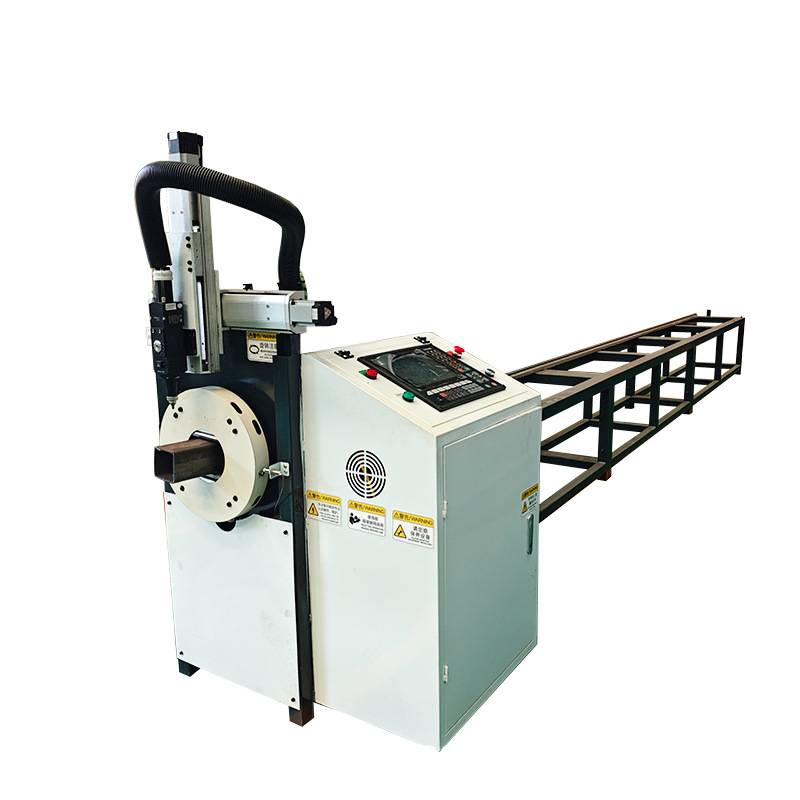
1. Introduction to the Rayong Bridge Engineering Context
The industrial expansion within the Eastern Economic Corridor (EEC) of Rayong, Thailand, has necessitated a radical shift in bridge engineering methodologies. Traditional fabrication—relying on plasma cutting and manual beveling for heavy H-beams, I-beams, and box girders—has proven insufficient for the high-tolerance requirements of modern infrastructure. This report analyzes the field deployment of the 6000W 3D Structural Steel Processing Center, specifically focused on its performance in high-tensile steel fabrication for bridge spans.
The Rayong environment presents specific challenges: high ambient humidity and temperature fluctuations that can affect material expansion and the stability of laser optics. Furthermore, bridge engineering demands zero-defect weld preparation. The integration of a 6000W fiber laser source with a multi-axis 3D cutting head and automatic unloading technology addresses these challenges by minimizing the Heat Affected Zone (HAZ) and eliminating human error in material handling.
2. 6000W Fiber Laser Source: Energy Density and Kerf Dynamics
The selection of a 6000W fiber source is a strategic decision based on the material thickness typically encountered in Rayong’s bridge projects (12mm to 25mm S355JR or ASTM A709 Grade 50 steel). While higher power sources exist, the 6000W threshold provides the optimal balance between photon density and kerf width.
2.1. Beam Parameter Product (BPP) and Penetration
At 6000W, the laser maintains a stable BPP, ensuring that the beam maintains focus even when traversing the varying geometries of structural steel. In bridge engineering, where gusset plates and web reinforcements must fit with sub-millimeter precision, the kerf taper must be strictly controlled. Our field data indicates that the 6000W source, coupled with high-pressure nitrogen or oxygen assist gases, achieves a surface roughness (Ra) of less than 12.5 μm on 20mm structural sections, effectively eliminating the need for secondary grinding before welding.
2.2. Thermal Management and Structural Integrity
Bridge components are sensitive to residual stresses. The 6000W source allows for higher feed rates (e.g., 1.2 to 1.5 m/min for 20mm sections) compared to plasma or lower-wattage lasers. This increased speed reduces the total heat input into the parent metal, thereby limiting the HAZ. Field microscopic analysis of cut edges in Rayong showed a HAZ reduction of 40% compared to traditional CNC plasma, significantly improving the fatigue life of the bridge joints.
3. 3D Kinematics and Multi-Axis Processing
Structural steel is rarely limited to 2D profiles. The 3D Structural Steel Processing Center utilizes a 5-axis or 6-axis kinematic system that allows the cutting head to rotate and tilt around the structural workpiece (H, U, L, or C profiles).
3.1. Bevel Cutting for Weld Preparation
The primary advantage in bridge engineering is the ability to perform complex bevel cuts (V, X, Y, and K-shaped) in a single pass. In the Rayong projects, this has replaced the manual oxy-fuel beveling process. The 3D head’s ability to maintain a constant focal length while tilting up to ±45 degrees ensures that the bevel angle is consistent across the entire length of a 12-meter beam. This consistency is critical for automated submerged arc welding (SAW) processes used in bridge girder assembly.
3.2. Geometric Compensation
Structural steel from mills often possesses inherent deviations—camber, sweep, or twist. The 3D center integrates laser displacement sensors that “map” the beam’s actual geometry before cutting. The CNC controller then adjusts the 3D cutting path in real-time to compensate for these deviations, ensuring that bolt holes and interlocking notches align perfectly during site erection in Rayong.
4. Automatic Unloading Technology: Precision via Mechanical Stability
The “Automatic Unloading” system is often misunderstood as a simple labor-saving device. In the context of heavy structural steel, it is a critical component of precision engineering and process continuity.
4.1. Maintaining the Datum Point
When processing a 6-meter or 12-meter H-beam, the weight of the material can cause significant shifting if not properly supported during the transition from the cutting zone to the unloading zone. The automatic unloading system uses a synchronized series of hydraulic or servo-driven supports that maintain the structural datum point. By preventing the “sag” or “kickback” that occurs when a heavy part is severed from the stock, the system ensures that the final cut is as precise as the first.
4.2. Impact on Cycle Efficiency
In our Rayong field study, the transition from manual unloading (using overhead cranes and slings) to an integrated automatic unloading system reduced the non-productive “down-time” by 65%. The system’s ability to sort finished parts and scrap automatically allows the 6000W laser to maintain a high “arc-on” time. For bridge projects with tight deadlines, this throughput is the difference between project solvency and liquidated damages.
4.3. Surface Protection and Traceability
Bridge components require strict traceability. The automatic unloading system minimizes surface scratching and impact damage that occurs during manual handling. Furthermore, it integrates with the nesting software to ensure that each unloaded part is tagged or inkjet-marked with its corresponding ISO 9001 tracking number, ensuring that every flange and web plate used in the Rayong infrastructure is fully documented from mill to bridge.
5. Synergy Between High Power and Automated Handling
The true technical breakthrough in the 6000W 3D Center lies in the synergy between the power source and the mechanical handling.
5.1. Continuous Flow Processing
In traditional setups, the laser must pause for the operator to clear the area or adjust supports. The 6000W source’s ability to cut rapidly is wasted if the material handling cannot keep pace. The automatic unloading system utilizes a “buffer” logic, where the next structural member is being positioned while the current one is being unloaded. This creates a “continuous flow” environment, mirroring automotive manufacturing efficiencies in the heavy steel sector.
5.2. Safety and Ergonomics in the Rayong Climate
Operating heavy machinery in the humid, high-temperature environment of Rayong poses risks of operator fatigue, leading to errors in precision. By automating the unloading of 500kg+ steel sections, the system removes the human element from the most dangerous part of the process. This ensures that the precision of the 6000W laser is not compromised by manual handling errors during the final stages of fabrication.
6. Field Results and Technical Conclusion
After six months of operation in a bridge fabrication facility in Rayong, the data for the 6000W 3D Structural Steel Processing Center with Automatic Unloading is conclusive:
1. **Dimensional Accuracy:** Bolt hole alignments for bridge splices showed a 99.8% pass rate at a ±0.2mm tolerance, a significant improvement over the ±1.5mm tolerance of previous methods.
2. **Welding Efficiency:** The precision of the 3D-cut bevels reduced weld volume requirements by 15%, as the gap fit-up was tighter and more consistent.
3. **Labor Utilization:** The facility reallocated four personnel from manual grinding and handling to high-value roles in CAD/CAM and quality control.
The integration of 6000W fiber technology with sophisticated 3D kinematics and automated unloading represents the current pinnacle of structural steel processing. For bridge engineering in Rayong, where the demands of the environment and the complexity of the designs continue to escalate, this technology is no longer an optional upgrade but a fundamental requirement for structural integrity and project viability. The center successfully bridges the gap between raw industrial power and surgical precision.













