Mastering Brass Fabrication: A Comprehensive Guide to 3kW Precision Laser Systems in Toluca
The industrial landscape of Toluca, Mexico, has undergone a significant transformation over the last decade. As one of the country’s primary manufacturing hubs, the Lerma-Toluca corridor demands high-efficiency technology to support its robust automotive, aerospace, and electrical sectors. Among the most critical advancements in this region is the adoption of the 3kW precision laser system. This specific power rating has emerged as the “gold standard” for processing non-ferrous metals, particularly brass, which is notoriously difficult to handle with traditional thermal cutting methods.
Brass, an alloy of copper and zinc, is prized for its conductivity, corrosion resistance, and aesthetic appeal. However, from an engineering perspective, it presents unique challenges due to its high thermal conductivity and optical reflectivity. A 3kW fiber laser provides the necessary power density to overcome these physical barriers, ensuring that laser cutting operations remain stable, precise, and cost-effective for Toluca-based manufacturers.
The Physics of 3kW Fiber Lasers and Brass Interaction
To understand why a 3kW system is ideal for brass, one must look at the wavelength of fiber lasers. Typically operating at a wavelength of approximately 1.064 microns, fiber lasers are absorbed much more efficiently by yellow metals than the 10.6-micron wavelength of older CO2 technology. When a 3kW beam is focused onto a brass sheet, the energy density is sufficient to instantly melt and vaporize the material, creating a narrow kerf.
In the context of Toluca’s high-altitude environment, atmospheric pressure can slightly affect gas dynamics during the laser cutting process. A 3kW system offers the “overhead” power needed to compensate for these variables, ensuring that the melt pool remains consistent. This power level allows for high-speed processing of brass up to 6mm or 8mm in thickness, which covers the vast majority of industrial applications in the region’s electrical component manufacturing sector.
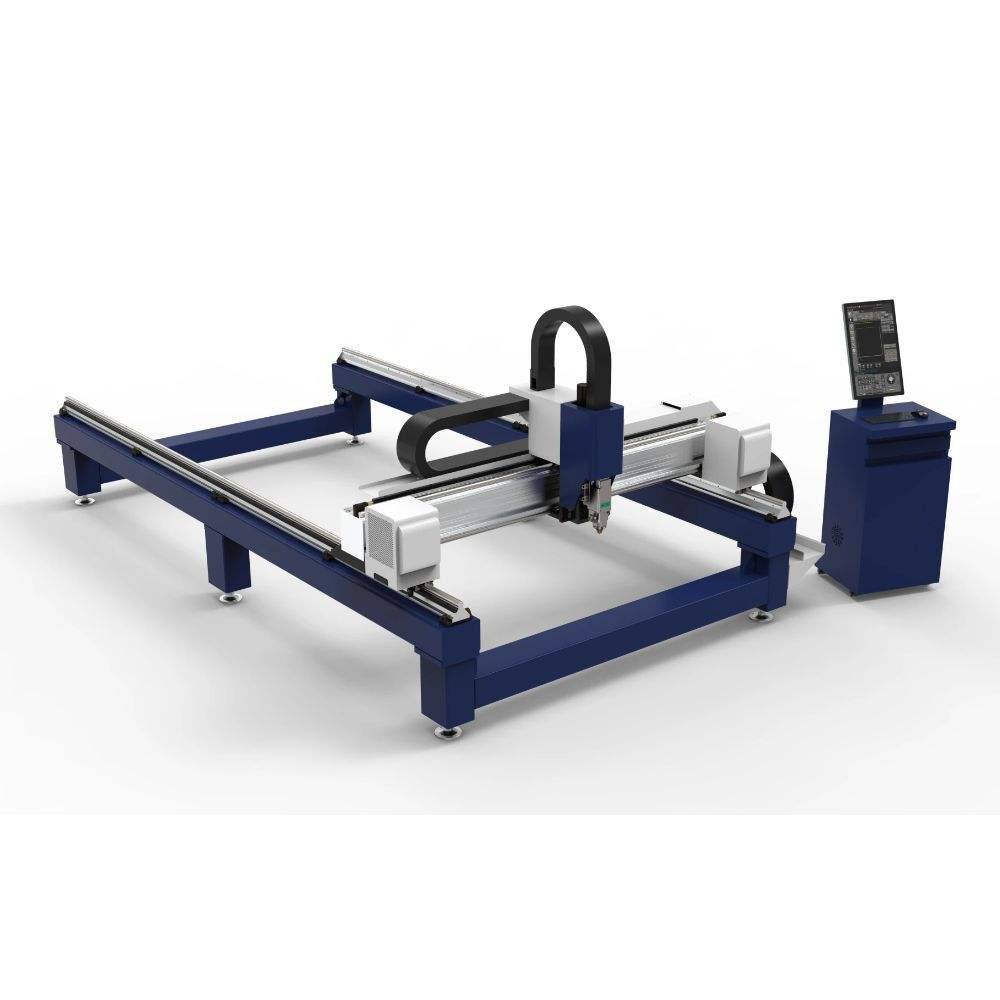
 laser cutting machine” style=”width: 100%; max-width: 800px; height: auto; margin: 20px 0;”>
Overcoming Reflectivity and Back-Reflection
One of the primary concerns for engineers in Toluca when implementing laser cutting for brass is back-reflection. Brass, in its solid state, acts like a mirror to laser light. If the laser beam is reflected back into the delivery fiber and the resonator, it can cause catastrophic damage to the optical components.
Modern 3kW precision systems are equipped with advanced back-reflection isolation mechanisms. These sensors detect any returning light and can terminate the beam in microseconds to protect the hardware. Furthermore, the 3kW power threshold is significant because it allows the beam to “pierce” the reflective surface quickly. Once the material starts to melt, its reflectivity drops significantly, allowing the laser to absorb more energy and proceed with a stable cut. For Toluca’s Tier 2 automotive suppliers, this reliability is non-negotiable for meeting Just-In-Time (JIT) production schedules.
Optimizing Parameters for the Toluca Industrial Sector
Engineering teams in Toluca must calibrate several key parameters to achieve the best results with a 3kW system. These include assist gas selection, nozzle diameter, and focal position. For brass, Nitrogen is the preferred assist gas. High-pressure Nitrogen (typically between 12 and 18 bar) is used to blow the molten brass out of the kerf, preventing oxidation and resulting in a clean, bright edge that often requires no secondary finishing.
The focal position is also critical. Unlike carbon steel, where the focus might be on the surface, brass laser cutting often requires a slightly negative focus (inside the material) to ensure the energy is distributed effectively through the thickness of the plate. This precision is what allows Toluca’s workshops to produce intricate decorative panels or complex electrical busbars with tolerances as tight as +/- 0.05mm.
Strategic Advantages for Manufacturers in the State of Mexico
The decision to invest in a 3kW precision laser system in Toluca is driven by economic and competitive factors. The region is home to numerous multinational corporations that require high-precision parts. By utilizing a 3kW fiber laser, local shops can offer faster turnaround times compared to traditional milling or waterjet cutting.
Furthermore, the energy efficiency of a 3kW fiber laser is significantly higher than that of older technologies. In an era where energy costs in Mexico are a major consideration for plant managers, the lower power consumption per part produced offers a clear path to a faster Return on Investment (ROI). The 3kW system provides a perfect balance—enough power for versatility across different gauges of brass, without the extreme energy overhead of 6kW or 10kW systems that might be overkill for standard brass components.
Maintenance and Longevity in Toluca’s Climate
Toluca is known for its relatively cool and sometimes humid climate. For a 3kW precision laser, maintaining a controlled environment for the chiller and the power source is vital. Fiber lasers are generally low-maintenance compared to CO2 lasers because they lack moving parts or mirrors in the beam generation path. However, the cutting head—specifically the protective windows and the nozzle—must be inspected daily.
In the industrial zones of Toluca, dust management is also a factor. High-quality 3kW systems feature sealed optical paths to prevent contamination. Engineers should ensure that the laser cutting machine’s filtration system is optimized to handle the fine metallic dust produced during brass processing, as zinc fumes can be hazardous and corrosive if not properly extracted.
Software Integration and Nesting Efficiency
Precision is not just a function of the hardware; it is also a result of the software driving the 3kW system. Advanced CAD/CAM integration allows Toluca’s engineers to optimize nesting patterns, reducing material waste in expensive brass sheets. Because brass is a premium-priced material, even a 5% increase in nesting efficiency can result in thousands of dollars in annual savings.
Modern software also allows for “fly-cutting” or “grid-cutting” techniques, where the 3kW laser head moves in a continuous path without stopping between holes. This significantly reduces the mechanical wear on the gantry and increases the overall throughput of the laser cutting cell. For high-volume projects in the Toluca electrical sector, these marginal gains in cycle time are what separate profitable shops from their competitors.
Future-Proofing Your Production Line
As the “Nearshoring” trend continues to bring more manufacturing from Asia to North America, Toluca is positioned to see continued growth. A 3kW precision laser system is a future-proof investment because of its versatility. While this guide focuses on brass, the same system can seamlessly transition to cutting stainless steel, aluminum, and carbon steel by simply switching gas parameters and cutting libraries.
The precision offered by 3kW fiber technology also aligns with the industry 4.0 initiatives being adopted by major players in the State of Mexico. These machines can be integrated into automated loading and unloading systems, allowing for “lights-out” manufacturing. This level of automation is essential for Toluca to maintain its status as a competitive global manufacturing hub.
Conclusion: The Path Forward for Toluca Engineers
The implementation of a 3kW precision laser system for brass laser cutting represents a significant upgrade in capability for any Toluca-based fabrication facility. By understanding the interaction between the 1.064-micron wavelength and non-ferrous alloys, and by mastering the specific assist gas requirements, engineers can produce components of unparalleled quality.
In the competitive landscape of the Mexican industrial sector, the ability to process brass with speed, accuracy, and minimal waste is a distinct advantage. Whether it is for intricate automotive connectors or architectural hardware, the 3kW fiber laser stands as the cornerstone of modern metal fabrication. As technology continues to evolve, the principles of precision, maintenance, and parameter optimization will remain the keys to success for manufacturers in the heart of Mexico’s industrial engine.













