Mastering the 3kW Precision Laser System: A Guide for Brass Processing in Mexico City
In the heart of Mexico’s industrial landscape, Mexico City (CDMX) has emerged as a hub for high-precision manufacturing. As the demand for intricate metalwork grows in the automotive, aerospace, and decorative sectors, the adoption of the 3kW precision laser system has become a cornerstone for local workshops. This guide explores the technical nuances of utilizing 3kW fiber technology specifically for brass—a material known for its aesthetic appeal and its challenging physical properties.
The transition from traditional CO2 lasers to fiber laser cutting technology has revolutionized how copper alloys are handled. For engineers and shop managers in the Vallejo industrial zone or the surrounding State of Mexico, understanding the interplay between 3kW power delivery and the unique atmospheric conditions of the high-altitude capital is essential for maximizing ROI and part quality.
The Engineering Fundamentals of 3kW Fiber Laser Technology
A 3kW fiber laser provides a specific power density that is ideal for medium-thickness non-ferrous metals. Unlike CO2 lasers, which operate at a wavelength of 10.6 micrometers, fiber lasers operate at approximately 1.07 micrometers. This shorter wavelength is more readily absorbed by reflective metals like brass, making the laser cutting process significantly more efficient.
At 3,000 watts, the system strikes a balance between speed and precision. It offers enough energy to overcome the initial reflectivity of brass while maintaining a narrow kerf width. This power level is particularly effective for brass sheets ranging from 1mm to 8mm, providing clean edges that often require zero post-processing. For the precision-focused industries in Mexico City, this efficiency translates directly into lower cost-per-part and faster turnaround times.
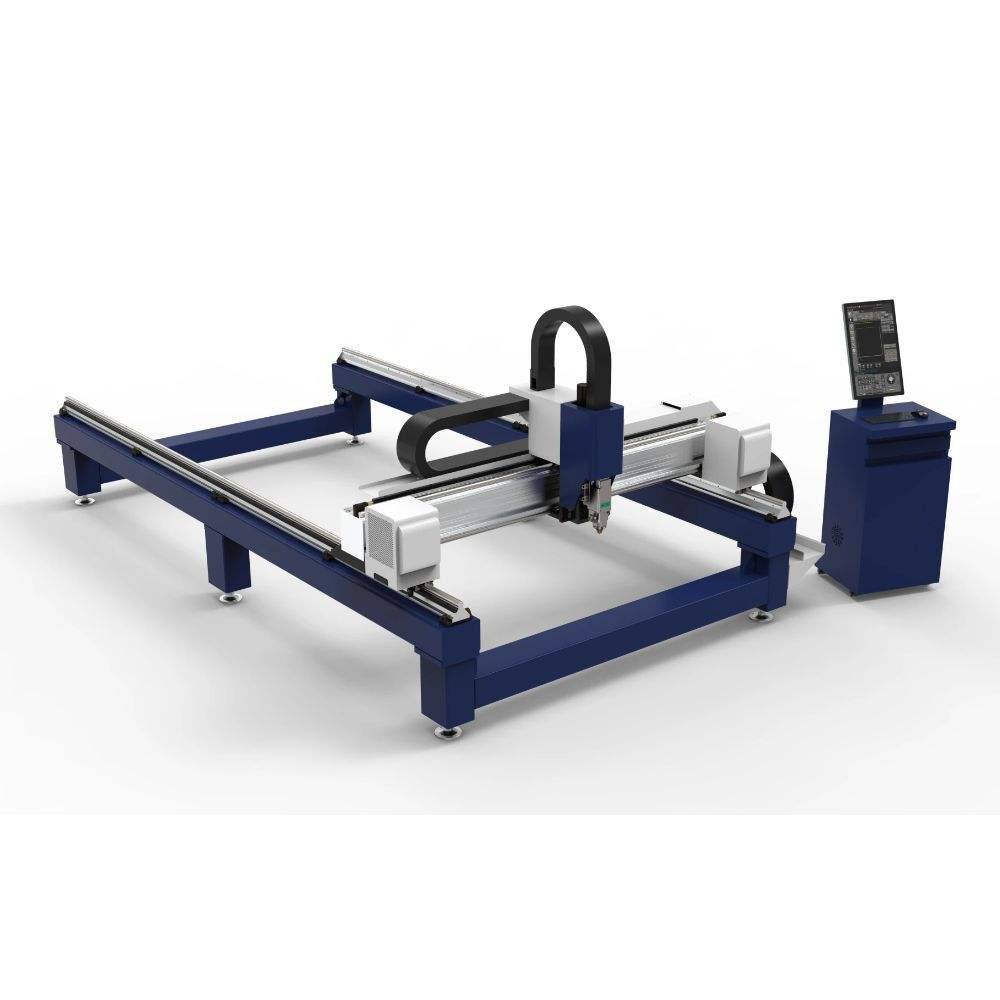
 laser cutting machine” style=”width: 100%; max-width: 800px; height: auto; margin: 20px 0;”>
Thermal Conductivity and the Heat-Affected Zone (HAZ)
Brass is an alloy of copper and zinc, characterized by high thermal conductivity. During laser cutting, heat dissipates rapidly away from the cut zone. A 3kW system provides the necessary irradiance to melt the metal faster than the heat can conduct into the surrounding material. This minimizes the Heat-Affected Zone (HAZ), ensuring that the structural integrity and the color of the brass remain consistent near the edge. For architectural applications in Mexico City’s luxury real estate market, maintaining the visual purity of the brass is a non-negotiable requirement.
Overcoming the Challenges of High-Reflectivity Brass
One of the primary hurdles in processing brass is its tendency to reflect laser energy back into the cutting head. Back-reflection can damage the optical fibers and the laser source itself. Modern 3kW systems are equipped with advanced back-reflection isolation modules. These components detect reflected light and divert it or shut down the beam before damage occurs.
When engineering a workflow for brass in CDMX, operators must utilize specific piercing strategies. Using a “power ramp” during the initial pierce prevents a sudden burst of reflected energy. Furthermore, the use of high-pressure Nitrogen as an assist gas is critical. Nitrogen not only expels the molten brass from the cut but also cools the surrounding area, preventing the formation of dross (slag) on the underside of the workpiece.
Optimizing Laser Cutting for Mexico City’s High Altitude
Mexico City sits at an elevation of approximately 2,240 meters (7,350 feet). This high altitude presents unique challenges for laser cutting systems that are often overlooked in standard manuals. The atmospheric pressure is significantly lower than at sea level, which affects both the cooling systems and the dynamics of the assist gases.
Atmospheric Pressure and Gas Dynamics
At higher altitudes, the air is less dense. This means that the fluid dynamics of the Nitrogen or Oxygen used in the laser cutting nozzle behave differently. Operators in CDMX often find that they need to increase the assist gas pressure by 10-15% compared to sea-level settings to achieve the same “flush” effect in the kerf. Furthermore, the lower boiling point of water at this altitude can affect the efficiency of the laser’s chiller system. It is imperative to use high-performance refrigerants and ensure the cooling unit is rated for high-altitude operation to prevent the 3kW source from overheating during long production runs.
Power Stability and Electrical Infrastructure
The industrial power grid in certain sectors of Mexico City can experience fluctuations. For a 3kW precision laser, voltage stability is paramount. Even minor drops in voltage can affect the beam’s M2 factor (quality) and lead to inconsistent cuts in reflective brass. Integrating a dedicated voltage stabilizer and a robust grounding system is a standard engineering recommendation for local installations. This ensures that the laser cutting process remains stable, protecting the sensitive diode banks within the fiber source.
Strategic Applications in the Mexican Industrial Sector
The versatility of the 3kW laser allows Mexican manufacturers to pivot between various high-value sectors. Brass, with its excellent electrical conductivity and corrosion resistance, is a staple in several local industries.
Automotive and Electronic Components
Mexico is a global leader in automotive assembly. Brass components, such as connectors, terminals, and decorative interior trim, are frequently produced using laser cutting. The precision of a 3kW system allows for the tight tolerances required by Tier 1 and Tier 2 suppliers in the Bajío region and the State of Mexico. The ability to cut intricate geometries without the need for expensive stamping dies makes the laser system ideal for prototyping and short-to-medium production runs.
Architectural and Decorative Work
From the historic buildings of the Centro Histórico to the modern skyscrapers in Santa Fe, brass is a favored material for signage, elevator panels, and custom lighting fixtures. The 3kW laser enables designers to achieve “lace-like” patterns in brass sheets that were previously impossible with mechanical routing. The clean, oxidation-free edges produced by Nitrogen-assisted laser cutting ensure that the brass can be polished or lacquered immediately after cutting.
Maintenance and Longevity in Urban Industrial Environments
Mexico City’s environment can be dusty and prone to pollution, which poses a risk to precision optical components. A 3kW laser system requires a strict maintenance protocol to ensure longevity. The cutting head’s protective windows must be inspected daily for “burn spots” caused by dust particles. Even a microscopic speck of dust can absorb laser energy, heat up, and crack the lens.
Furthermore, the beam delivery fiber must be kept in a controlled radius to prevent “micro-bending” losses. In the humid months of the Mexican rainy season, maintaining the humidity levels inside the laser cabinet is crucial to prevent condensation on the electronics. Using an air-conditioned cabinet for the laser source is a common best practice in CDMX facilities.
Economic Impact: ROI for CDMX Workshops
Investing in a 3kW precision laser system is a significant capital expenditure, but the economic returns in the Mexican market are compelling. The speed of fiber laser cutting on brass is roughly 3 to 4 times faster than a CO2 laser of equivalent power. When combined with lower electricity consumption and the elimination of laser gas (He, CO2, N2 mixtures), the operational cost drops by nearly 50%.
For a workshop in Naucalpan or Iztapalapa, this means the ability to take on more complex jobs with higher margins. The precision of the 3kW system also reduces material waste—a critical factor when dealing with expensive alloys like brass and copper. By nesting parts tightly, manufacturers can save thousands of pesos in scrap costs every month.
Technical Parameters for 3kW Brass Cutting
To achieve the best results, engineers should adhere to specific parameter sets. For a 3mm brass sheet, a typical setup would include:
- Power: 2800W – 3000W
- Speed: 4.5 – 6.0 m/min
- Assist Gas: Nitrogen at 16-18 Bar
- Nozzle: Double layer, 2.0mm – 2.5mm diameter
- Focus: Slightly negative (into the material) to ensure a wider kerf for easier melt ejection.
These settings may need slight adjustments based on the specific alloy grade (e.g., C260 or C360) and the ambient temperature of the shop floor.
Conclusion
The 3kW precision laser system represents the cutting edge of manufacturing technology for the Mexico City industrial sector. By understanding the specific challenges of brass—its reflectivity and thermal properties—and adapting to the local high-altitude environment, manufacturers can unlock unprecedented levels of productivity. Whether it is for automotive parts, electronics, or architectural masterpieces, mastering laser cutting on brass ensures that Mexican workshops remain competitive on a global stage. As the industry evolves, the integration of these high-power systems will continue to be the catalyst for innovation and economic growth in the region.













