Introduction to 3kW Precision Laser Systems in Toluca’s Industrial Sector
The industrial landscape of Toluca, State of Mexico, has evolved into one of the most significant manufacturing hubs in North America. As the automotive, aerospace, and electronics sectors continue to expand within the Lerma and Toluca corridors, the demand for high-precision fabrication tools has reached an all-time high. Among these technologies, the 3kW precision laser system stands out as a cornerstone for modern production facilities. This specific power rating—3,000 watts—represents a “sweet spot” for many manufacturers, offering a perfect balance between capital investment, operational costs, and the ability to process non-ferrous metals like aluminum alloy with extreme accuracy.
In the context of laser cutting, precision is not merely a goal but a requirement. Toluca’s proximity to major automotive OEMs (Original Equipment Manufacturers) means that local suppliers must adhere to international quality standards, where tolerances are measured in microns. A 3kW fiber laser system provides the necessary beam quality and stability to meet these rigorous demands, particularly when dealing with the unique metallurgical properties of aluminum alloys.
The Strategic Advantage of Fiber Laser Technology
The transition from CO2 lasers to fiber laser technology has revolutionized metal fabrication. For a 3kW system, the fiber laser source utilizes optical fibers doped with rare-earth elements to amplify light. This results in a beam with a much smaller focal diameter and higher energy density compared to traditional gas lasers. For Toluca-based workshops, this translates to faster processing speeds on thin to medium-gauge materials and significantly lower maintenance requirements, as there are no complex mirrors or bellows to align.
 laser cutting machine“>
Optimizing Aluminum Alloy Processing
Aluminum alloys are favored in Toluca’s aerospace and automotive industries for their high strength-to-weight ratio and corrosion resistance. However, aluminum presents specific challenges for laser cutting. It is highly reflective and possesses high thermal conductivity, which can lead to instabilities during the cutting process if the equipment is not properly configured.
Addressing Material Reflectivity
One of the primary concerns when processing aluminum with a laser is back-reflection. Aluminum, especially in its polished state, can reflect a significant portion of the laser beam back into the cutting head, potentially damaging the optical components. Modern 3kW precision systems are equipped with “back-reflection isolation” technology. This safety mechanism protects the fiber laser source by diverting reflected light away from the sensitive diode modules. Engineers in Toluca must ensure that their systems are specifically rated for “high-reflectivity materials” to maintain long-term operational integrity.
Managing Thermal Conductivity
Because aluminum dissipates heat rapidly, the 3kW laser must deliver energy faster than the material can conduct it away. The high energy density of a 3kW fiber source allows for a rapid piercing process and a stable “melt pool.” This ensures that the heat-affected zone (HAZ) remains minimal, preserving the structural integrity and mechanical properties of the aluminum alloy. This is critical for structural components used in vehicle chassis or aircraft interiors produced in the State of Mexico’s industrial parks.
Technical Specifications for 3kW Aluminum Cutting
When configuring a 3kW system for aluminum, several technical parameters must be optimized to achieve a “burr-free” finish. The choice of assist gas, nozzle diameter, and focal position are the three pillars of successful laser cutting.
Assist Gas Selection: Nitrogen vs. Oxygen
For aluminum alloys, Nitrogen is the preferred assist gas. Using high-pressure Nitrogen (often exceeding 15 bar) creates a mechanical “flushing” action that removes molten aluminum from the kerf before it can re-solidify or oxidize. This results in a clean, shiny edge that often requires no post-processing or deburring. While Oxygen can be used for thicker sections to increase speed through an exothermic reaction, it tends to leave an oxide layer on the aluminum, which can interfere with subsequent welding or painting processes—a major drawback for Toluca’s high-end manufacturing lines.
Nozzle Geometry and Focal Point
A 3kW system typically utilizes double-layer nozzles for aluminum to stabilize the gas flow. The focal point is usually set slightly below the surface of the material (negative focus) to ensure that the widest part of the beam energy is concentrated within the cut, facilitating the efficient removal of the viscous molten aluminum. Precision CNC controllers allow operators in Toluca to store these parameters in “material libraries,” ensuring consistency across different shifts and production batches.
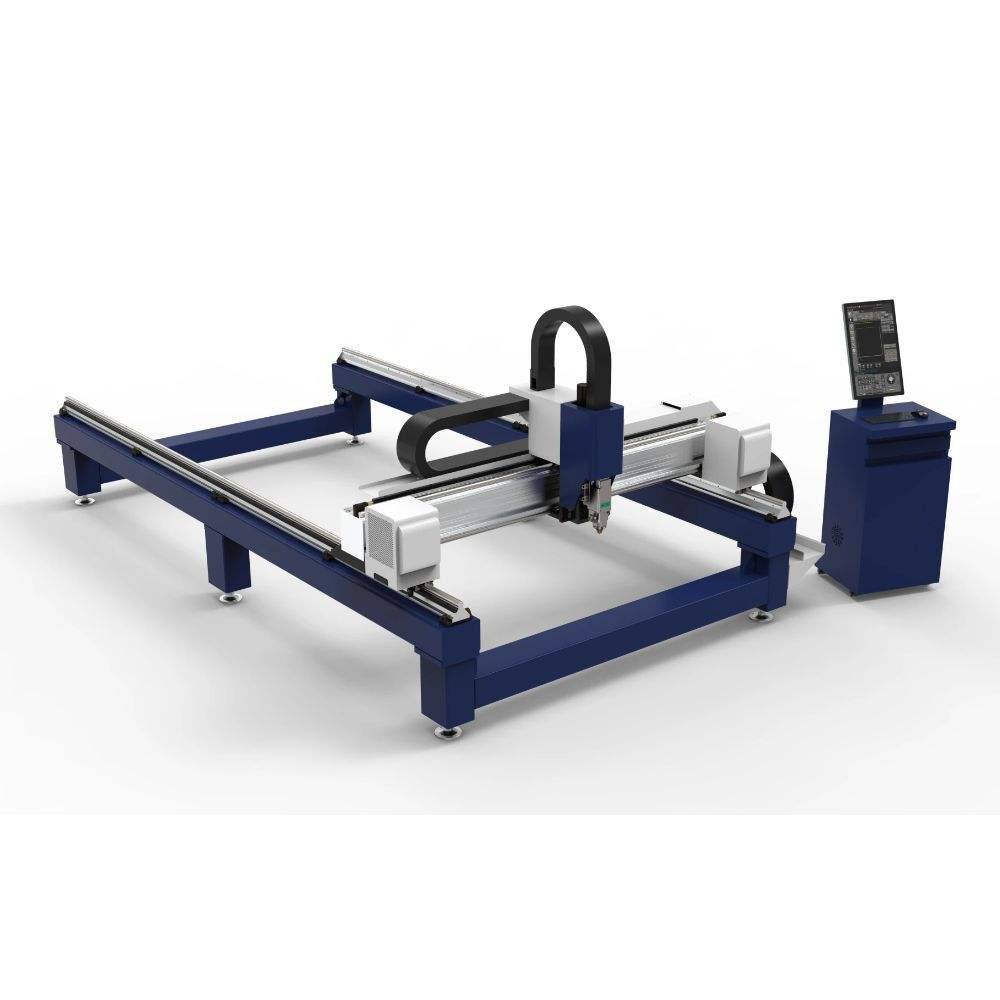
Operational Excellence in Toluca’s Manufacturing Environment
Operating a 3kW precision laser in Toluca requires consideration of the local environment. Toluca sits at an altitude of approximately 2,660 meters above sea level. While fiber lasers are solid-state and less affected by atmospheric pressure than CO2 lasers, the cooling systems and gas delivery must be robust enough to handle the thinner air and fluctuating temperatures of the region.
Environmental Considerations and Cooling
The 3kW laser source and the cutting head generate significant heat during continuous operation. High-efficiency industrial chillers are mandatory. In Toluca, where daytime and nighttime temperatures can vary drastically, dual-circuit chillers are used to maintain the laser source and the optics at separate, precise temperatures. This prevents condensation on the lenses, which is a common cause of beam distortion and premature component failure in high-altitude industrial settings.
Integration with Industry 4.0
Many shops in the Toluca-Lerma area are moving toward Industry 4.0. Modern 3kW laser cutting systems are often equipped with sensors that monitor beam quality, gas pressure, and protective window cleanliness in real-time. This data can be integrated into a factory’s MES (Manufacturing Execution System), allowing for predictive maintenance. For a Tier 1 automotive supplier in Toluca, this means reducing unplanned downtime and ensuring that every aluminum bracket or panel meets the required specifications.
Maintenance Protocols for High-Precision Systems
To maintain the precision of a 3kW system, a rigorous maintenance schedule is required. Aluminum laser cutting produces a fine, conductive dust that can be hazardous if not managed correctly.
Safety Standards and Dust Management
Aluminum dust is highly flammable and, in certain concentrations, explosive. Precision laser systems must be paired with high-volume dust extraction units equipped with “spark arrestors” and HEPA filtration. In Toluca, environmental regulations (under SEMARNAT and local state laws) require strict adherence to air quality standards. Operators must also be trained in the use of Class 4 laser safety protocols, including the use of specialized eyewear and ensuring the machine’s interlock systems are never bypassed.
Optical Integrity
The protective window (cover glass) is the most frequently replaced consumable in a 3kW system. When cutting aluminum, small “spatter” particles can adhere to the glass. If not cleaned or replaced, these particles will absorb laser energy, heat up, and eventually crack the glass or damage the focus lens. Regular inspection of the optics—performed in a clean-room environment—is essential for maintaining the “precision” aspect of the 3kW system.
Economic Impact and ROI for Toluca-Based Shops
The investment in a 3kW precision laser system is significant, but the Return on Investment (ROI) for a Toluca-based fabrication shop is often realized within 18 to 24 months. The speed of laser cutting aluminum with a fiber source is up to three times faster than traditional plasma or mechanical shearing for thicknesses under 6mm. Furthermore, the reduction in scrap material—thanks to nesting software that optimizes sheet usage—directly improves the bottom line.
As the “Nearshoring” trend continues to bring more manufacturing from Asia to Mexico, facilities in Toluca that possess 3kW laser capabilities are positioned to capture high-value contracts. The ability to prototype rapidly and move into full-scale production of aluminum components gives local companies a competitive edge in the global supply chain.
Conclusion
The 3kW precision laser system is more than just a cutting tool; it is a catalyst for industrial growth in Toluca. By mastering the nuances of aluminum alloy processing—from managing reflectivity to optimizing nitrogen assist gas—manufacturers in the State of Mexico can achieve world-class production standards. As fiber laser technology continues to advance, the integration of these systems will remain vital for the continued success of Toluca’s automotive and aerospace sectors, ensuring that “Made in Mexico” remains synonymous with precision and quality.













