Mastering the 3kW Precision Laser System for Aluminum Alloy Fabrication in Puebla
The industrial landscape of Puebla, Mexico, has undergone a radical transformation over the last decade. As a primary hub for the automotive and aerospace sectors, the demand for high-precision components has skyrocketed. Central to this evolution is the 3kW precision laser system, a tool that has become indispensable for processing aluminum alloys. This guide explores the technical intricacies, operational strategies, and regional advantages of deploying 3kW fiber laser technology within the Puebla manufacturing corridor.
The Rise of Fiber Laser Technology in Central Mexico
For years, CO2 lasers were the standard for industrial cutting. However, the advent of fiber laser technology changed the calculus for fabricators in Puebla. A 3kW fiber laser offers a wavelength of approximately 1.06 microns, which is absorbed much more efficiently by non-ferrous metals like aluminum compared to the 10.6 microns of a CO2 laser. This efficiency translates directly into faster processing speeds, lower operational costs, and the ability to handle complex geometries that were previously difficult to execute.
In the context of Puebla’s “Automotive Valley,” where Tier 1 and Tier 2 suppliers provide components to giants like Volkswagen and Audi, the 3kW system represents the “sweet spot” of power. It provides sufficient energy density to pierce thick aluminum plates while maintaining the finesse required for thin-gauge decorative or structural shrouds.
 laser cutting Machine” style=”width: 100%; max-width: 800px; height: auto; margin: 20px 0;”>
Understanding Aluminum Alloy Challenges in Laser Cutting
Aluminum is notoriously difficult to process via laser cutting due to two primary physical properties: high thermal conductivity and high reflectivity. Aluminum acts like a mirror to infrared light, which can cause “back-reflection.” If not managed correctly, this reflected energy can travel back through the delivery fiber and damage the laser source.
Modern 3kW systems utilized in Puebla are equipped with advanced back-reflection isolation units. Furthermore, the 3kW power level allows for a “keyhole” welding effect during the initial pierce, where the laser energy creates a small cavity that traps the beam, drastically reducing reflectivity almost instantaneously. For alloys such as the 5000 series (marine grade) and 6000 series (architectural/structural), the 3kW system delivers a clean, burr-free edge that often requires no secondary finishing.
Technical Specifications and Material Thickness
When engineering a workflow for a 3kW system, understanding the thickness-to-speed ratio is critical. In the Puebla industrial zones, most aluminum fabrication falls within the 1mm to 10mm range. A 3kW precision system typically achieves the following:
- 1mm – 3mm Aluminum: Extremely high-speed nitrogen cutting, producing an oxide-free edge suitable for immediate welding or painting.
- 4mm – 6mm Aluminum: High-precision cutting with excellent verticality. This is the standard for automotive brackets and heat shields.
- 8mm – 12mm Aluminum: The upper limit for a 3kW source. While cutting is possible, the speed decreases, and the heat-affected zone (HAZ) becomes a more significant factor.
Optimizing Gas Dynamics for Puebla’s Altitude
One often overlooked factor in laser cutting is the geographic location of the facility. Puebla sits at an elevation of approximately 2,135 meters (7,000 feet) above sea level. The lower atmospheric pressure and oxygen density can affect the cooling and assist gas dynamics. Engineers must calibrate their nitrogen or oxygen pressure settings to compensate for these environmental variables.
For aluminum alloys, Nitrogen is the preferred assist gas. It acts as a mechanical force to blow the molten aluminum out of the kerf without allowing it to oxidize. In the high-altitude environment of Puebla, ensuring a high-purity nitrogen supply (99.999%) and maintaining a stable pressure of 15-20 bars is essential for achieving that “silver” edge finish that aerospace clients demand.
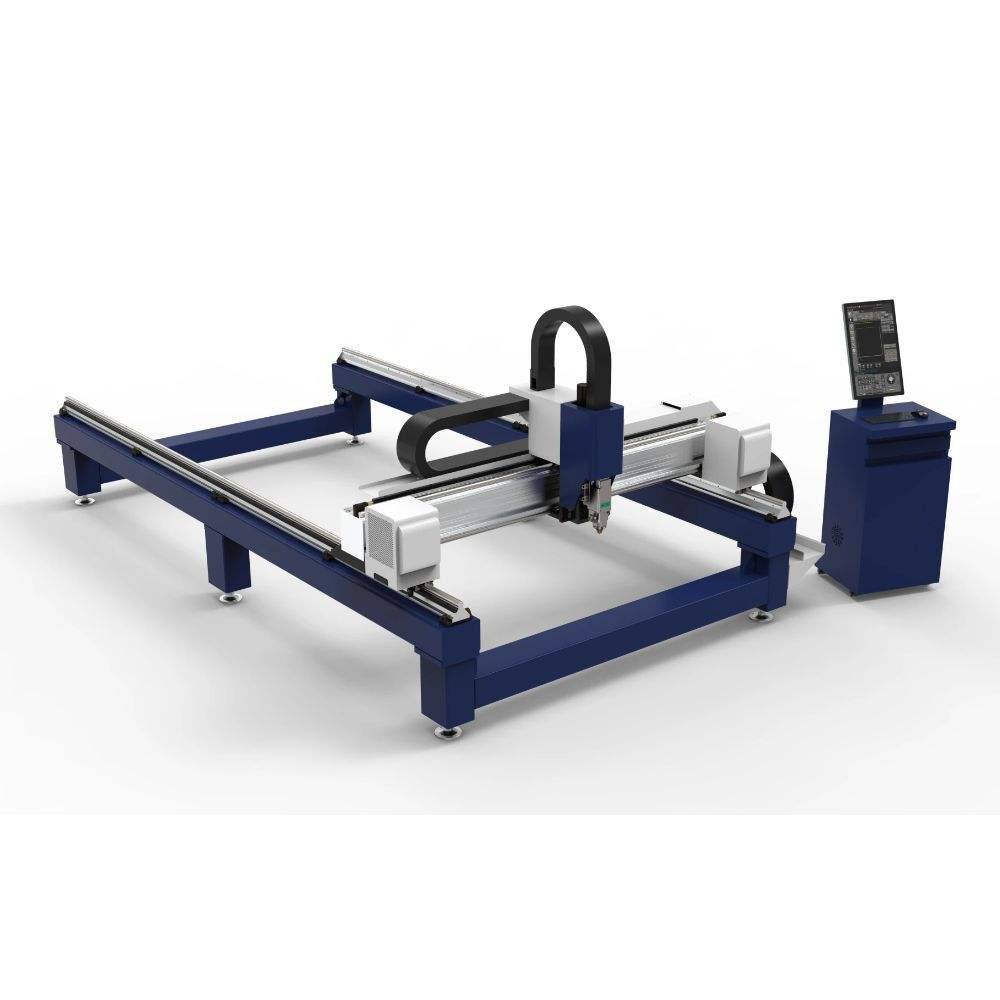
The Importance of Precision Motion Control
A 3kW laser source is only as good as the gantry and CNC system that moves it. In precision laser cutting, the goal is to maintain a constant focal point relative to the material surface. Aluminum alloys often have slight internal stresses that cause them to “pop” or bow during the cutting process.
High-end systems used in Puebla incorporate capacitive height sensing. The cutting head maintains a distance of 0.5mm to 1.0mm from the plate at all times, reacting in milliseconds to any surface fluctuations. This precision prevents nozzle collisions and ensures that the laser’s focal point remains buried at the optimal depth within the material, which is usually near the bottom of the plate for thicker aluminum sections.
Integrating Industry 4.0 in the Puebla Corridor
The manufacturing plants in San José Chiapa and Cuautlancingo are increasingly moving toward Industry 4.0. Modern 3kW laser systems are no longer standalone units; they are nodes in a larger data network. By utilizing IoT-enabled CNC controllers, Puebla-based fabricators can monitor power consumption, gas usage, and cutting time in real-time.
Predictive maintenance is particularly vital for aluminum processing. Because aluminum dust is highly flammable and conductive, the extraction systems and filtration units must be monitored constantly. A 3kW system integrated with smart sensors can alert operators when the protective window (cover glass) is contaminated or when the dust collector needs cleaning, preventing costly downtime and potential fire hazards.
Nozzle Selection and Focal Length Strategies
To achieve precision in laser cutting aluminum, the choice of nozzle is paramount. For a 3kW system, a double-layer nozzle is often used when oxygen is the assist gas, but for the high-pressure nitrogen cutting common in aluminum fabrication, a single-layer large-diameter nozzle (2.0mm to 3.0mm) is standard. This allows for a higher volume of gas to evacuate the viscous molten aluminum.
Focal length also plays a role. A shorter focal length (e.g., 125mm) creates a smaller spot size with higher energy density, ideal for thin sheets. A longer focal length (e.g., 200mm) provides a deeper “depth of field,” which is necessary for maintaining a straight cut through 8mm or 10mm aluminum plates. Engineers in Puebla often keep multiple cutting heads or quick-change lens cartridges to switch between these modes rapidly.
Economic Impact and ROI for Local Fabricators
Investing in a 3kW precision laser system in Puebla offers a compelling Return on Investment (ROI). Compared to traditional waterjet cutting or plasma cutting, the fiber laser offers significantly higher throughput and lower per-part costs. While the initial capital expenditure is higher, the elimination of secondary grinding and the reduction in scrap material (due to a narrower kerf) make the 3kW laser the most cost-effective solution for aluminum.
Furthermore, the local availability of technical support and spare parts in the Puebla-Mexico City axis has matured. Companies no longer need to wait weeks for international shipping of lenses or nozzles, ensuring that the high-uptime requirements of the automotive supply chain are met.
Conclusion: The Future of Aluminum Fabrication
The 3kW precision laser system has redefined what is possible for aluminum alloy fabrication in Puebla. By combining high energy density with advanced motion control and localized environmental calibrations, fabricators can produce components that meet the most stringent global standards. As the automotive industry continues its shift toward electric vehicles (EVs), the demand for lightweight aluminum structures will only grow. The 3kW laser cutting system stands at the forefront of this transition, providing the speed, accuracy, and reliability required to power the next generation of Mexican manufacturing.
Best Practices Summary for 3kW Aluminum Cutting
- Monitor Cover Glass: Aluminum “spatter” can quickly degrade the protective lens. Inspect every 4 hours of operation.
- Optimize Piercing: Use multi-stage piercing with lower frequency and higher duty cycles to prevent “blowouts” in thick aluminum.
- Safety First: Ensure the machine is fully enclosed (Class 1) to protect operators from the 1.06-micron beam, which is invisible and highly dangerous to eyesight.
- Gas Quality: Never compromise on nitrogen purity; even a 0.1% oxygen contamination will cause yellowing on the cut edge of the aluminum.













