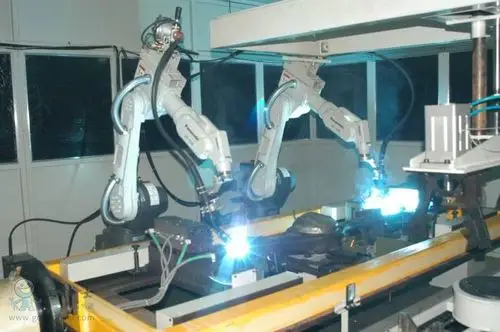
The Dawn of the 30kW Era in Istanbul’s Industrial Landscape
As a crossroads of global trade and a centerpiece of the Mediterranean’s manufacturing prowess, Istanbul has long been a leader in steel fabrication. However, the recent introduction of the 30kW Fiber Laser Universal Profile system has fundamentally altered the competitive landscape. For decades, the structural steel industry relied on traditional methods: mechanical sawing, plasma cutting, and manual drilling. While functional, these methods lacked the speed and micron-level precision required for the burgeoning modular construction market.
The 30kW fiber laser is not merely an incremental upgrade; it is a transformative force. At this power level, the laser source generates a beam with enough energy density to vaporize thick structural steel almost instantaneously. In the context of Istanbul’s industrial zones—stretching from Tuzla to Ikitelli—this technology is being leveraged to meet the high-volume demands of rapid urbanization and the urgent need for modular, earthquake-resilient housing.
Technical Superiority of 30kW Fiber Laser Sources
From a technical perspective, the jump to 30kW allows for the processing of carbon steel and stainless steel at thicknesses previously reserved for slow, messy plasma systems. A 30kW source can comfortably cut 30mm to 50mm structural plates with a clean, dross-free edge. More importantly, it maintains incredible speed on mid-range thicknesses (10mm-20mm), which are the bread and butter of modular frames.
The beam quality of a 30kW system is maintained through advanced optical delivery systems that compensate for thermal lensing. For modular construction, where parts must fit together with the precision of a Swiss watch, the “Heat Affected Zone” (HAZ) is a critical factor. The high speed of the 30kW laser means the heat is concentrated in a very narrow corridor, preserving the metallurgical integrity of the surrounding steel—a vital requirement for seismic-rated structures in Turkey’s active tectonic zones.
Universal Profile Processing: Beyond the Flat Plate
The “Universal Profile” designation refers to the system’s ability to handle more than just flat sheets. In modular construction, the skeleton of a building is composed of H-beams, I-beams, C-channels, and L-angles. Traditional laser cutters are limited to 2D planes, but a Universal Profile Steel Laser System utilizes a multi-axis head and a rotary chuck system to perform complex 3D cuts.
Imagine a structural H-beam that requires complex interlocking notches, bolt holes, and beveled edges for welding. In the past, this would require three different machines and multiple manual setups. The 30kW Universal system performs all these operations in a single pass. The precision of the laser ensures that when these beams arrive at a modular assembly site in Istanbul or are shipped internationally, they “click” together without the need for on-site grinding or re-drilling. This “Lego-style” assembly is the holy grail of modern construction efficiency.
The Economics of Zero-Waste Nesting
In the current economic climate, where raw material costs fluctuate wildly, steel is a precious commodity. Zero-waste nesting is an algorithmic approach to part placement that minimizes the “skeleton” or scrap left over after a cut.
Traditional nesting often leaves 15-20% of material as waste. However, Istanbul’s latest fiber laser systems utilize AI-driven software that employs “Common Line Cutting.” This technique allows two parts to share a single cut line, effectively eliminating the space (and waste) between them. Furthermore, the software can nest smaller components—such as gussets or connection plates—into the empty spaces within larger profile cutouts.
When you are operating at 30kW, the kerf (the width of the cut) is extremely narrow. This allows for tighter nesting densities. For a large-scale modular project involving thousands of tons of steel, a 10% reduction in waste translates directly into millions of Lira in savings, not to mention the significant reduction in the carbon footprint associated with steel recycling.
Modular Construction and the Istanbul Resilience Requirement
Modular construction is gaining massive traction in Istanbul due to the city’s unique architectural and safety challenges. Modular units—pre-fabricated rooms or structural blocks—require absolute dimensional consistency. If a module is out of alignment by even 2mm, the entire stack of a ten-story building can become structurally unsound.
The 30kW fiber laser provides the “digital thread” that connects the architect’s CAD model directly to the physical component. The accuracy of ±0.03mm provided by these systems ensures that every modular frame is a perfect replica of the digital twin. This level of precision facilitates the use of advanced joining technologies, such as friction-bolt connections, which are superior in absorbing seismic energy compared to traditional rigid welding.
Furthermore, the speed of the 30kW system allows Istanbul-based manufacturers to meet the “just-in-time” delivery schedules required for urban infill projects. In a crowded city like Istanbul, there is no room to store massive amounts of inventory on-site. Modular components must arrive exactly when they are ready to be craned into place.
The Synergy of Automation and Human Expertise
While the hardware—the 30kW source and the universal gantry—is impressive, the true power lies in the integration. Istanbul’s leading fabrication shops are now combining these lasers with automated loading and unloading systems.
In a typical 24-hour cycle, the system can transition from cutting heavy H-beams for an industrial warehouse to precision-cutting thin-wall galvanized steel for residential modular pods. The versatility of the 30kW fiber laser means it is never idle. The expert operators in Turkey’s industrial heartlands are increasingly becoming “data managers” who oversee the flow of information from design to finished part, ensuring that the zero-waste algorithms are optimized for every unique batch of steel.
Environmental Impact and Sustainable Fabrication
Sustainability is no longer an optional “green” badge; it is a requirement for international construction tenders. The fiber laser is inherently more efficient than CO2 lasers or plasma cutters, consuming significantly less electricity per millimeter of cut.
By implementing zero-waste nesting in Istanbul, the industry is leading the way in “Circular Manufacturing.” The reduction in scrap means less energy is spent on melting down and re-rolling steel. Additionally, the precision of the laser-cut edges reduces the need for secondary cleaning processes that often involve harsh chemicals or excessive abrasive media, making the entire modular construction pipeline cleaner and more environmentally friendly.
Future Outlook: Istanbul as a Global Modular Hub
The investment in 30kW Universal Profile Steel Laser Systems is a clear signal of Istanbul’s intent to dominate the modular construction export market. With the ability to produce high-precision, low-waste structural components, Turkish firms are winning contracts from London to Dubai.
As we look toward the future, we can expect even higher power levels—40kW and 50kW systems are already on the horizon—but the current 30kW sweet spot provides the perfect balance of capital investment and operational capability. The “Zero-Waste” philosophy, pioneered here, will likely become the global standard for any fabrication shop serious about modularity and sustainability.
In conclusion, the 30kW Fiber Laser Universal Profile system is more than just a tool; it is the engine of a new industrial revolution in Istanbul. It marries the brute force of high-wattage photonics with the surgical precision of modern AI, creating a fabrication environment where waste is obsolete, and the speed of construction is limited only by the speed of the laser itself. For the modular construction industry, this is the foundation upon which the cities of tomorrow will be built.