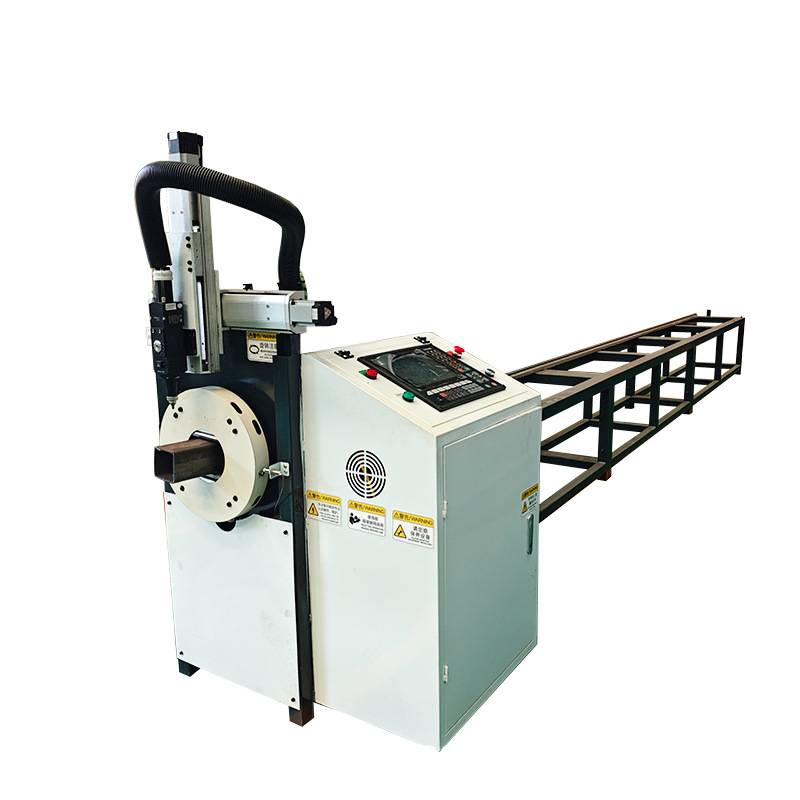
Field Evaluation: 30kW Fiber Laser Heavy-Duty I-Beam Profiler Deployment
1. Introduction and Operational Context
This report outlines the technical deployment and performance metrics of a 30kW Fiber Laser Heavy-Duty I-Beam Profiler, recently commissioned for a major modular construction facility in Pune, India. The integration of high-wattage fiber laser technology into structural steel processing represents a paradigm shift from traditional plasma or mechanical sawing and drilling. In the Pune industrial corridor, where modular construction—specifically for data centers, high-rise warehouses, and industrial mezzanines—is accelerating, the requirement for sub-millimeter precision in heavy-duty sections (I-beams, H-beams, and channels) has become critical.
The primary objective of this installation was to replace legacy multi-step fabrication lines with a single-pass automated solution capable of handling I-beams up to 12 meters in length while implementing “Zero-Waste Nesting” protocols to mitigate rising raw material costs.
2. The Physics of 30kW Photon Density in Structural Steel
The transition to a 30kW power source is not merely an upgrade in speed; it is an evolution in material interaction. At 30kW, the photon density at the focal point allows for the instantaneous sublimation of carbon steel webs and flanges up to 25mm thickness with a significantly reduced Heat-Affected Zone (HAZ).
In Pune’s specific manufacturing environment, ambient temperature and humidity fluctuations can affect beam stability. However, the 30kW source utilized here employs a localized chiller circuit and nitrogen-purged beam delivery paths to ensure the Beam Parameter Product (BPP) remains constant. For heavy-duty I-beams, the 30kW source permits “high-speed melt-shearing,” where the kerf width is minimized to 0.3mm–0.5mm, a feat impossible with 10kW or 12kW systems on similar thicknesses. This precision is vital for the modular construction sector, where interlocking joints and bolt-hole alignments must be perfect to avoid on-site rework.
3. Zero-Waste Nesting: Algorithmic Material Optimization
The “Zero-Waste Nesting” technology integrated into the profiler’s CNC suite addresses the historical inefficiency of structural steel processing. Traditional nesting often leaves “skeletons” or significant remnants at the end of a beam.
Technical Implementation:
The software utilizes a “Common Cut” logic specifically adapted for 3D structural profiles. When the laser processes a series of I-beams, the algorithm identifies shared geometries between the trailing edge of one part and the leading edge of the next. By utilizing the 30kW laser’s ability to maintain a consistent kerf over long distances, the system eliminates the “dead space” between parts.
In the context of Pune’s modular steel industry, where H-beams (ISMB/ISHB) are frequently used, Zero-Waste Nesting has demonstrated a material utilization increase of 12-15%. Furthermore, the system incorporates “Remnant Tracking,” where off-cuts as short as 300mm are cataloged in a digital library for smaller components like gusset plates or stiffeners, which are then nested into the next production run automatically.
4. Synergy: 30kW Source and Automatic Structural Processing
The synergy between a 30kW source and the automated mechanical bed is the core driver of throughput. Heavy-duty I-beams require massive clamping forces to prevent torsional vibration during high-speed laser movement.
Mechanical Architecture:
The profiler utilizes a four-chuck system—three rotating and one stationary—allowing for “zero-tailing” processing. As the I-beam moves through the cutting zone, the chucks pass the material seamlessly, ensuring that the laser can cut right to the physical end of the beam. When combined with the 30kW power source, the machine can execute complex bevel cuts (±45°) on 20mm flanges at speeds exceeding 1.5m/min.
For modular construction in Pune, this synergy allows for the integration of “Smart Markings”—laser-etched assembly instructions, part numbers, and weld-prep lines—engraved directly onto the beams during the cutting cycle. This eliminates the need for manual layout and reduces assembly errors in the field.
5. Application in Pune’s Modular Construction Sector
Pune has emerged as a hub for pre-engineered buildings (PEB) and modular steel structures. The 30kW I-Beam Profiler addresses specific regional challenges:
1. Structural Integrity for Seismic Zones: Pune falls into Seismic Zone III. The 30kW laser produces cleaner bolt holes without the micro-fractures associated with mechanical punching or the dross associated with plasma. This preserves the structural integrity of the beam’s flanges, which is critical for seismic-resistant modular joints.
2. Rapid Prototyping for Industrial Parks: The speed of the 30kW source allows fabricators to move from CAD to a finished, ready-to-weld beam in minutes. This agility is essential for the rapid expansion of the Chakan and Talegaon industrial belts.
3. Tolerance Management: Modular construction relies on the “plug-and-play” fitment of steel members. The profiler maintains a dimensional tolerance of ±0.05mm over a 12-meter span, ensuring that modular units fabricated in Pune can be shipped and bolted together at remote sites without on-site grinding or drilling.
6. Thermal Management and Gas Dynamics
A critical observation during the field deployment was the management of the “Thermal Column” generated by 30kW of energy. In heavy I-beam processing, the thickness of the flange (often 15mm-25mm) requires significant gas pressure to clear the molten pool.
The system utilizes an Intelligent Gas Control (IGC) valve that modulates between Oxygen (for thick carbon steel) and High-Pressure Air (for thinner sections to increase speed). During the I-beam flange-to-web transition, the CNC dynamically adjusts the laser power and gas pressure to account for the change in material density at the fillet. This prevents “over-burning” at the junctions, a common failure point in lower-wattage systems.
7. Productivity Metrics and Comparative Analysis
Prior to the 30kW deployment, the facility in Pune utilized a 6kW plasma system followed by a secondary CNC drilling station. The following improvements were recorded over a 30-day observation period:
* Process Consolidation: Three separate operations (sawing, drilling, and marking) were consolidated into one laser cycle.
* Cycle Time: A standard 600mm I-beam with 12 bolt holes and a double-bevel cut was completed in 4.2 minutes, compared to the previous 18-minute multi-station process.
* Labor Reduction: The requirement for manual layout and deburring was reduced by 85%.
* Edge Quality: The surface roughness (Ra) of the cut edge was measured at <12.5 μm, meeting the requirements for Grade 1 weld preparations without secondary grinding.
8. Challenges and Engineering Solutions
The primary challenge identified in the Pune deployment was the power stability of the local grid. To protect the 30kW resonator, a dedicated high-speed voltage stabilizer and UPS buffer were installed to prevent “clipping” during the high-draw piercing phase.
Additionally, the weight of the heavy-duty I-beams (up to 200kg/meter) required a reinforced foundation for the loading and unloading zones to prevent floor settling, which would otherwise misalign the laser’s focal plane relative to the beam’s Z-axis.
9. Conclusion
The deployment of the 30kW Fiber Laser Heavy-Duty I-Beam Profiler with Zero-Waste Nesting represents the pinnacle of current structural steel fabrication technology. For the Pune modular construction market, the benefits of increased material yield, extreme precision, and the elimination of secondary processes provide a significant competitive advantage.
The data confirms that high-wattage fiber lasers are no longer limited to thin sheet metal; they are now the primary tool for heavy structural engineering, capable of handling the most demanding I-beam profiles with unprecedented efficiency. Future iterations will likely focus on further AI integration for predictive nesting based on real-time inventory, but the hardware foundation—the 30kW source and the 4-chuck mechanical bed—is now firmly established as the industry standard for high-output modular construction.













