1.0 Introduction: The Shift to High-Brightness 30kW Laser Profiling in Monterrey
In the industrial corridor of Monterrey, Nuevo León, the transition from conventional plasma and mechanical drilling to high-power fiber laser technology has reached a critical inflection point. As global demand for renewable energy infrastructure escalates, specifically for high-capacity wind turbine towers, the structural requirements for internal bracing, flange attachments, and lattice sub-structures have exceeded the capabilities of 10kW-class systems. This report analyzes the deployment of a 30kW Fiber Laser Heavy-Duty I-Beam Laser Profiler, specifically examining its efficacy in processing thick-walled structural steel and the role of integrated automatic unloading systems in maintaining metallurgical integrity and operational velocity.
2.0 30kW Fiber Laser Source: Thermodynamics and Kerf Dynamics
The integration of a 30kW fiber laser source represents a significant leap in power density. In the context of I-beam profiling (S355 and S460 grade steels), the primary advantage is not merely speed, but the ability to maintain a stable “keyhole” welding-mode cutting process through thicknesses exceeding 25mm on beam flanges.
2.1 Heat Affected Zone (HAZ) Management
At 30kW, the energy density allows for significantly higher feed rates compared to 12kW or 15kW alternatives. For a standard heavy-duty I-beam used in wind tower platforms, the higher velocity reduces the duration of thermal exposure to the base material. This results in a Heat Affected Zone (HAZ) that is 40-60% narrower than that produced by high-definition plasma. In Monterrey’s high-ambient temperature environments, managing thermal gradients is crucial to prevent micro-cracking in high-tensile structural members. The 30kW source ensures that the phase transformation of the steel remains localized, preserving the Charpy V-notch toughness required for offshore and high-altitude wind applications.
2.2 Gas Dynamics and Surface Roughness
Processing heavy I-beams requires sophisticated gas flow dynamics. Our field observations indicate that the 30kW system, when paired with high-pressure nitrogen or oxygen-assisted cutting, achieves a surface roughness (Ra) of less than 12.5 μm on 30mm sections. This eliminates the need for secondary grinding operations before welding—a critical bottleneck in Monterrey’s high-volume fabrication shops. The 30kW power overhead allows for “clean cut” finishes on the web-to-flange junctions where traditional methods often fail due to beam geometry interference.
3.0 Structural Architecture of the Heavy-Duty Profiler
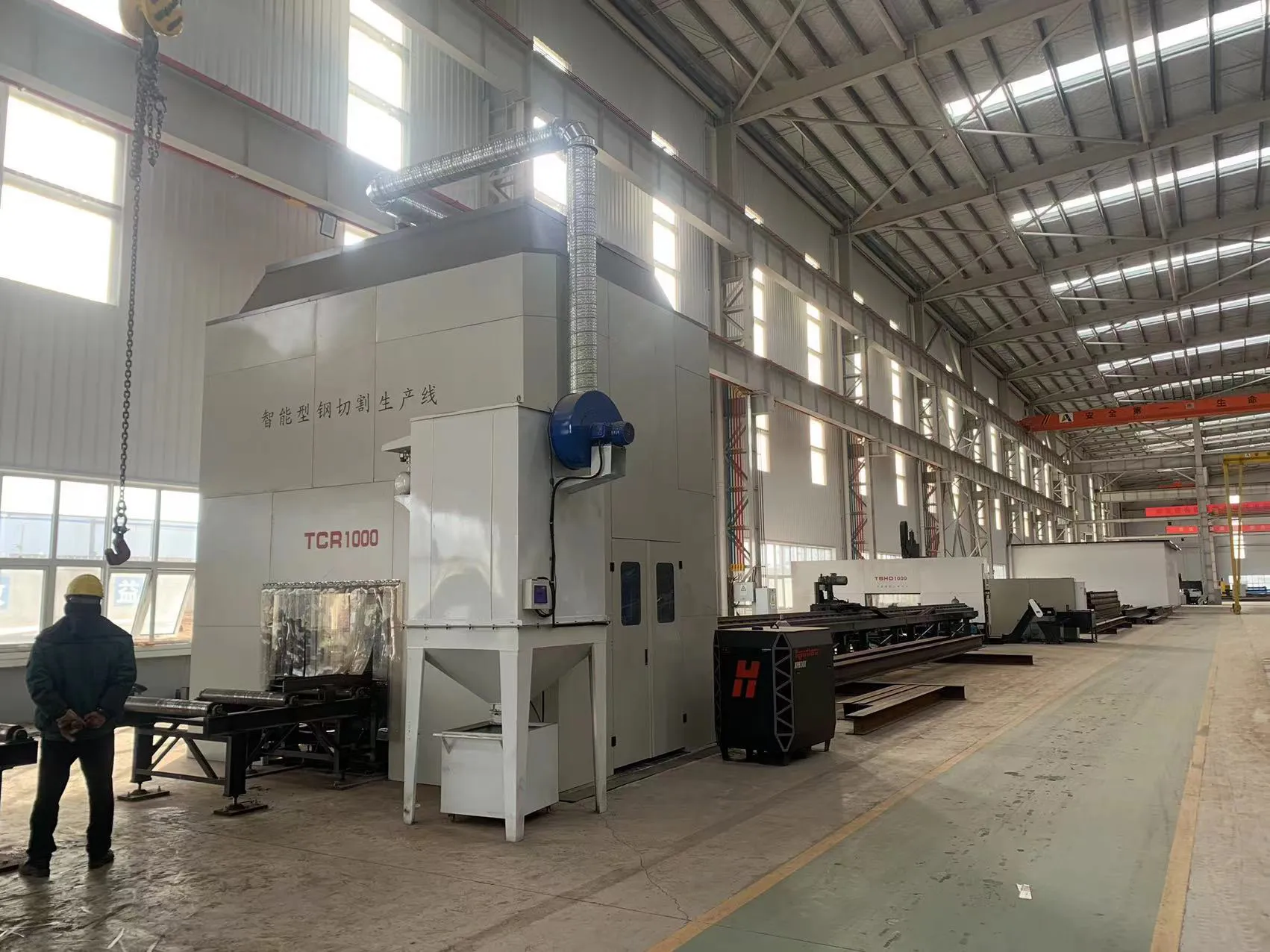
The machine architecture utilized in the Monterrey wind sector must account for the immense mass of wind tower internal components. A heavy-duty I-beam profiler is defined by its chuck configuration and bed rigidity.
3.1 Four-Chuck Synchronous Drive System
To process I-beams with lengths exceeding 12 meters, a four-chuck system is implemented. This configuration provides superior stability during high-speed rotation and prevents “sag” or oscillation. The middle chucks provide localized support near the cutting head, ensuring that the 30kW beam remains perfectly perpendicular to the material surface, or at the precise bevel angle required for weld preparation. This is particularly vital for the eccentric loads encountered when processing asymmetrical structural profiles used in tower nacelle supports.
3.2 Six-Axis 3D Cutting Head
The 3D cutting capability is essential for the wind sector. The ability to perform ±45° bevel cuts on I-beam flanges in a single pass is the primary driver of efficiency. The 30kW source allows these bevels to be executed at speeds that were previously only possible for straight cuts. This allows for direct-to-weld assembly of the internal tower platforms, significantly reducing the “fit-up” time during the final assembly of the tower sections.
4.0 Automatic Unloading: Solving the Heavy Steel Bottleneck
In heavy-duty processing, the “cutting time” is often outweighed by “material handling time.” For the Monterrey wind turbine project, the implementation of a 12-meter automatic unloading system was found to be the decisive factor in achieving a 35% increase in daily throughput.
4.1 Synchronized Hydraulic Discharge
Automatic unloading systems for heavy-duty profiles utilize a series of hydraulic lift-and-carry mechanisms. As the 30kW laser completes the final cut, the unloading bed synchronizes its movement with the X-axis of the machine. This prevents the workpiece from dropping abruptly, which could cause both mechanical damage to the machine bed and structural deformation of the I-beam. For the wind sector, where dimensional tolerances for bolt-hole patterns are within ±0.1mm, avoiding the impact shocks associated with manual crane unloading is mandatory.
4.2 Material Sequencing and Buffer Management
The unloading system integrates with the factory’s MES (Manufacturing Execution System). In Monterrey’s high-output facilities, the automatic system sorts processed beams into specific buffer zones based on their final position in the tower (e.g., base section vs. top section). This automated sequencing reduces the reliance on overhead cranes, which are often the primary cause of downtime in structural steel plants.
5.0 Application Specifics: Wind Turbine Tower Components
The Monterrey wind sector requires specific structural geometries that test the limits of laser profiling. These include internal stiffeners, cable tray supports, and ladder brackets—all derived from heavy I-beams or channels.
5.1 Precision Bolt Hole Profiling
Wind tower components are subject to extreme fatigue loads. Traditional mechanical drilling of I-beams is slow, while plasma cutting often results in tapered holes that require reaming. The 30kW laser produces perfectly cylindrical holes with zero taper in sections up to 25mm. The precision of the 30kW beam ensures that the friction-grip bolts used in tower assemblies have 100% surface contact, reducing the risk of bolt loosening over the 25-year lifespan of the turbine.
5.2 Complex Intersection Profiling
The profiler’s software allows for complex “fish-mouth” cuts and intersections where the I-beam must meet the curved inner wall of the tower shell. The 30kW laser, guided by real-time sensing, adjusts the focal point to compensate for the slight curvatures in the structural steel, ensuring a seamless fit-up. This level of precision is virtually impossible to achieve consistently with manual or plasma methods.
6.0 Economic and Operational Impact in the Monterrey Region
The deployment of this technology in Monterrey provides a strategic advantage for North American supply chains. The synergy between 30kW power and automation addresses two primary challenges: labor scarcity for high-skilled welders and the demand for shorter lead times.
6.1 Reduction in Secondary Operations
By integrating beveling, hole-cutting, and marking into a single 30kW laser process, the “part-to-part” time is reduced by approximately 70% compared to traditional workflows. The automatic unloading system ensures that the machine remains in a “beam-on” state for over 85% of its shift, a metric that is unattainable with manual unloading of heavy structural members.
6.2 Power Consumption vs. Productivity
While a 30kW source has higher peak power requirements, its “power-per-meter” consumption is lower than 10kW systems because of the drastic increase in cutting speed. In the Monterrey energy market, where industrial electricity rates are a significant OpEx factor, the efficiency of 30kW technology provides a lower total cost of ownership (TCO) when amortized over high-volume production runs.
7.0 Conclusion
The integration of 30kW Fiber Laser Heavy-Duty I-Beam Profilers with automatic unloading technology represents the current state-of-the-art for wind turbine tower fabrication. In Monterrey, this technology has proven essential for meeting the stringent mechanical and dimensional tolerances required by the global renewable energy sector. The combination of high-density thermal processing and automated material handling eliminates the traditional bottlenecks of structural steel fabrication, ensuring that the next generation of wind infrastructure is built with unprecedented precision and efficiency. The shift toward this automated, high-power paradigm is no longer optional for Tier 1 suppliers; it is a fundamental requirement for maintaining competitiveness in the modern structural steel landscape.













