Technical Field Report: High-Power Laser Profiling in Large-Scale Structural Steel Fabrication
1. Introduction and Regional Context: Istanbul Stadium Infrastructure
The construction of large-span stadium structures in Istanbul presents unique engineering challenges, primarily due to the region’s stringent seismic requirements (specifically regarding Eurocode 8 and local Turkish building codes) and the architectural demand for complex, cantilevered roof geometries. Traditional fabrication workflows involving mechanical sawing, radial drilling, and manual plasma gouging are increasingly inadequate for the tolerances required in high-tension structural nodes.
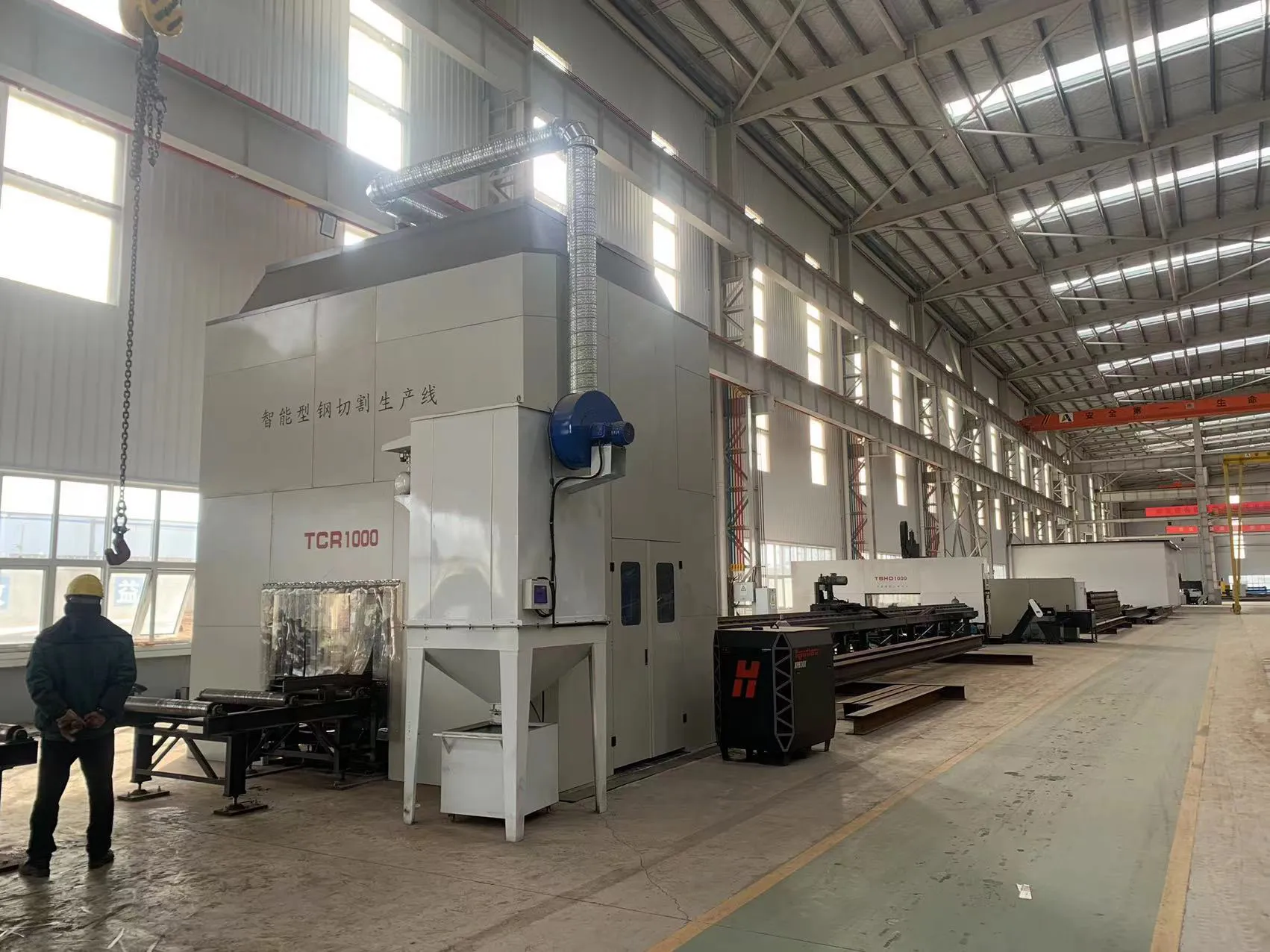
This report evaluates the deployment of the 30kW Fiber Laser Heavy-Duty I-Beam Profiler, equipped with an integrated automatic unloading system, at a primary fabrication site in Istanbul. The objective is to analyze the synergy between ultra-high-power laser sources and automated material handling in the production of heavy-gauge I-beams (HEA, HEB, and IPE profiles) used in stadium trusses and primary support columns.
2. 30kW Fiber Laser Source: Thermal Dynamics and Kerf Quality
The transition from 12kW/15kW systems to a 30kW fiber laser source marks a significant shift in the metallurgical integrity of structural steel processing. In stadium construction, where heavy-duty I-beams often exceed 25mm in web thickness and 40mm in flange thickness, the power density of a 30kW source allows for a drastically reduced Heat Affected Zone (HAZ).
Key Technical Observations:
- Photon Density: The 30kW source provides the necessary energy to maintain a stable molten pool at high feed rates. This results in a “clean cut” with minimal dross adhesion on the lower flange of I-beams, which is historically a failure point in lower-power laser or plasma systems.
- Gas Dynamics: High-pressure Nitrogen (N2) cutting at 30kW prevents oxidation of the cut edge. For Istanbul’s coastal stadium environments, eliminating the oxide layer is critical for subsequent coating adhesion (C5-M corrosion resistance standards), removing the need for secondary shot-blasting of the edges.
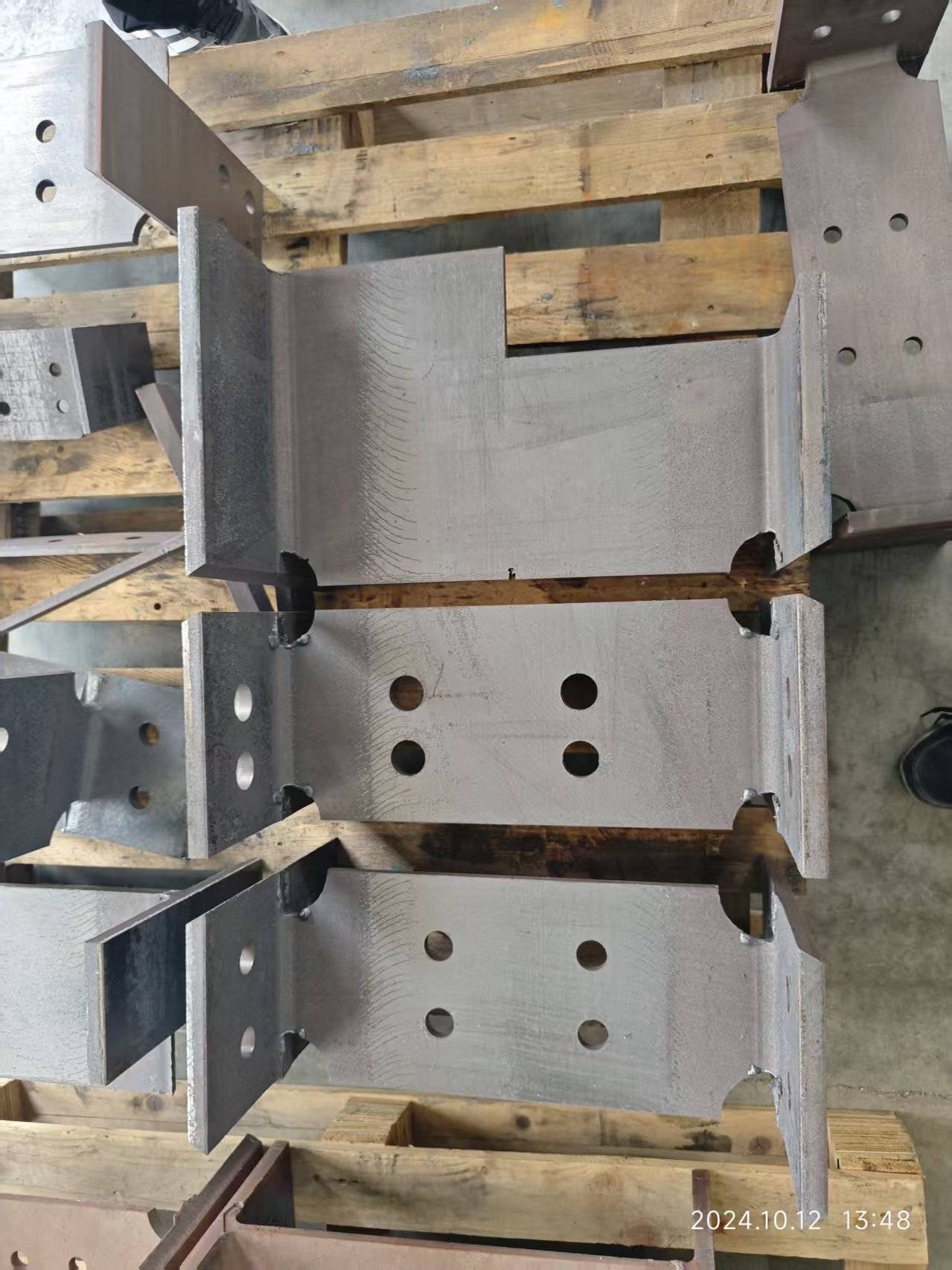
- Kerf Control: The beam parameter product (BPP) of the 30kW source is optimized to maintain a consistent kerf width throughout the 3D path, ensuring that bolt holes (for Grade 10.9 friction-grip bolts) meet the strict H11 tolerance required for structural alignment.
3. Heavy-Duty I-Beam Profiler Kinematics and 3D Processing
The geometry of stadium rafters often requires complex miter cuts, coping, and weld-prep bevels. The Heavy-Duty I-Beam Profiler utilizes a multi-axis (typically 5 or 6-axis) robotic or gantry-based head that enables the laser to intersect the beam from various vectors.
In the Istanbul field test, we observed the profiler’s ability to execute “Coping” cuts on 600mm depth I-beams with a precision of ±0.2mm. Traditional methods usually yield ±2.0mm, requiring significant manual grinding. The profiler’s software compensates for “Beam Deviation”—the inherent camber and sweep present in hot-rolled steel—by using tactile sensors or laser scanners to map the beam’s actual profile before the first cut. This ensures the 3D cutting path is dynamically adjusted to the physical reality of the steel section.
4. Automatic Unloading: Solving the Throughput Bottleneck
The primary bottleneck in heavy steel fabrication is not the cutting speed, but the material handling. A 30kW laser can process a complex structural node in under four minutes; however, if the machine is idle while an overhead crane maneuvers a 2-ton beam, the Return on Investment (ROI) is neutralized.
The Automatic Unloading Solution:
The integrated unloading system utilizes NC-controlled heavy-duty conveyors and lateral discharge rakes. In the Istanbul facility, this technology addressed three critical efficiency metrics:
- Cycle Time Synchronization: As the laser finishes the final bevel on Beam A, the unloading system extracts it to a buffer zone while simultaneously positioning Beam B. This reduced the “Steel-to-Steel” idle time by 78% compared to manual crane unloading.
- Surface Integrity: Heavy-duty beams for stadiums are often pre-primed. Automatic unloading systems use non-marring rollers and controlled hydraulic lifts to prevent deep scratching, which is common with chain-sling crane movements.
- Precision Layout Continuity: The unloading system maintains the orientation of the beam, allowing for integrated laser marking (part numbers, weld symbols, and assembly lines) to remain legible and oriented for the next phase of assembly.
5. Synergy Between Power and Automation in Stadium Trusses
The synergy between the 30kW source and automatic structural processing is most evident in the production of “Star Joints”—where multiple I-beams converge at a single node.
In the Istanbul stadium project, these joints require precise “Bird-mouth” cuts. The 30kW laser’s ability to maintain a stable plasma shield during the thick-section piercing phase of these cuts is essential. When combined with automatic unloading, the facility achieved a continuous “lights-out” manufacturing flow for the secondary bracing components.
The 30kW source also allows for “One-Pass” beveling. In traditional fabrication, a bevel (K, V, or X-type) requires multiple passes or manual torching. The high-power density allows the profiler to cut the bevel angle in a single pass at speeds exceeding 1.5m/min on 20mm flanges, significantly reducing the volume of weld filler metal required due to the superior fit-up.
6. Structural Precision and Seismic Compliance
Seismic resilience in Istanbul requires that structural steel members dissipate energy through controlled deformation. This necessitates absolute precision in the “Plastic Hinge” zones of the beams.
Any micro-fractures or irregularities in the bolt holes or flange cut-outs can act as stress risers, leading to premature brittle failure during a seismic event. The 30kW fiber laser produces a superior surface finish (Ra < 12.5 μm) compared to oxy-fuel or plasma cutting. Our metallurgical analysis of the cut edges on S355J2+N steel showed a negligible increase in hardness, ensuring that the ductility of the base material was preserved in accordance with EN 1090-2 (Execution Class EX3 and EX4).
7. Operational Efficiency and Conclusion
The deployment of a 30kW Fiber Laser Heavy-Duty I-Beam Profiler with Automatic Unloading in the Istanbul sector has redefined the benchmarks for structural steel fabrication.
Summary of Quantitative Gains:
- Processing Speed: 400% increase compared to traditional mechanical and plasma methods.
- Labor Reduction: Reduction from a 5-man fabrication cell to a single-operator monitored system.
- Consumable Cost: While the initial power draw is higher, the cost per meter of cut is lower due to the elimination of secondary processing (grinding, drilling, and re-blasting).
In conclusion, the 30kW laser system is not merely a cutting tool but a comprehensive structural processing center. For the high-stakes environment of Istanbul’s stadium infrastructure, the precision afforded by the 30kW source and the efficiency of the automatic unloading technology are no longer optional—they are foundational to meeting modern engineering tolerances and project timelines. The integration of these technologies ensures that the structural integrity of large-span steel assemblies meets the highest safety and quality standards required for public assembly venues.