The Dawn of 12kW Fiber Laser Technology in Haiphong’s Industrial Sector
Haiphong has long been the industrial heartbeat of Northern Vietnam, serving as a gateway for logistics and heavy manufacturing. As the nation accelerates its National Power Development Plan (PDP8), the demand for robust, precision-engineered power towers has skyrocketed. Traditionally, these massive structures were fabricated using plasma cutting, drilling, and sawing—a multi-step process prone to human error and material waste.
The arrival of the 12kW CNC Beam and Channel Laser Cutter changes the equation. At 12,000 watts, the fiber laser provides enough power density to vaporize thick-walled structural steel almost instantaneously. For the fabrication of power towers, which often utilize high-tensile carbon steel, the 12kW source ensures that the heat-affected zone (HAZ) is kept to an absolute minimum. This preserves the metallurgical properties of the steel, ensuring that the towers can withstand the typhoons and environmental stresses common in the Gulf of Tonkin.
The Engineering Marvel of the Infinite Rotation 3D Head
Perhaps the most significant advancement in this system is the “Infinite Rotation” 3D cutting head. In traditional 3D laser systems, the cutting head is limited by internal cabling, requiring it to “unwind” after a certain degree of rotation. This leads to interrupted cuts and increased cycle times.
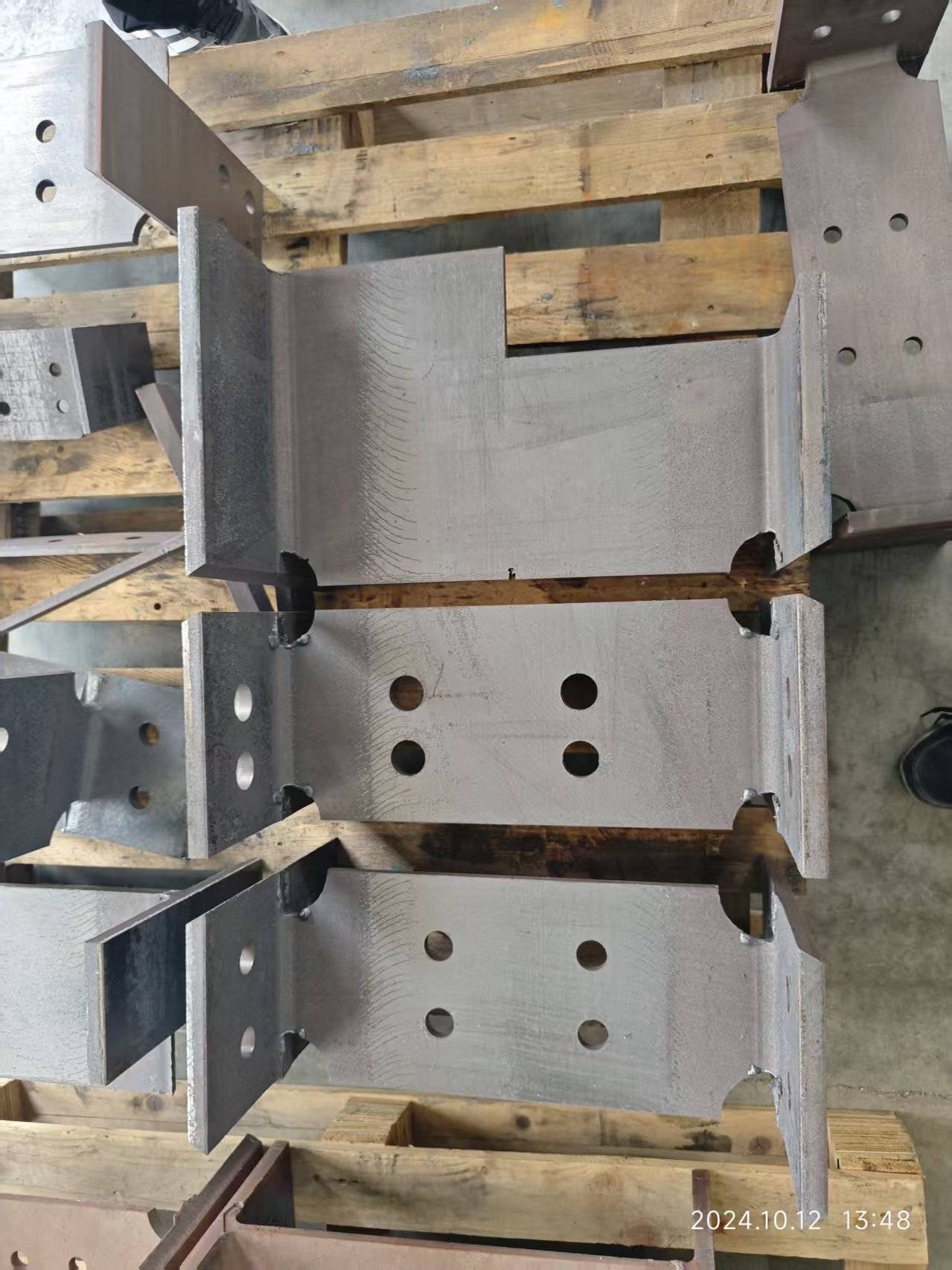
The Infinite Rotation head utilizes a specialized slip-ring or advanced fiber-delivery design that allows the C-axis to spin indefinitely. For power tower fabrication, where beams must be beveled, notched, and pierced on all four sides, this capability is revolutionary. The head can transition seamlessly from cutting a bolt hole on the flange of a channel to performing a complex miter cut on the web, all in one continuous motion. This 5-axis capability allows for “V”, “Y”, “K”, and “X” bevels, which are essential for high-quality weld preparations—eliminating the need for secondary grinding or manual edge prep.
Optimizing Beam and Channel Processing for Lattice Towers
Power towers, specifically lattice-type transmission structures, rely on a multitude of angles, channels, and H-beams. Accuracy in bolt-hole placement is non-negotiable; even a 1mm deviation across a 30-meter structure can lead to catastrophic assembly failures in the field.
The CNC integration in these 12kW systems uses sophisticated laser sensing and “touch-probe” technology. Since structural steel beams are rarely perfectly straight from the mill (often having slight twists or bows), the laser system performs a real-time scan of the profile. The software then compensates the cutting path to match the actual geometry of the workpiece. This ensures that every hole is perfectly centered and every notch fits its mating component with aerospace-level tolerances. In the context of Haiphong’s high-volume production lines, this means a “right-first-time” rate of nearly 100%, drastically reducing the scrap costs that plague traditional fabrication methods.
The 12kW Advantage: Speed, Thickness, and Productivity
While 3kW and 6kW lasers have been available for years, the 12kW threshold is a “sweet spot” for heavy structural work. At this power level, the laser can process 16mm to 25mm thick steel with high-pressure nitrogen or oxygen at speeds that make plasma cutting look stagnant.
For power tower components, which often range from 10mm to 20mm in thickness, the 12kW laser allows for “high-speed piercing.” Traditional piercing methods can take several seconds per hole; the 12kW source does it in a fraction of a second. When a single tower requires hundreds of bolt holes, the cumulative time savings allow Haiphong-based factories to double their daily output. Furthermore, the 12kW beam produces a cleaner edge with less dross, meaning components can move directly from the laser bed to the galvanizing tank or the assembly site without intermediate cleaning.
Integration with Haiphong’s Logistics and Steel Supply Chain
The location of these machines in Haiphong is strategic. Being adjacent to major ports and steel distribution centers allows fabricators to minimize the “dead time” between material arrival and processing. The 12kW CNC cutters are typically equipped with automated loading and unloading systems capable of handling beams up to 12 meters in length.
This automation is vital for the Vietnamese market, which is currently facing a tightening labor market for skilled welders and machinists. By automating the most complex cutting and beveling tasks, Haiphong manufacturers can redirect their skilled labor toward assembly and quality control. The CNC systems also integrate with BIM (Building Information Modeling) and TEKLA software, common in power infrastructure design, allowing for a seamless “digital-to-physical” workflow. A designer in Hanoi can upload a CAD file, and the machine in Haiphong can begin cutting the exact profile within minutes.
Sustainability and Environmental Impact
In the modern industrial era, sustainability is no longer optional. The 12kW fiber laser is significantly more energy-efficient than older CO2 lasers or high-definition plasma systems. Fiber lasers convert electricity to light with high efficiency, and because the cutting speed is so much faster, the energy consumed per meter of cut is drastically lower.
Additionally, the precision of the 12kW CNC system allows for superior “nesting.” Advanced nesting algorithms can pack parts more tightly onto a beam or channel, reducing the “remnant” or waste steel. In a city like Haiphong, where industrial waste management is a key focus of the local government, the reduction in scrap metal and the elimination of the chemical sludge associated with traditional machining are major advantages for ISO 14001 compliance.
Future-Proofing Vietnam’s Power Grid
As Vietnam pivots toward a greener grid, the infrastructure required to transport energy from offshore wind farms in places like nearby Quang Ninh to the industrial hubs requires sturdier, more complex towers. The 12kW CNC Beam and Channel Laser Cutter is the tool that makes this transition possible. It allows for the use of advanced, high-strength alloys that were previously difficult to cut and enables the design of more aerodynamic and structurally efficient tower geometries.
The infinite rotation 3D head is particularly useful for the specialized connectors used in tubular towers and monopiles for offshore wind—a growing sector in the Haiphong region. The ability to cut complex apertures in large-diameter pipes and transition pieces is a capability that will keep Northern Vietnamese fabricators competitive on a global scale.
Conclusion: A New Standard for Excellence
The implementation of 12kW CNC Beam and Channel Laser Cutters with Infinite Rotation 3D Heads in Haiphong marks a turning point for Vietnamese heavy industry. By combining massive power with surgical precision and robotic flexibility, fabricators are not just making towers; they are building the backbone of a modern nation.
For the power tower fabrication industry, the benefits are clear: reduced lead times, lower costs per part, unmatched precision, and the ability to tackle the most complex architectural challenges. As Haiphong continues to evolve into a high-tech manufacturing hub, the fiber laser stands as the primary engine of that evolution, proving that in the world of heavy infrastructure, light is the most powerful tool we have.