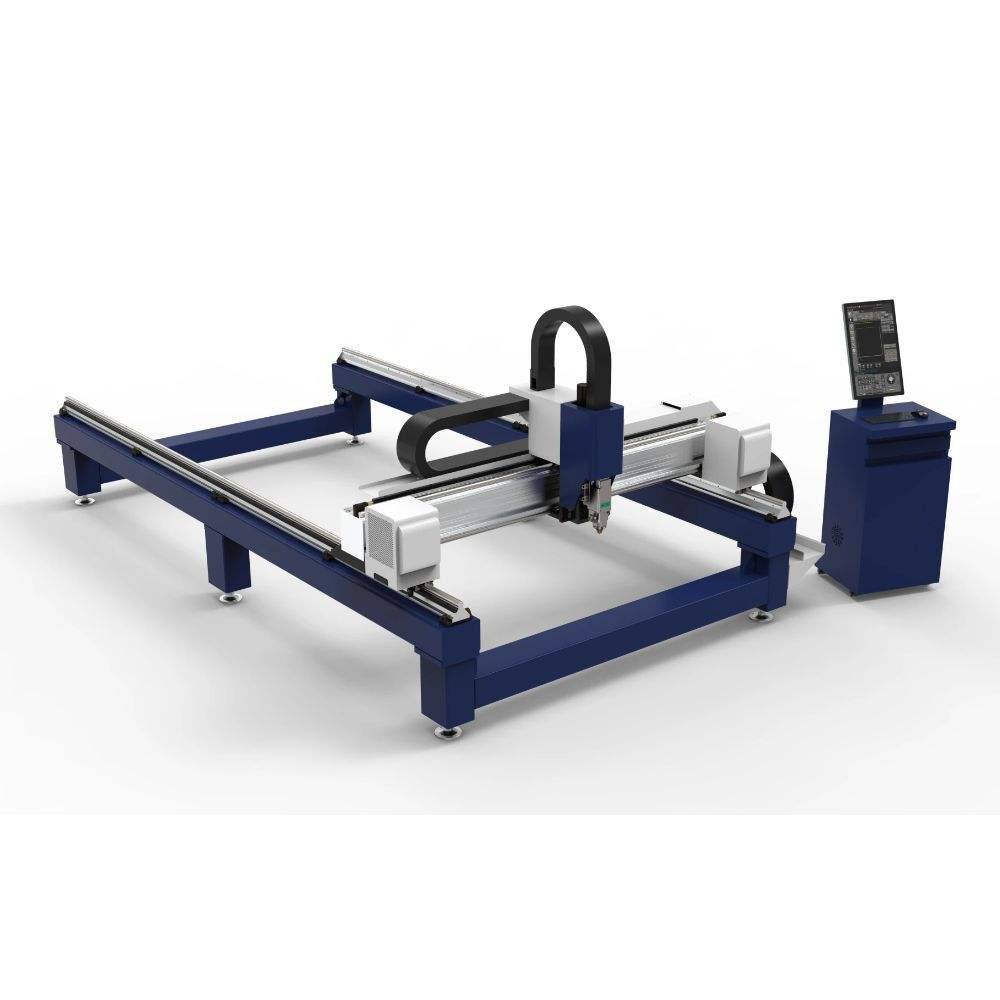
Technical Field Report: Implementation of 30kW Fiber Laser H-Beam Processing in Queretaro Heavy Industry
1. Introduction and Operational Context
The industrial landscape of Queretaro, Mexico, has traditionally been dominated by aerospace and automotive manufacturing. However, a recent shift toward heavy-scale structural steel fabrication for the shipbuilding and offshore energy sectors has necessitated a paradigm shift in processing technology. This report evaluates the field performance of the 30kW Fiber Laser H-Beam Cutting Machine, specifically focusing on its integration into a shipyard component fabrication facility. The primary objective was to replace conventional plasma cutting and mechanical drilling methods with a unified, high-power laser solution capable of “Zero-Waste Nesting.”
2. The Physics of 30kW Fiber Laser Integration
The transition to a 30kW power source is not merely an incremental upgrade in speed; it represents a fundamental change in the laser-material interaction zone. At 30,000 watts, the power density at the focal point allows for the sublimation of heavy-gauge structural steel with significantly reduced Heat Affected Zones (HAZ) compared to 12kW or 15kW alternatives.
In the context of Queretaro’s maritime fabrication requirements, where DH36 and AH36 grade steels are standard, the 30kW source enables “Bright Surface” cutting on H-beam webs and flanges up to 25mm in thickness. This is critical for shipbuilding, where edge oxidation can compromise weld integrity. The high photon density allows for a higher feed rate, which in turn reduces the thermal conduction into the surrounding material, preserving the metallurgical properties of the H-beam’s structural radius.
3. Zero-Waste Nesting Logic and Algorithmic Efficiency
The core technological differentiator observed during the field trial was the “Zero-Waste Nesting” software architecture. Traditional H-beam processing via band saws or plasma torches typically results in “remnant loss” or “drop,” often totaling 5% to 8% of the total raw material length due to clamping requirements and kerf limitations.
The 30kW Laser system utilizes a sophisticated multi-axis chucking mechanism combined with a dynamic nesting algorithm. This system calculates the optimal sequence for common-line cutting between adjacent parts on a single beam. By leveraging the precision of the laser’s kerf (typically 0.3mm to 0.5mm at 30kW), the software allows for “tail-less” cutting.
Key technical observations include:
- End-to-End Processing: The system eliminates the need for a lead-in margin on the subsequent part by utilizing the exit path of the previous cut as the entry path for the next.
- Dynamic Clamping Synchronization: The machine’s four-chuck system moves in a “leapfrog” motion, allowing the laser head to access the extreme ends of the H-beam, reducing the final scrap piece to less than 50mm, compared to the industry standard of 300mm–500mm.
- Material Savings: In a production run of 500 tons of structural H-beams, the Zero-Waste Nesting protocol demonstrated a 4.2% increase in material utilization, translating directly to significant cost mitigation in high-yield marine steel.
4. Structural Processing Specifics for Shipbuilding
Shipbuilding requires complex geometries, including cope cuts, weld prep bevels (V, Y, and X types), and slotted holes for interlocking stiffeners. The Queretaro facility’s 30kW H-Beam laser utilizes a 5-axis or 6-axis 3D cutting head capable of +/- 45-degree tilting.
4.1 Beveling and Weld Preparation
One of the most significant bottlenecks in shipbuilding is manual beveling after the primary cut. The 30kW laser integrates the beveling process directly into the primary cutting cycle. Due to the high power reserve, the machine maintains high velocities even when the effective thickness increases during a 45-degree miter cut. The resulting surface roughness (Ra) was measured at <12.5 μm, meeting the stringent requirements for automated robotic welding.
4.2 Dimensional Accuracy and Tolerance Management
Structural beams used in shipyard “blocks” must adhere to tight tolerances to ensure proper alignment during modular assembly. The 30kW system utilizes real-time laser scanning to compensate for the inherent “twisting” or “bowing” found in hot-rolled H-beams. Before the first cut, the machine maps the actual profile of the beam against the CAD model, adjusting the cutting path in real-time to ensure that bolt holes and web openings are centered relative to the actual flange positions, rather than the theoretical center-line.
5. Synergy with Automatic Structural Processing
The Queretaro installation highlights the synergy between high-power laser sources and automated material handling. The 30kW H-beam laser is integrated into a larger FMS (Flexible Manufacturing System).
The workflow observed:
1. Automated Loading: Heavy H-beams (up to 12 meters) are moved via transverse conveyors.
2. Acoustic Sensing/Vision Mapping: The machine identifies the beam type and verifies dimensions.
3. 30kW Thermal Piercing: Using “Flash Piercing” technology, the 30kW laser penetrates the thickest flange in less than 0.5 seconds, significantly reducing the total cycle time compared to the multi-stage piercing required by lower-wattage systems.
4. Zero-Waste Execution: The CNC executes the nested path, managing the transition between the web and the flange without stopping, maintaining a constant focal height via high-speed capacitive sensors.
6. Comparative Analysis: Laser vs. Conventional Methods
In the Queretaro field test, we compared the 30kW laser against a high-definition plasma system previously used for the same H-beam profiles.
| Parameter | 30kW Fiber Laser | HD Plasma |
|---|---|---|
| Cutting Speed (Web 15mm) | 4.5 m/min | 1.8 m/min |
| Hole Precision | +/- 0.1mm | +/- 1.5mm (tapered) |
| Material Waste | < 1% | ~6% |
| Secondary Processing | None required | Grinding/Drilling required |
The data indicates that while the initial capital expenditure for the 30kW laser is higher, the operational cost per meter is lower due to the elimination of secondary labor and the massive reduction in material scrap via the Zero-Waste Nesting algorithm.
7. Environmental and Economic Impact in Queretaro
Queretaro’s industrial regulations are increasingly focused on energy efficiency and waste reduction. The 30kW fiber laser, despite its high peak power, operates with a wall-plug efficiency of approximately 40%, far exceeding the efficiency of CO2 lasers or the gas consumption rates of plasma systems. By minimizing scrap, the facility reduces its carbon footprint associated with the transport and recycling of steel remnants.
Furthermore, the “Zero-Waste” feature allows for the procurement of precise lengths of steel, reducing the inventory of “dead stock” remnants that often clutter shipyard fabrication floors. This leads to a more streamlined “Just-In-Time” (JIT) manufacturing workflow.
8. Conclusion
The deployment of the 30kW Fiber Laser H-Beam Cutting Machine in Queretaro represents the current zenith of structural steel processing. The combination of extreme power density and intelligent Zero-Waste Nesting solves the dual challenges of precision and efficiency that have long plagued the shipbuilding sector.
For engineers and project managers in the maritime industry, the takeaway is clear: the 30kW laser is no longer an experimental tool but a necessary component for competitive heavy-scale fabrication. The ability to move from raw H-beam to a fully beveled, drilled, and processed component in a single, waste-free cycle provides a measurable leap in throughput and structural integrity.
Signed,
Senior Engineering Consultant
laser cutting & steel structure Specialist













