The Dawn of Ultra-High Power: Why 30kW Changes Everything
In the realm of fiber laser technology, the leap from 12kW to 30kW is not merely incremental; it is transformative. For years, the structural steel industry in Mexico City relied on plasma cutting or mechanical sawing and drilling for heavy profiles. While functional, these methods lacked the precision required for modern, modular mining equipment.
A 30kW fiber laser source delivers a concentrated beam of energy so intense that it transitions from cutting to “vaporizing” through thick-walled H-beams. At this power level, the laser can maintain a stable “keyhole” in materials exceeding 25mm to 50mm in thickness, which is common in the heavy-duty chassis and supports of mining conveyors and crushers. The high power allows for a significantly smaller Heat Affected Zone (HAZ). In the context of mining machinery, which is subject to extreme vibration and cyclic loading, a smaller HAZ means the molecular structure of the steel remains uncompromised, preventing premature fatigue failure in the field.
Furthermore, the 30kW source allows for the use of air or nitrogen cutting at thicknesses where oxygen was previously the only option. This results in a cleaner, oxide-free edge that is immediately ready for welding—a massive bottleneck-breaker for Mexico City’s high-throughput fabrication shops.
Precision 3D Processing for H-Beam Architectures
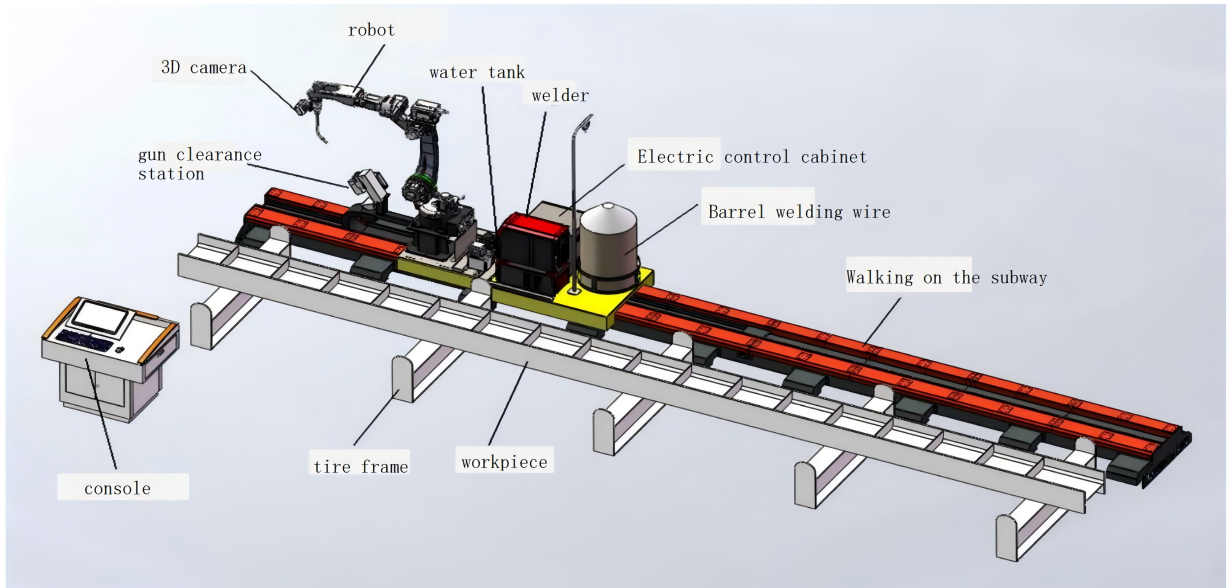
The 30kW H-Beam laser cutting Machine is not a flatbed system; it is a sophisticated 3D robotic or multi-axis gantry environment. Processing an H-beam involves navigating the flanges and the web simultaneously. Traditional methods required multiple setups: one machine to cut the length, another to drill holes, and a manual torch to create bevels for weld preparation.
The modern 30kW system utilizes a 5-axis swing head that can rotate and tilt. This allows for complex “V,” “X,” and “K” shaped bevels to be cut directly into the H-beam in a single pass. For the mining industry, where massive steel structures must be bolted or welded with surgical precision in remote locations like Zacatecas or Sonora, the ability to produce self-aligning joints (mortise and tenon style) directly on the laser is a game-changer. The machine handles the rotation of the beam with precision chucks, ensuring that holes on the top flange align perfectly with holes on the bottom, within a tolerance of ±0.1mm.
Zero-Waste Nesting: The Economics of Efficiency
In the current global economy, the price of structural steel is volatile. For manufacturers in Mexico City, reducing scrap is the most direct path to increasing profit margins. This is where “Zero-Waste Nesting” software becomes the brain of the 30kW laser.
Zero-waste nesting goes beyond simple geometric arrangement. It utilizes artificial intelligence to “bridge” cuts between different parts on the same beam. By employing common-line cutting, the laser can use a single cut to create the edges of two separate parts, effectively eliminating the “skeleton” scrap between them.
Furthermore, the software can nest smaller parts—such as gussets or mounting brackets—into the “drop” or the internal cut-outs of the H-beam’s web. In traditional fabrication, the material removed to create a window in a beam would be discarded. With zero-waste nesting, that “hole” becomes a source of smaller components. For a large-scale mining project requiring kilometers of structural steel, this can result in a material utilization rate of over 95%, compared to the 75-80% seen with traditional methods.
Tailoring for the Mexican Mining Machinery Sector
Mexico is a global leader in the production of silver, lead, and zinc. The machinery required to extract these minerals—underground loaders, vibratory screens, and massive ventilation systems—must withstand some of the harshest environments on earth.
Manufacturers in Mexico City are increasingly being asked to build equipment that is lighter yet stronger. By using a 30kW fiber laser, they can work with high-strength, low-alloy (HSLA) steels that are notoriously difficult to process with mechanical tools. The laser’s ability to cut complex geometries allows engineers to design “lightened” beams—removing material where stresses are low without compromising structural integrity.
Additionally, the geographical context of Mexico City as a logistics hub means that these machines are often the centerpiece of a “Hub and Spoke” manufacturing model. Components are precision-cut in the capital and shipped to mining sites for rapid assembly. The precision of the 30kW laser ensures that even if the assembly crew is thousands of miles away, the parts will fit together perfectly without the need for on-site grinding or re-drilling.
Technical Synergy: The Chiller and Motion Control
Operating a 30kW laser requires more than just the light source. To maintain a 24/7 duty cycle in the climate of Mexico City, the thermal management system must be robust. High-capacity industrial chillers are integrated to keep the laser source and the cutting head at a constant temperature. Even a fluctuation of one degree can affect the beam’s focal point, which in turn affects the cut quality.
The motion control system must also be world-class. Moving a multi-ton H-beam through a laser cabinet at high speeds requires high-torque servo motors and precision rack-and-pinion systems. When the laser is cutting at speeds of 20 meters per minute, the acceleration and deceleration phases must be handled by advanced algorithms to prevent “overshoot” on corners. This ensures that every bolt hole is perfectly circular, which is critical for the high-tension bolts used in mining towers.
Environmental Impact and Sustainability
Sustainability is becoming a core metric for Mexican industry. The 30kW fiber laser is inherently more “green” than the technologies it replaces. It eliminates the need for cutting fluids and chemicals used in mechanical sawing. It produces less smoke and particulate matter than plasma cutting, and when combined with high-efficiency dust collection systems, it provides a much cleaner environment for the workers in Mexico City’s industrial zones.
Moreover, the “Zero-Waste” aspect directly contributes to a lower carbon footprint. Every ton of steel saved through smart nesting is a ton of steel that doesn’t need to be produced, transported, or recycled. For companies looking to meet ESG (Environmental, Social, and Governance) targets, investing in ultra-high-power laser technology is a clear statement of intent.
Conclusion: The Future of Mexican Infrastructure
The deployment of a 30kW Fiber Laser H-Beam Cutting Machine in Mexico City represents the pinnacle of current fabrication technology. For the mining machinery sector, it offers a trifecta of benefits: extreme power to handle the heaviest materials, surgical precision for complex 3D geometries, and the fiscal intelligence of zero-waste nesting.
As the mining industry continues to push into deeper and more challenging environments, the equipment supporting these efforts must be built with the highest standards of integrity. The 30kW fiber laser is not just a tool for cutting steel; it is a tool for building the future of Mexican industry, ensuring that “Made in Mexico” remains synonymous with quality, efficiency, and technological leadership on the global stage. For the fabricators in the heart of the country, the message is clear: the era of high-power photonics has arrived, and it is reshaping the very foundations of the earth.