The Industrial Renaissance of Casablanca: A Hub for Rail Excellence
Casablanca is no longer just a commercial gateway; it has evolved into the industrial heartbeat of North Africa. With Morocco’s aggressive investment in its railway network—led by the Office National des Chemins de Fer (ONCF)—the demand for structural steel has skyrocketed. The expansion of the Al Boraq high-speed line and the modernization of regional freight corridors require massive quantities of H-beams, I-beams, and complex structural profiles.
Traditionally, processing these heavy sections involved a fragmented workflow: mechanical sawing, followed by radial drilling, and manual oxy-fuel or plasma torching for bevels and notches. This manual intervention introduced human error and slowed down the supply chain. The introduction of the 30kW Fiber Laser H-Beam Cutting Machine in Casablanca’s industrial zones changes this equation. It centralizes these processes into a single automated station, allowing the city to transition from importing finished components to becoming a primary fabricator for the entire African railway sector.
Decoding the 30kW Powerhouse: Why High Wattage Matters
In the world of fiber lasers, power is the primary determinant of both speed and thickness capacity. A 30kW resonator is a high-brightness energy source capable of vaporizing thick-walled structural steel almost instantaneously. For railway infrastructure, where H-beams often feature web and flange thicknesses exceeding 20mm to 30mm, lower-power lasers struggle to maintain clean cuts or suffer from significantly reduced feed rates.
At 30kW, the laser maintains a high “power density,” allowing it to pierce thick sections in a fraction of a second. This minimizes the Heat Affected Zone (HAZ), ensuring that the metallurgical properties of the high-strength steel used in railway bridges and gantries remain uncompromised. For a project manager in Casablanca, this means the structural integrity of the rail components is higher, and the secondary finishing work—such as grinding down carbonization—is virtually eliminated.
The Engineering Marvel: Infinite Rotation 3D Head
The most significant bottleneck in H-beam processing has always been the transition between the web (the middle part) and the flanges (the sides). A standard 2D laser cannot navigate the interior angles or perform the necessary beveling for weld preparations. The Infinite Rotation 3D Head solves this by offering five-axis or even six-axis kinematic freedom.
The “infinite rotation” aspect is critical. Traditional 3D heads often have “cable wrap” limitations, meaning they must “unwind” after a certain degree of rotation, which pauses the cutting process and creates marks on the metal. The infinite rotation mechanism uses advanced slip-ring technology or specialized fiber routing to allow the head to spin indefinitely.
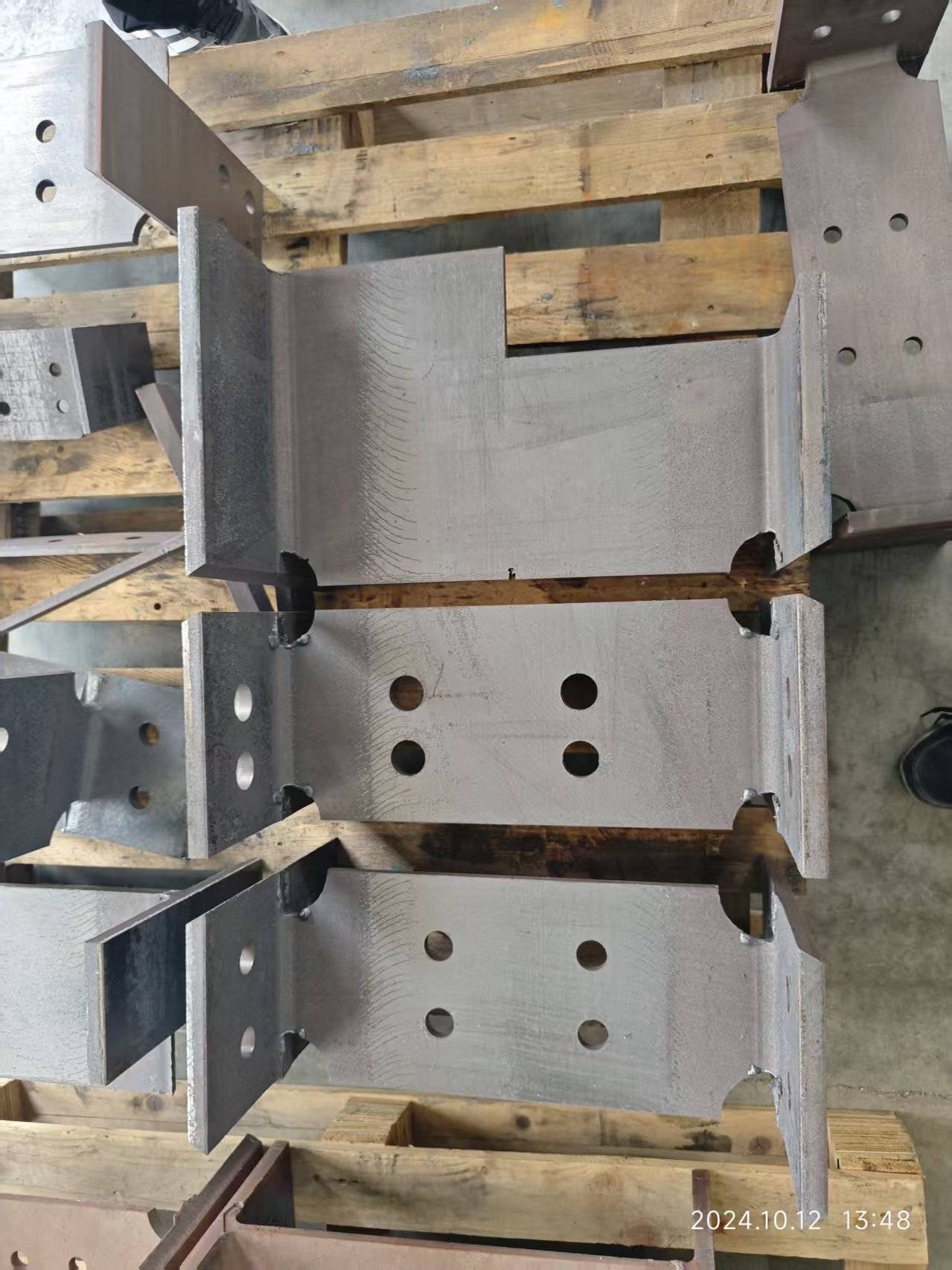
This capability is essential for cutting “coping” patterns, complex notches, and bolt holes across all three faces of the H-beam in one continuous motion. In railway construction, where beams must often be joined at precise angles to support overhead catenary systems or station canopies, the 3D head allows for +/- 45-degree beveling. These ready-to-weld edges significantly accelerate the assembly of rail infrastructure on-site in Casablanca and beyond.
Precision Engineering for Railway Infrastructure
Railway infrastructure is unforgiving. Every bolt hole must align perfectly across kilometers of track-side structures. The 30kW fiber laser machine utilizes sophisticated CNC algorithms to compensate for the natural “twists” and “bows” found in raw H-beams.
Before cutting, the 3D head often employs a touch-probe or laser-sensing system to map the actual geometry of the beam. The software then adjusts the cutting path in real-time. For Casablanca’s rail projects, this means that even if a 12-meter H-beam has a slight manufacturing deviation, the laser will place the holes and notches with sub-millimeter precision relative to the beam’s actual center line. This level of accuracy is impossible to achieve with manual layouts and portable magnetic drills.
Furthermore, the 30kW laser can engrave part numbers, alignment marks, and QR codes directly onto the steel. This digitalization of the physical component streamlines the logistics of large-scale railway projects, ensuring that the right beam reaches the right section of the track during the nocturnal maintenance windows common in Moroccan rail operations.
Economic and Environmental Impact in the Moroccan Context
The shift to 30kW fiber laser technology brings a dual advantage: economic efficiency and environmental sustainability. Fiber lasers are significantly more energy-efficient than older CO2 lasers or plasma systems. They convert electrical energy into light with high efficiency, reducing the “carbon footprint” per ton of processed steel—a key consideration as Morocco moves toward “green” manufacturing standards.
From an economic perspective, the 30kW machine in Casablanca reduces “cost-per-part” by maximizing material utilization. The software’s nesting capabilities allow engineers to fit more components onto a single length of H-beam, reducing scrap. Given the volatility of global steel prices, saving even 5% of material across a national railway project translates into millions of Dirhams in savings.
Additionally, by localizing this high-tech fabrication, Casablanca reduces its reliance on European or Asian imports. This creates a high-tech job market for Moroccan engineers and technicians who specialize in CNC programming and laser photonics, bolstering the local economy’s technical “know-how.”
Overcoming Challenges: Maintenance and Cooling in Casablanca
Operating a 30kW laser in the coastal environment of Casablanca presents unique challenges, primarily humidity and temperature fluctuations. A laser of this magnitude generates substantial heat within the resonator and the cutting head.
To ensure 24/7 operation, these machines are equipped with advanced dual-circuit industrial chillers. One circuit cools the laser source, while the other cools the 3D cutting head and the delivery fiber. In Casablanca’s industrial outskirts, these systems must also be fitted with high-efficiency dust extraction and air filtration to protect the sensitive optics from the saline air and industrial particulates. As an expert, I emphasize that the longevity of a 30kW system in Morocco depends entirely on a rigorous preventative maintenance schedule and the use of high-purity assist gases (Oxygen or Nitrogen) to ensure the highest cut quality.
The Future: Scaling Beyond H-Beams
While the current focus remains on H-beams for railway infrastructure, the versatility of the 30kW 3D laser machine allows it to process a wide variety of profiles, including C-channels, square tubing, and large-diameter pipes. This versatility is vital for Casablanca’s broader infrastructure goals, including the expansion of the Port of Casablanca and the construction of new stadium facilities for upcoming international sporting events.
The 30kW fiber laser is not just a tool; it is a catalyst for industrial sovereignty. By mastering 3D laser processing of structural steel, Casablanca is positioning itself as the premier fabrication hub for the “Africa Integrated High-Speed Railway Network.” The machine’s ability to turn a raw, 12-meter H-beam into a precision-engineered structural component in under ten minutes is the heartbeat of this transformation.
In conclusion, the integration of 30kW power with infinite 3D rotation represents the pinnacle of current laser technology. For Casablanca’s railway infrastructure, it means faster construction, lower costs, and superior structural integrity. As the city continues to grow, this technology will remain at the forefront, cutting the path for a more connected and industrially advanced Morocco.