Technical Field Report: 30kW Fiber Laser H-Beam Integration in the Casablanca Mining Machinery Sector
1. Executive Summary: The Shift to High-Power Structural Photonics
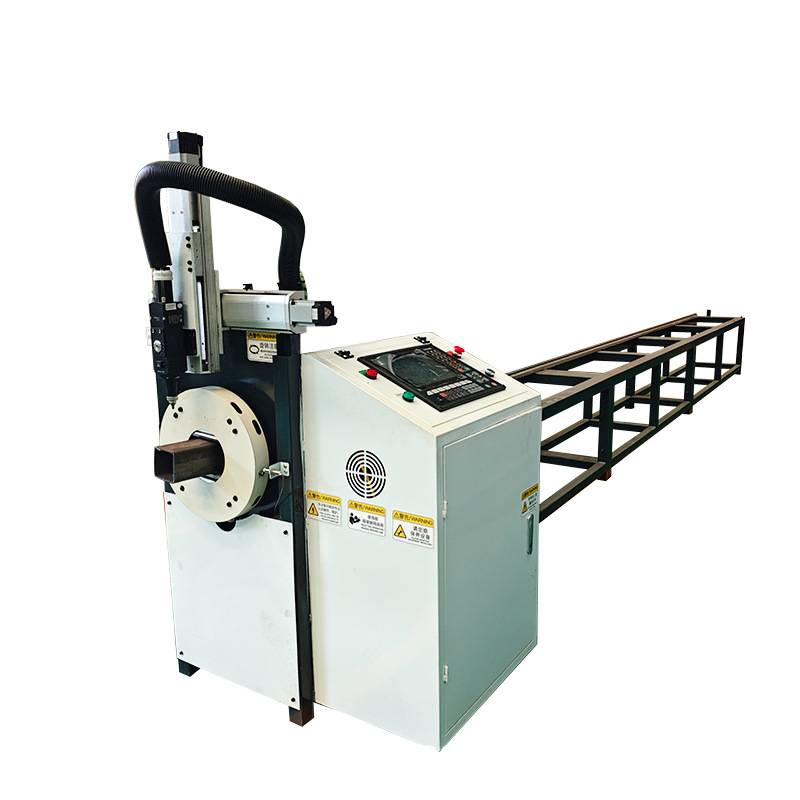
The industrial landscape of Casablanca, particularly the sector dedicated to heavy mining machinery and phosphate processing infrastructure, has historically relied on plasma arc cutting and mechanical drilling for structural H-beam fabrication. The deployment of the 30kW Fiber Laser H-Beam Cutting Machine represents a paradigm shift. This report analyzes the technical integration of ultra-high-power fiber laser sources with automated structural handling, focusing on the elimination of secondary processing and the enhancement of structural integrity in high-stress mining environments.
2. 30kW Fiber Source: Photonic Density and Kerf Dynamics
The 30kW fiber laser source is not merely an increment in power; it is a fundamental change in the thermodynamics of the cut. In heavy-duty H-beams (S355JR or higher grades common in Moroccan mining), the 30kW threshold allows for “high-speed vaporization cutting” rather than simple melt-and-blow processes.
- Beam Power Density: At 30kW, the energy density at the focal point exceeds the threshold required to maintain a stable plasma shield, allowing for deeper penetration into thick-web H-beams (up to 25mm+).
- Kerf Width and Verticality: The high power enables the use of smaller nozzles with higher gas pressures (N2 or O2), resulting in a kerf width of less than 0.8mm. For mining machinery—where vibration-resistant joints are critical—this precision ensures a “press-fit” quality for interlocking structures.
- Heat Affected Zone (HAZ): The 30kW source facilitates higher feed rates (m/min), significantly reducing the duration of thermal exposure. This minimizes the HAZ, preserving the metallurgical properties of the HSLA (High-Strength Low-Alloy) steels used in underground mining supports.
3. Kinematics of H-Beam Processing: 3D Cutting Heads
H-beam processing involves non-linear geometry. Unlike flat sheet cutting, the machine must navigate the transition from the flange to the web. The integrated 5-axis or 6-axis 3D cutting head is essential for:
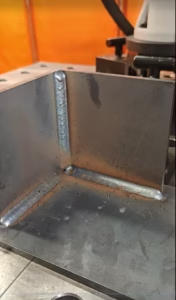
- Beveling for Weld Preparation: Mining equipment requires deep penetration welds. The 30kW system performs V, X, and K-type bevels in a single pass, eliminating the need for manual grinding.
- Flange Compensation: H-beams often exhibit “as-rolled” tolerances (bowing or twisting). The system utilizes high-speed inductive sensors to map the beam’s actual profile in real-time, adjusting the Z-axis focal length to maintain constant standoff distance.
4. Automatic Unloading: Solving the Heavy Steel Bottleneck
In the Casablanca heavy machinery sector, the primary bottleneck has never been the “cut time,” but the “material handling time.” A standard 12-meter H-beam can weigh several tons. Manual unloading using overhead cranes is slow and introduces risk of structural deformation or machine damage.
4.1 Hydraulic Synchronous Support
The automatic unloading system employs a series of hydraulic synchronized support modules. As the laser completes the final cut, the unloading arms rise to meet the beam’s center of gravity. This prevents the “drop-off” snap that can damage the laser head or the beam’s end-face.
4.2 Material Flow and Throughput
By automating the extraction of finished parts, the “arc-on” time is increased from roughly 40% to over 85%. In the context of a mining conveyor frame production line, this equates to a 3x increase in daily tonnage. The system automatically categorizes scrap and finished parts, pushing the latter to a buffer zone for immediate robotic welding.
5. Application Analysis: Mining Machinery in Casablanca
Casablanca serves as the engineering hub for the OCP (Office Chérifien des Phosphates) and various sub-Saharan mining contractors. The requirements for machinery in this sector are characterized by high abrasive wear and extreme structural loads.
5.1 Underground Support Systems
The 30kW laser allows for the precision cutting of complex bolt-hole patterns and interlocking tabs in thick-walled H-beams used for mine gallery reinforcement. The precision of the laser ensures that these components can be assembled in confined underground spaces without the need for onsite thermal correction or “force-fitting.”
5.2 Vibratory Screening Plants
Screening plants used in phosphate processing are subject to intense cyclic loading. Traditional plasma-cut holes create micro-fissures in the H-beam web, leading to fatigue failure. The 30kW fiber laser produces a “glass-smooth” finish on hole interiors, significantly increasing the fatigue life of the structural frame.
6. Synergy Between Power and Automation
The synergy between 30kW power and automatic unloading is most evident in the “nesting efficiency.” High-power lasers allow for tighter nesting of parts because the narrow kerf and controlled heat input prevent the web from warping.
When the unloading is automated, the software can optimize the nesting for “continuous cutting” sequences. The machine doesn’t stop between parts; the unloading system extracts parts as they are completed. This “flow-through” architecture is what differentiates a 30kW industrial cell from a standard CNC cutter.
7. Technical Challenges and Field Solutions
During the commissioning phase in the Casablanca facility, several environmental factors were addressed:
- Power Stability: High-power fiber lasers require exceptional voltage stability. We implemented a dedicated transformer and high-speed voltage regulator to protect the 30kW diodes from the local grid’s industrial surges.
- Dust Mitigation: Mining environments are high-dust areas. The H-beam machine is equipped with a high-volume partitioned dust extraction system. This is critical for 30kW operations, as airborne particles can interfere with the laser beam path, causing “thermal lensing” in the protective windows.
8. Comparative Data: 30kW Laser vs. HD Plasma
| Feature | 30kW Fiber Laser (Auto-Unloading) | High-Definition Plasma (Manual) |
|---|---|---|
| Cutting Speed (20mm Web) | 3.2 – 4.5 m/min | 0.8 – 1.2 m/min |
| Hole Tolerance | ± 0.05 mm | ± 0.5 – 1.0 mm |
| Secondary Process | None (Ready for Weld) | Grinding & Reaming Required |
| Labor Intensity | 1 Operator (Supervisory) | 3 Operators (Handling + Cutting) |
9. Structural Integrity and Quality Control
For mining machinery, the “Cut Quality Level” is graded according to ISO 9013. The 30kW H-beam system consistently achieves Range 2 or Range 3 for perpendicularity and angularity, which is unprecedented for heavy structural steel. The automatic unloading system further protects this quality by ensuring that heavy parts do not collide or scrape during the transition from the cutting bed to the outfeed conveyor.
10. Conclusion
The integration of a 30kW Fiber Laser H-Beam Cutting Machine with Automatic Unloading in Casablanca represents the pinnacle of modern structural steel fabrication. For the mining machinery sector, the benefits extend beyond mere speed. The technology offers a combination of metallurgical preservation, extreme geometric precision, and an automated workflow that removes the physical limitations of handling heavy steel. As the mining industry moves toward more complex, modular infrastructure, the ability to process H-beams with this level of photonic efficiency will be the primary driver of regional manufacturing competitiveness.
Log End: System Operational. Calibration verified for S355 Structural Grade.