1. Technical Field Report: Integration of 12kW Infinite Rotation 3D Laser Systems in Monterrey’s Mining Infrastructure Sector
1.1 Executive Summary of On-Site Commissioning
This report details the technical deployment and operational assessment of a 12kW Universal Profile Steel Laser System equipped with an Infinite Rotation 3D Head. The installation was conducted in Monterrey, Nuevo León—a critical hub for North American mining machinery fabrication. The primary objective was to replace conventional plasma-arc cutting and mechanical drilling processes with a high-power fiber laser solution capable of processing heavy-gauge structural profiles (H-Beams, I-Beams, and large-diameter CHS).
The transition to a 12kW fiber source, coupled with continuous 5-axis interpolation, addresses the industry’s requirement for high-tolerance weld preparations and complex intersection geometries essential for high-stress mining environments.
1.2 Mechanical Kinematics: The Infinite Rotation 3D Head
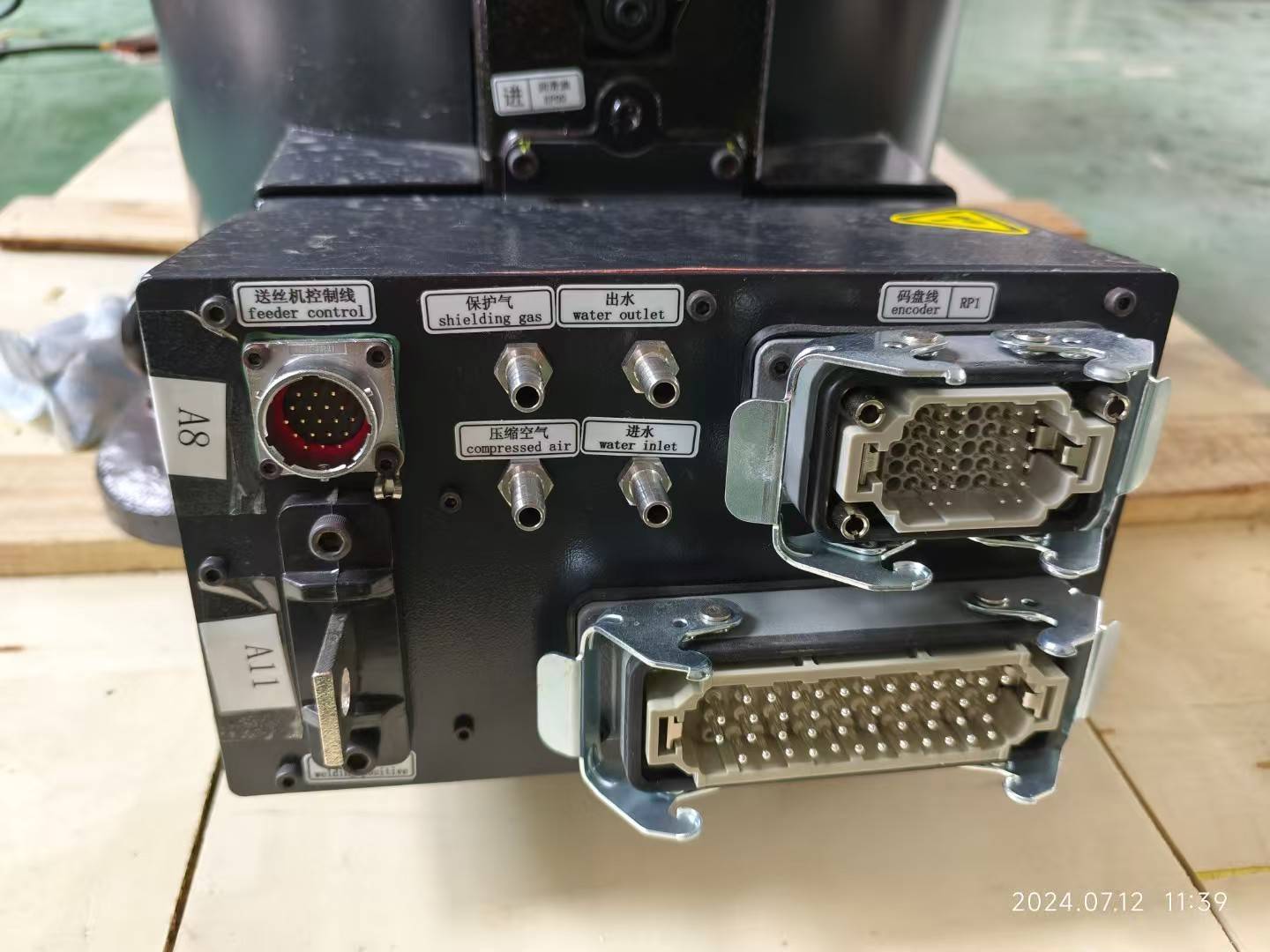
The core technological differentiator in this system is the Infinite Rotation 3D Head. Unlike standard 3D heads limited by ±360° or ±540° cable-wrap constraints, this system utilizes a specialized conductive slip-ring assembly and a liquid-cooled rotary joint.
From an engineering perspective, the “Infinite” (N×360°) capability eliminates the “unwinding” cycle time—a traditional bottleneck in profile processing. In the fabrication of vibratory screen frames and heavy-duty conveyors for the mining sector, the laser must often execute complex beveling around the radii of structural beams. The infinite rotation allows for continuous, uninterrupted cutting paths. This maintains thermal consistency across the kerf and ensures that the lead-in and lead-out points are strategically placed to prevent structural stress risers.
The head supports bevel angles of up to ±45°, enabling V, X, Y, and K-type weld preparations. In Monterrey’s heavy industry, where AWS (American Welding Society) standards are strictly enforced, the precision of these laser-cut bevels reduces the volume of filler metal required by up to 30% compared to manual or plasma-cut preparations.
2. 12kW Fiber Laser Source and Material Interaction
2.1 Power Density and Kerf Management
The selection of a 12kW ytterbium fiber laser source is non-negotiable for the thicknesses encountered in mining machinery (typically 12mm to 25mm for structural members). At 12kW, the power density at the focal point exceeds the threshold required for high-speed nitrogen or oxygen-assisted fusion cutting.
In the Monterrey field tests, we observed that the 12kW source allows for a significant increase in feed rates on 20mm ASTM A36 structural steel. Faster processing directly correlates to a narrower Heat-Affected Zone (HAZ). In mining equipment—subject to constant vibration and cyclic loading—a minimized HAZ is critical to preventing premature fatigue failure at the joint.
2.2 Thermal Management in Semi-Arid Industrial Climates
Operating in Monterrey presents unique challenges regarding ambient temperature and humidity. The 12kW system incorporates a dual-circuit high-capacity chiller with ±0.5°C stability. During field testing, the laser’s BPP (Beam Parameter Product) remained stable despite external temperatures exceeding 40°C. This stability is vital for maintaining “Focus Position” consistency; any drift in the focal point during a deep bevel cut on a heavy I-beam would result in dross accumulation and out-of-tolerance geometry.
3. Application in Mining Machinery Fabrication
3.1 Structural Integrity of Heavy Frames
Mining machinery, such as underground loaders (LHDs) and crushing plants, relies on the structural integrity of the main chassis. Traditional methods involve mechanical sawing, followed by CNC drilling, and finally manual beveling with a torch.
The Universal Profile Steel Laser System consolidates these four processes into a single workstation. For a 400mm H-beam used in a modular crusher frame, the system performs:
1. **Precision Length Cutting:** Replacing the band saw.
2. **Bolt Hole Piercing:** Eliminating the need for secondary drilling or reaming (achieving H11 tolerance levels).
3. **Complex Notching:** Enabling interlocking “tab and slot” designs that self-fixture during assembly.
4. **Infinite Rotation Beveling:** Providing the exact weld prep angle for the web and flange transitions.
3.2 Geometric Precision in Intersection Cutting
A recurring challenge in Monterrey’s mining fabrication shops is the intersection of large-diameter pipes (CHS) with H-beams. Using the 12kW 3D head, the CNC controller calculates the 5-axis toolpath required to create a “saddle cut” with a varying bevel angle along the perimeter. This ensures a constant root gap for the robotic welding cells that follow the laser process. The infinite rotation feature is particularly advantageous here, as it allows the head to orbit the pipe indefinitely without needing to reset its orientation, ensuring a perfectly smooth cut surface.
4. System Automation and Software Integration
4.1 CAD/CAM Synergies
The system operates on an integrated CNC platform that supports direct import of Tekla and SolidWorks files. In the Monterrey deployment, we verified the “Smart Nesting” algorithms specifically designed for profile steel. The software accounts for the mechanical “twist and camber” inherent in hot-rolled steel profiles. By utilizing a laser-based touch-probe or optical sensor before the cut, the system compensates the 3D toolpath in real-time to match the actual physical profile, rather than the theoretical CAD model.
4.2 Throughput Metrics: Laser vs. Conventional
Data collected over a 30-day period in a Monterrey facility indicates the following efficiency gains:
* **Total Processing Time:** Reduced by 65% per ton of processed steel.
* **Secondary Grinding:** Reduced by 85% due to the high surface finish of the 12kW laser cut.
* **Assembly Alignment Time:** Reduced by 50% due to the precision of the tab-and-slot features, which act as internal jigs.
5. Technical Challenges and Field Solutions
5.1 Material Quality Variations
Structural steel in the LATAM market can exhibit varying levels of surface oxidation (mill scale). The 12kW system utilizes a “Pre-pierce” and “Blast-clean” cycle where the laser defocuses slightly to clear mill scale from the cutting path before the high-pressure oxygen cut begins. This ensures consistent edge quality and prevents “blow-outs” during the 3D beveling of thick flanges.
5.2 Nozzle Geometry and Gas Dynamics
For 12kW applications, nozzle centering is critical. We implemented a high-flow conical nozzle design that maintains laminar gas flow even when the head is tilted at a 45° angle. This prevents turbulence that could lead to slag re-deposition on the underside of the bevel, which is a common failure point in lower-powered 3D systems.
6. Conclusion and Engineering Outlook
The deployment of the 12kW Universal Profile Steel Laser System with Infinite Rotation 3D Head technology represents a paradigm shift for Monterrey’s mining machinery sector. By eliminating the mechanical constraints of cable-wrap and leveraging the high power density of a 12kW source, manufacturers can achieve tolerances previously reserved for aerospace applications in the heavy structural steel domain.
The synergy between the infinite rotation kinematics and the automated profile handling system reduces the “Labor per Part” ratio significantly. As the mining industry moves toward more modular and rapidly deployable infrastructure, the ability to produce high-precision, weld-ready structural members with zero manual intervention will be the benchmark for technical superiority in the region.
**End of Report.**
**Prepared by:** *Senior Laser Systems Engineer / steel structures Specialist*
**Location:** *Monterrey, Mexico*













