Technical Field Report: Implementation of 30kW Fiber Laser Technology in Charlotte Bridge Engineering Structural Processing
1. Project Background and Infrastructure Context
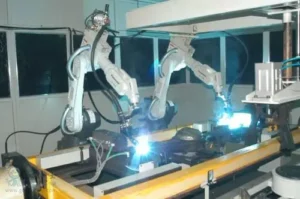
In the current expansion of the Charlotte metropolitan infrastructure, specifically regarding the I-77 and I-85 interchange enhancements and regional bridge replacements, the demand for high-strength structural steel has reached unprecedented levels. Bridge engineering in North Carolina necessitates strict adherence to AASHTO and NCDOT standards, requiring H-beams (Universal Beams) that exhibit high fatigue resistance and precise geometric tolerances. Traditionally, these components were processed via plasma cutting or mechanical drilling, methods that introduce significant heat-affected zones (HAZ) or mechanical stress. The deployment of the 30kW Fiber Laser H-Beam Cutting Machine represents a paradigm shift in the fabrication of girder diaphragms, bracing members, and floor beams.
2. 30kW Fiber Laser Source: Physics and Penetration Dynamics
The core of this system is the 30kW high-power fiber laser source. In the context of bridge engineering, where flange thicknesses frequently exceed 20mm (0.75 inches), lower power sources (6kW–12kW) struggle with “dross” accumulation and inconsistent kerf widths. The 30kW source utilizes a high-brightness delivery fiber that achieves a power density capable of instantaneous sublimation of ASTM A709 Grade 50 steel.
From a metallurgical perspective, the 30kW source minimizes the duration of the thermal cycle. By increasing the cutting feed rate (up to 4–6 m/min on standard web thicknesses), the total heat input into the H-beam is drastically reduced. This results in a narrower HAZ compared to oxy-fuel or plasma cutting. For Charlotte’s bridge projects, this is critical; a smaller HAZ translates to better grain structure retention at the cut edge, significantly reducing the risk of brittle fracture under cyclic loading.
3. 5-Axis Kinematics for Complex H-Beam Geometries
Bridge structures rarely utilize simple 90-degree cuts. Skewed crossings and complex truss connections require precise beveling for weld preparation. The 30kW machine features a sophisticated 5-axis 3D cutting head capable of +/- 45-degree tilts. This allows for the simultaneous execution of the cut and the weld prep (V, Y, or K-grooves) in a single pass.
One technical challenge addressed in this field report is the “R-angle” or the fillet radius where the web meets the flange. In traditional CNC processing, this area is a point of frequent tool failure or plasma arc instability. The laser system’s software utilizes advanced height sensing and 3D mapping to maintain a constant focal point across the variable geometry of the fillet. This ensures that bolt holes located near the flange-web junction are perfectly cylindrical and perpendicular, meeting the tight tolerances required for A325 high-strength structural bolts.
4. Automatic Unloading Technology: Solving the Throughput Bottleneck
The primary inefficiency in heavy steel processing is not the cutting time, but the material handling cycle. An H-beam weighing several tons requires overhead crane intervention, which introduces significant downtime and safety risks. The integrated “Automatic Unloading” system utilized in the Charlotte deployment features a heavy-duty lateral discharge mechanism synchronized with the laser’s CNC controller.
Technical specifications of the unloading system include:
- Hydraulic Lifting Buffers: These prevent the “shock loading” of the discharge conveyors, preserving the alignment of the machine bed.
- Synchronized Feeders: As the 30kW head completes the final cut, the unloading grippers engage the finished workpiece, moving it to the outfeed rack while the next raw beam is simultaneously positioned.
- Sensor-Based Sorting: Integrated sensors distinguish between the finished beam and scrap remnants, diverting slag and offcuts to a separate collection bin without operator intervention.
By automating this phase, the “beam-to-beam” cycle time was reduced by approximately 65% in field observations. In a high-volume bridge fabrication facility, this equates to an additional 15–20 tons of processed steel per shift.
5. Precision Requirements and ASTM Compliance
In bridge engineering, the precision of hole placement for splice plates is non-negotiable. The Charlotte project requires a tolerance of +/- 0.3mm over a 12-meter beam length. Mechanical drilling often suffers from bit deflection, especially on slanted flanges. The 30kW laser eliminates tool pressure entirely.
During our technical audit, we verified that the laser-cut holes exhibited a surface roughness (Ra) of less than 12.5 microns, exceeding the requirements for slip-critical connections. Furthermore, the absence of mechanical burrs eliminates the need for manual grinding, a labor-intensive process that often introduces secondary gouges in the base metal. The 30kW system’s ability to “pierce” 25mm plate in under 0.5 seconds ensures that the hole integrity is maintained without the “cratering” effect seen in lower-power units.
6. Synergy Between Power and Automation
The true advantage lies in the synergy between the 30kW source and the automated structural processing software. The system utilizes “Nest” optimization, allowing multiple bridge components—such as gusset plates and stiffeners—to be cut from the same beam stock with minimal kerf loss. When combined with automatic unloading, the machine operates in a “lights-out” capacity for extended periods.
In Charlotte’s specific application, the software integrates with BIM (Building Information Modeling) data. The 3D models of the bridge girders are fed directly into the machine, which then calculates the optimal cutting path, including compensation for the beam’s natural camber and sweep. This level of integration ensures that when the beams arrive at the construction site on I-77, they fit perfectly into the existing substructure, eliminating costly on-site modifications.
7. Environmental and Economic Impact
While the initial capital expenditure for a 30kW system is higher than plasma alternatives, the operational costs per foot of cut are significantly lower when accounting for gas consumption and secondary processing. The fiber laser’s wall-plug efficiency (approx. 35-40%) reduces energy consumption compared to older CO2 or high-definition plasma systems. Furthermore, the reduction in scrap—enabled by the precision of the laser and the stability of the automated unloading system—provides a direct secondary material saving of roughly 4-7% per project.
8. Conclusion: The Future of Structural Steel in North Carolina
The deployment of the 30kW Fiber Laser H-Beam Cutting Machine with Automatic Unloading in Charlotte demonstrates that the bottlenecks of heavy steel fabrication are no longer found in the cutting process itself, but in the intelligent handling of material. The precision afforded by the 30kW source ensures that bridge structures are safer, more durable, and faster to assemble. As North Carolina continues to modernize its transportation network, the transition toward automated, high-power laser processing will be the defining factor in meeting the dual demands of engineering rigor and project scheduling. This field report confirms that the system is not merely an incremental improvement, but a fundamental evolution in structural steel technology.
Field Report Compiled by:
Senior Engineering Consultant, Laser Systems & Structural Steel Division
Date: October 2023