The Dawn of 30kW Fiber Laser Technology in Heavy Industry
For decades, the fabrication of heavy structural steel—specifically H-beams and I-beams—relied on a combination of mechanical sawing, drilling, and plasma cutting. While functional, these methods often struggled with precision and the high labor costs associated with secondary finishing. The arrival of the 30kW fiber laser has fundamentally altered this landscape. As an expert in the field, I have witnessed the transition from 6kW and 12kW systems to the current 30kW standard, which provides the necessary power density to penetrate the thick flanges of structural H-beams used in railway bridges and station frameworks.
In Hamburg, a city defined by its industrial prowess and its role as a central European rail gateway, the demand for high-throughput, high-accuracy steel processing is at an all-time high. A 30kW fiber laser does not merely cut faster; it cuts differently. The beam quality (BPP) at this power level allows for a narrower kerf and a significantly reduced heat-affected zone (HAZ), which is critical for maintaining the metallurgical integrity of S355 and S460 structural steels commonly found in German railway infrastructure.
The Geometric Complexity of H-Beam Processing
Processing an H-beam is significantly more complex than cutting flat sheet metal. It involves managing the geometry of the top and bottom flanges as well as the central web. A 30kW fiber laser H-beam cutting machine utilizes a sophisticated gantry or robotic arm system combined with high-precision chucks that rotate and feed the beam through the cutting zone. This allows for four-sided processing in a single pass.
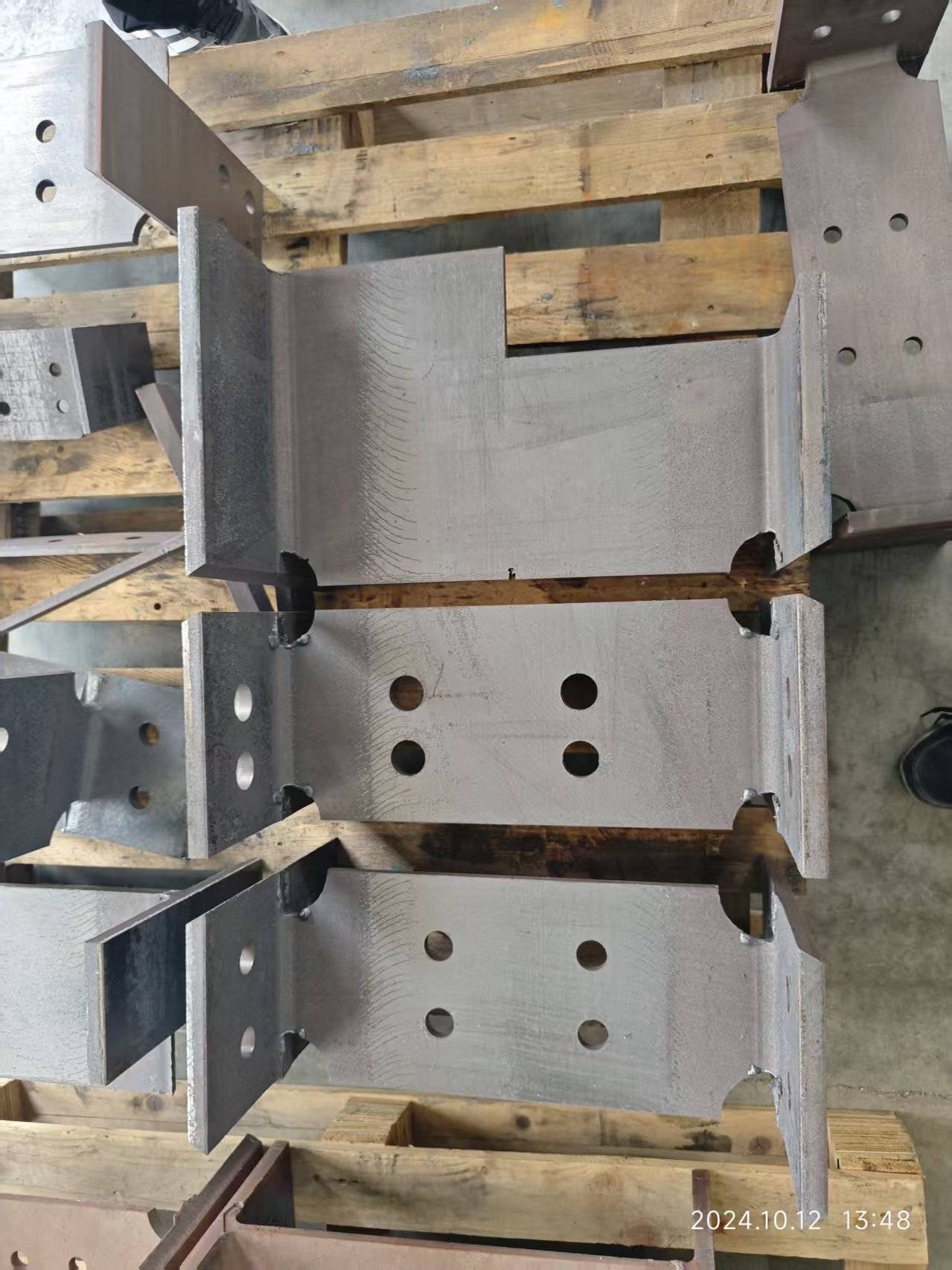
The 30kW power source is essential here because H-beams for railway applications often feature flange thicknesses exceeding 25mm to 40mm. Lower power lasers struggle with the “dross” or slag buildup at these thicknesses, but the 30kW system maintains enough kinetic energy in the melt pool to eject material cleanly using oxygen or nitrogen assist gases. This results in a “bolt-ready” finish, where holes for structural connections require no reaming or deburring before assembly.
Precision Beveling: The ±45° Advantage
Perhaps the most transformative feature of these modern machines is the 5-axis cutting head capable of ±45° beveling. In the context of railway infrastructure—such as gantry supports for overhead lines or the massive trusses of the Elbe bridges—weld preparation is a non-negotiable requirement. Traditional straight cuts require manual grinding or secondary machining to create the V, Y, or K-shaped grooves necessary for deep-penetration welding.
With a ±45° beveling head, the 30kW laser performs these complex geometries during the initial cutting phase. The machine’s software calculates the necessary offsets in real-time, ensuring that even as the head tilts, the focal point remains perfectly calibrated to the material surface. This capability reduces the fabrication cycle for a single H-beam by as much as 70%, as it moves directly from the laser bed to the welding station without any intermediate handling. For Hamburg’s engineering firms, this means meeting the stringent EN 1090-2 execution standards for steel structures with much greater ease.
Supporting Hamburg’s Railway Infrastructure Modernization
Hamburg serves as a vital node in the Trans-European Transport Network (TEN-T). The modernization of the Hamburg-Altona link and the expansion of the S-Bahn networks require massive quantities of precision-engineered steel. Railway infrastructure is subject to extreme fatigue and dynamic loading; therefore, the precision of every cut is a safety-critical factor. The 30kW fiber laser ensures that every cope, notch, and bolt hole is positioned with a tolerance of ±0.1mm.
Furthermore, the use of fiber lasers aligns with the “Green Hamburg” initiative. Fiber lasers are significantly more energy-efficient than older CO2 lasers or plasma systems. They convert electrical energy into light more effectively and require no warm-up time. When processing thousands of tons of steel for a project like the new Elbe bridge crossings, the cumulative energy savings and reduction in scrap material (thanks to advanced nesting algorithms) contribute significantly to the project’s overall sustainability goals.
Overcoming Challenges: Thermal Management and Beam Stability
As an expert, I must highlight that operating at 30kW presents unique challenges, primarily regarding thermal management. At these power levels, even a tiny amount of contamination on the protective window of the cutting head can lead to thermal lensing, which shifts the focal point and ruins the cut. Machines deployed in Hamburg’s industrial zones are equipped with pressurized, double-cooled cutting heads and real-time monitoring sensors that detect back-reflection and temperature spikes.
The stability of the beam over the long travel distances required for 12-meter or 15-meter H-beams is also paramount. Modern systems use sophisticated collimation units that adjust the beam diameter and divergence dynamically. This ensures that the cutting quality at the far end of the gantry is identical to the quality at the near end, a factor that is vital for the long-span beams used in railway platform canopies.
The Integration of CAD/CAM and Industry 4.0
The 30kW H-beam laser is not a standalone tool; it is part of a digital ecosystem. In Hamburg’s leading fabrication shops, BIM (Building Information Modeling) data is fed directly into the laser’s CAM software. This “File-to-Factory” workflow eliminates manual transcription errors. The software automatically identifies the beam profile, optimizes the cutting path to minimize head movement, and incorporates the ±45° bevels based on the specified weld joints.
In the railway sector, traceability is mandatory. These laser systems can also perform high-speed marking, etching part numbers, QR codes, and assembly instructions directly onto the steel. This ensures that when the beams arrive at a construction site in central Hamburg, the assembly team knows exactly where each component fits, further reducing the margin for error in complex logistical environments.
Economic Impact and Return on Investment (ROI)
While the capital expenditure for a 30kW H-beam laser with beveling capabilities is substantial, the ROI is driven by the sheer volume of throughput and the elimination of secondary processes. In a high-wage economy like Germany’s, reducing the man-hours required for grinding and drilling is the fastest way to achieve profitability. A single 30kW laser can often replace three to four traditional machines, freeing up valuable floor space in Hamburg’s expensive industrial real estate.
Moreover, the versatility of the fiber laser allows firms to pivot between different projects. One day the machine might be cutting heavy H-beams for a rail bridge, and the next it could be processing thinner rectangular hollow sections (RHS) for station architectural features. This flexibility is a key competitive advantage for Hamburg-based contractors bidding on diverse European infrastructure tenders.
Conclusion: The Future of European Steel Fabrication
The deployment of 30kW fiber laser H-beam cutting machines in Hamburg marks a milestone in the evolution of structural engineering. By mastering the ±45° bevel cut, fabricators are no longer limited by the constraints of mechanical tools. They can design and build railway infrastructure that is lighter, stronger, and more complex, all while maintaining the rigorous safety standards required by the German Federal Railway Authority (EBA).
As we look toward the future, the combination of even higher power levels—potentially reaching 40kW or 50kW—and increased AI integration will continue to refine this process. However, for the current needs of Hamburg’s railway expansion, the 30kW system represents the “sweet spot” of power, precision, and operational economy. It is the engine driving the next generation of European transit infrastructure, ensuring that Hamburg remains at the forefront of industrial innovation.













