The Dawn of 30kW Fiber Laser Power in Maritime Construction
For decades, the shipbuilding industry in Istanbul—centered primarily in the bustling industrial zones of Tuzla and the expanding docks of Yalova—relied on heavy-duty plasma and oxy-fuel cutting for structural steel. While reliable, these methods introduced significant thermal distortion and required extensive secondary processing. The arrival of the 30kW fiber laser has fundamentally altered this landscape.
A 30kW power source is not merely an incremental upgrade from 10kW or 12kW systems; it is a leap into a new category of material interaction. At 30,000 watts, the laser’s energy density is sufficient to vaporize thick-walled carbon steel and stainless steel profiles almost instantly. For a shipyard, this means the ability to cut through 20mm to 50mm structural sections with a kerf so narrow and a heat-affected zone (HAZ) so minimal that the structural integrity of the steel remains uncompromised. This power level allows for high-speed nitrogen cutting, which leaves a bright, oxide-free edge that is immediately ready for robotic welding—a crucial advantage in the fast-paced production schedules of Turkish naval and commercial contracts.
Precision Processing for Beams, Channels, and Profiles
Shipbuilding is rarely about flat sheets alone; the “skeleton” of a vessel consists of H-beams, I-beams, C-channels, and L-angles. Traditional methods of preparing these components involved manual marking, sawing, and drilling—processes prone to human error and slow throughput.
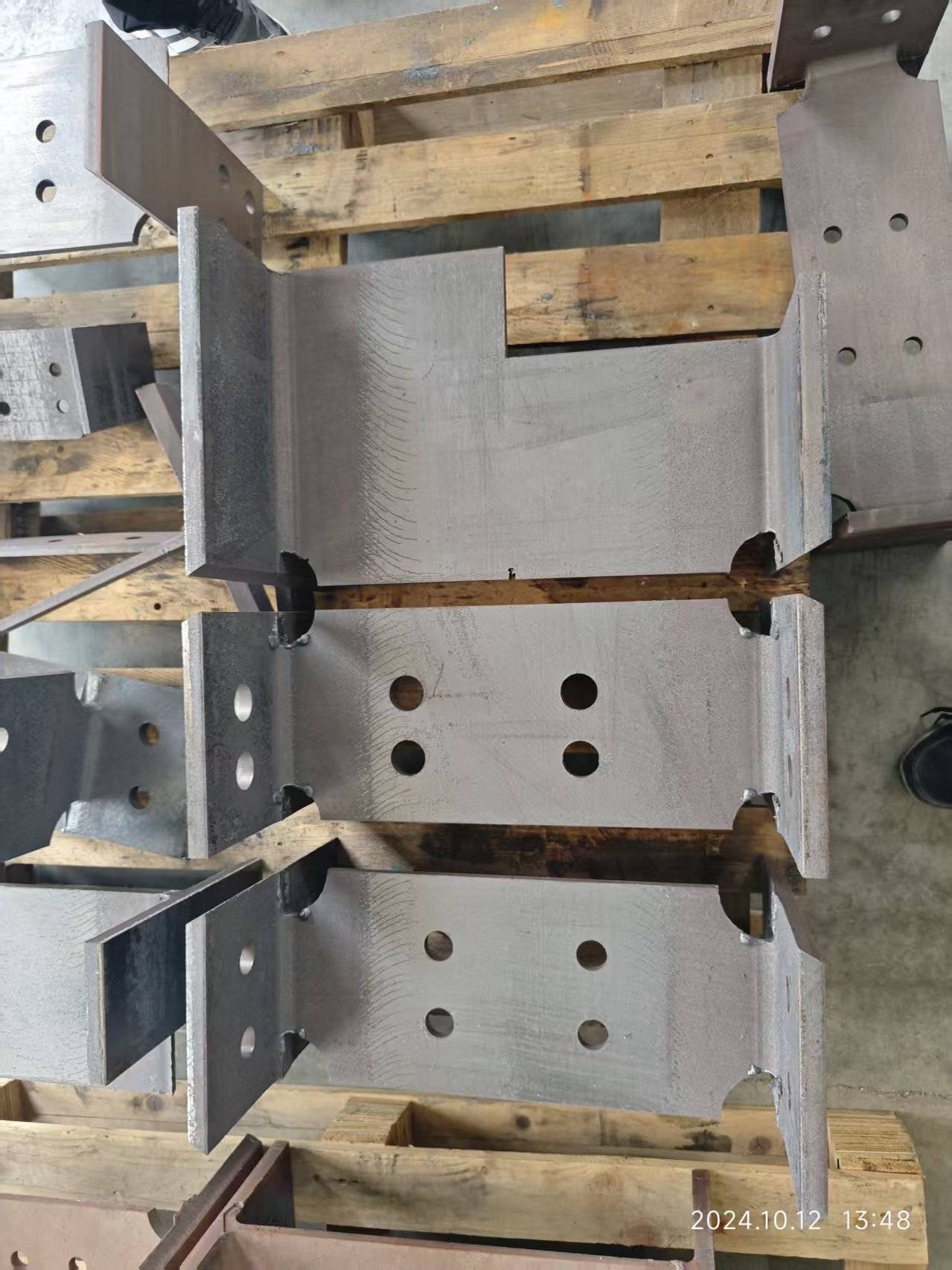
The 30kW Fiber Laser CNC Beam and Channel Cutter introduces a 5-axis or 3D cutting head capability. This allows the laser to perform complex bevels (up to 45 degrees) on the flanges and webs of structural beams. In the context of an Istanbul shipyard, where space is at a premium and efficiency is paramount, one machine can now handle the work of four. It cuts the profile to length, creates miter joints for complex intersections, and bores holes for piping and electrical conduits—all in a single continuous process. The accuracy of the CNC system ensures that when these beams reach the assembly floor, they fit together with tolerances measured in microns, significantly reducing the “re-work” time that often plagues large-scale maritime projects.
Mastering Zero-Waste Nesting Technology
In the high-stakes environment of Istanbul’s maritime sector, material costs represent a significant portion of a project’s budget. Traditional profile cutters often leave a “tail” or “dead zone” of 300mm to 500mm at the end of every beam because the mechanical chucks cannot hold the material close enough to the cutting head.
Zero-waste nesting technology solves this through a multi-chuck synchronization system. These machines typically employ three or four independent chucks that “hand off” the beam to one another. As the laser reaches the end of a profile, the final chuck moves the material past the cutting head while maintaining a rigid grip, allowing the laser to cut right to the very edge of the stock.
Combined with advanced nesting software, such as Lantek or SigmaNEST, the system calculates the optimal arrangement of parts across a standard 12-meter beam. The software accounts for the 30kW laser’s speed and the specific geometry of maritime components to ensure that scrap is reduced to virtually zero. For a shipyard processing thousands of tons of steel annually, the move to zero-waste nesting can result in seven-figure savings in raw material costs alone, while also reducing the environmental footprint of the facility.
The Istanbul Strategic Advantage: Tuzla and Yalova
Istanbul’s shipyards are uniquely positioned at the crossroads of Europe and Asia. The region specializes in high-complexity vessels, including chemical tankers, offshore support vessels, and luxury mega-yachts. These projects require a level of precision that traditional heavy industry cannot provide.
By implementing 30kW fiber lasers, Turkish shipbuilders are out-competing regional rivals by slashing lead times. A task that once took a team of workers two days—such as the preparation of the primary support ribs for a hull—can now be completed in a few hours. Furthermore, the 30kW system’s ability to cut through reflective materials like aluminum and brass (common in yacht building) without the risk of “back-reflection” damage to the fiber source makes it an incredibly versatile asset for the diverse portfolio of Istanbul’s maritime industry.
Operational Efficiency and the ROI of High-Wattage Systems
Critics of ultra-high-power lasers often point to the initial capital expenditure and power consumption. However, from a fiber laser expert’s perspective, the Return on Investment (ROI) is achieved through “speed-per-watt” efficiency.
A 30kW laser cuts 20mm steel profiles roughly 3 to 4 times faster than a 12kW system. This means the energy consumed per meter of cut is actually lower because the machine spends less time in operation for the same output. Additionally, the fiber laser’s wall-plug efficiency (WPE) is approximately 35-40%, far superior to older CO2 technology.
In a shipyard environment, the reduction in labor is the most significant cost-saver. Because the 30kW laser provides a finished edge, the hundreds of man-hours usually spent on grinding, de-burring, and cleaning edges before welding are eliminated. The CNC precision also means that automated welding robots can be used more effectively, as the gaps between joined parts are consistent and predictable.
Metallurgical Excellence: Minimal Heat-Affected Zones
One of the most critical factors in shipbuilding is the fatigue life of the steel. When steel is subjected to the intense heat of plasma or oxy-fuel, its crystalline structure changes, creating a Heat-Affected Zone (HAZ) that can become brittle and prone to cracking under the stress of ocean waves.
The 30kW fiber laser, despite its immense power, moves at such high velocities that the heat input into the surrounding material is extremely low. The “thermal shock” is localized to a very narrow strip. For Istanbul’s shipyards, which must adhere to strict international maritime classifications (such as Bureau Veritas or Lloyd’s Register), the use of 30kW laser technology ensures that the structural components meet the highest safety standards. This is particularly vital for the construction of pressure vessels and fuel tanks within the ship’s hull, where any metallurgical weakness could be catastrophic.
Conclusion: The Future of the Turkish Maritime Industrial Base
The 30kW Fiber Laser CNC Beam and Channel Cutter is more than just a tool; it is a signal of the digital transformation of the Turkish heavy industry. By adopting zero-waste nesting and ultra-high-power cutting, Istanbul’s shipyards are transitioning into “Smart Factories.”
The synergy between high-wattage hardware and intelligent software allows for a level of design flexibility previously thought impossible. Engineers can now design lighter, stronger vessels with complex geometries, knowing that the 30kW laser can execute those designs with flawless accuracy. As we look toward the next decade, the integration of these systems with AI-driven logistics and robotic assembly will solidify Istanbul’s reputation as a world leader in maritime manufacturing. The investment in 30kW technology is not just about cutting steel—it is about carving out a dominant position in the future of global trade and naval engineering.