Introduction to 2kW Precision Laser Systems in Industrial Fabrication
The evolution of thermal processing has reached a critical juncture with the widespread adoption of fiber laser technology. In the current industrial landscape of Queretaro, Mexico—a region synonymous with aerospace and automotive excellence—the implementation of a 2kW precision laser system represents a strategic upgrade for Tier 2 and Tier 3 suppliers. This power level, specifically 2000 watts, serves as a versatile “sweet spot” for manufacturers who require a balance between high-speed throughput on thin-to-medium gauge materials and manageable operational costs.
Precision laser cutting at 2kW provides the necessary power density to process complex geometries with a high degree of repeatability. Unlike CO2 lasers of the past, modern fiber systems utilize a solid-state gain medium, resulting in a beam with a shorter wavelength (typically around 1.06 microns). This shorter wavelength is more readily absorbed by metallic surfaces, particularly reflective ones, making it exceptionally efficient for processing galvanized steel, which remains a staple in the construction, HVAC, and automotive sectors of the Bajío region.
The Industrial Landscape of Queretaro: A Hub for Advanced Manufacturing
Queretaro has established itself as one of Mexico’s most sophisticated industrial corridors. With a heavy concentration of manufacturing facilities in parks such as El Marqués, Parque Industrial Querétaro, and Balvanera, the demand for high-precision components is constant. The local supply chain is heavily integrated with global standards, requiring local shops to utilize equipment that can meet stringent tolerances.
For a fabrication shop in Queretaro, a 2kW laser cutting system is not merely a tool but a competitive necessity. The ability to deliver parts with minimal heat-affected zones (HAZ) allows local manufacturers to serve the aerospace sector, where material integrity is paramount. Furthermore, the regional focus on sustainable manufacturing aligns with the energy efficiency of 2kW fiber systems, which consume significantly less power than their plasma or CO2 counterparts.

Material Challenges: Processing Galvanized Steel
Galvanized steel presents a unique set of challenges in the laser cutting environment. The material consists of a carbon steel core coated with a layer of zinc to prevent corrosion. While the zinc coating is beneficial for the longevity of the final product, it complicates the thermal cutting process. Zinc has a much lower melting and boiling point than the underlying steel. During the laser cutting process, the zinc coating tends to vaporize before the steel melts, which can lead to instability in the cutting kerf and potential contamination of the laser optics if not managed correctly.
A 2kW system provides sufficient energy to pierce and cut through galvanized layers rapidly, minimizing the time the zinc has to interfere with the beam’s path. Engineers must carefully calibrate the pulse frequency and duty cycle to ensure that the zinc layer is cleanly bypassed without excessive “boiling” at the edge, which can result in dross or a compromised edge finish that would require secondary grinding.
Technical Specifications of 2kW Fiber Laser Systems
To understand the efficacy of a 2kW system, one must look at the beam quality, often measured by the M2 factor. A high-quality 2kW fiber laser typically features an M2 factor close to 1.1, indicating a near-perfect Gaussian beam profile. This allows the laser cutting head to focus the energy into a very small spot size, increasing the power density to levels that can instantly sublimate steel.
Key technical attributes include:
– **Wavelength:** 1070 nm, ideal for high absorption in metals.
– **Beam Parameter Product (BPP):** Typically 0.5 to 2.0 mm.mrad, allowing for long-distance delivery via flexible fiber optic cables without loss of quality.
– **Power Stability:** High-end systems offer stability within +/- 1%, ensuring consistent cut quality over long production runs.
– **Cooling Requirements:** Most 2kW systems utilize a dual-circuit water chiller to maintain the temperature of both the laser source and the cutting head.
Optimization of Assist Gases for Galvanized Steel
The choice of assist gas is perhaps the most critical variable when using a 2kW laser for galvanized steel. Traditionally, oxygen was used to facilitate an exothermic reaction, increasing cutting speeds. However, when cutting galvanized material, oxygen can cause excessive burning of the zinc coating, leading to a charred edge that is unsuitable for welding or painting.
In the Queretaro industrial sector, nitrogen is the preferred assist gas for precision laser cutting of galvanized sheets. Nitrogen acts as a shielding gas, blowing away the molten material without allowing an oxidative reaction. This results in a “clean” or “bright” edge. For a 2kW system, using nitrogen requires higher pressures (typically 12 to 18 bar) to ensure that the vaporized zinc and molten steel are ejected from the kerf efficiently. This prevents the formation of “beard” or dross on the underside of the workpiece.
Precision Parameters and Motion Control
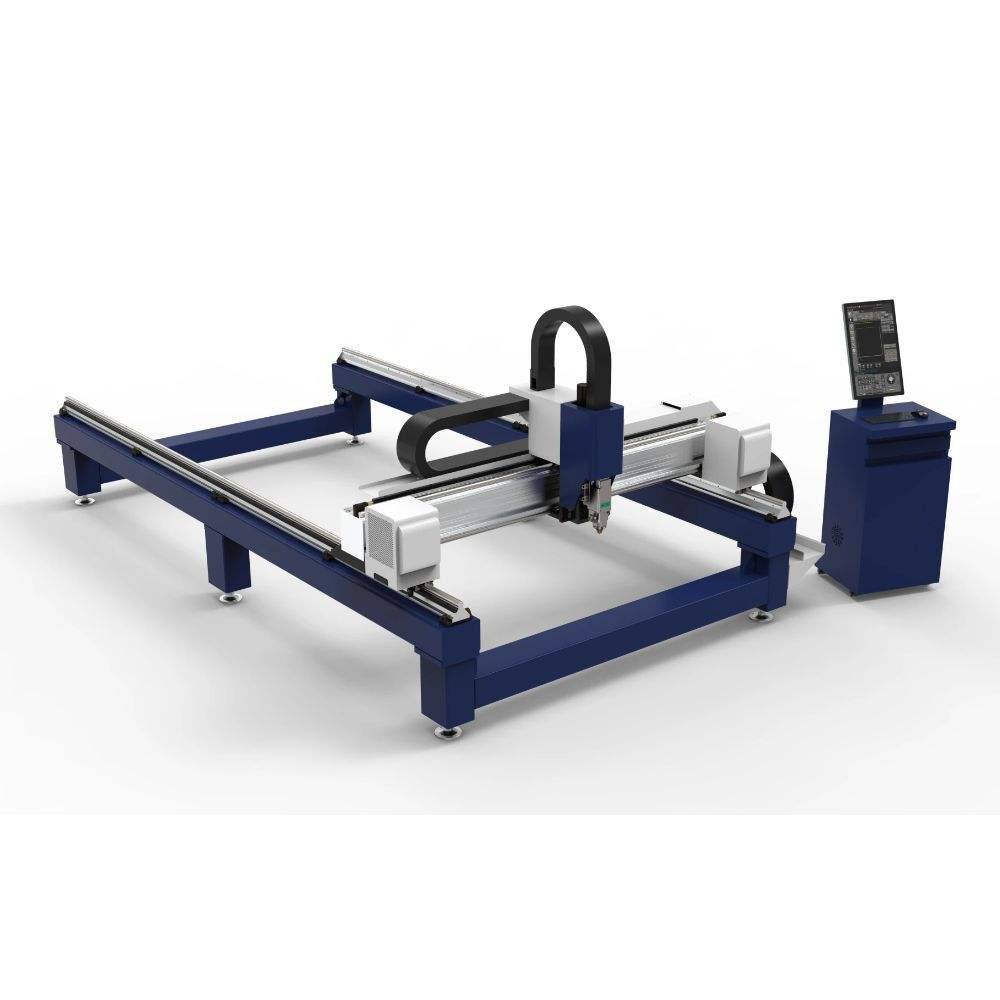
Precision in laser cutting is as much about the motion system as it is about the laser source. To fully utilize 2000 watts of power, the machine must be equipped with high-dynamic linear motors or precision rack-and-pinion systems. In Queretaro’s high-output environments, acceleration rates of 1.0G to 1.5G are standard for 2kW machines, allowing the head to maintain commanded speeds even when navigating tight radii or intricate lace-work patterns in sheet metal.
The CNC controller must also feature sophisticated “look-ahead” capabilities. This allows the machine to adjust the laser power in real-time based on the current velocity. For example, when the cutting head slows down to negotiate a corner, the controller reduces the 2kW output to prevent over-burning the material. This synchronization between the laser source and the motion system is what defines “precision” in a modern 2kW system.
Maintenance and Longevity in Queretaro’s Environment
Queretaro’s climate can be dusty, and its industrial zones often have high ambient temperatures during the summer months. For a 2kW laser cutting system, environmental control is vital. The laser source should be housed in an air-conditioned cabinet to prevent electronic failure and to keep the fiber couplings clean.
Maintenance protocols for processing galvanized steel must be more rigorous than those for cold-rolled steel. The vaporized zinc creates a fine metallic dust that can settle on the machine’s bellows, rails, and—most dangerously—the protective window of the cutting head. If zinc dust accumulates on the protective window, it will absorb laser energy, heat up, and eventually crack the lens or damage the internal optics. Daily cleaning of the optics and weekly inspection of the filtration system are mandatory for maintaining the precision of the laser cutting process.
Economic Impact and Return on Investment (ROI)
For a fabrication business in Queretaro, the investment in a 2kW precision laser system is justified through a rapid ROI. Compared to a 1kW system, the 2kW unit can often cut 1mm to 3mm galvanized steel at more than double the speed. This increase in throughput allows a shop to take on more contracts without increasing their footprint or labor costs.
Furthermore, the precision of the 2kW fiber laser reduces the need for secondary operations. Parts come off the machine ready for assembly. In the automotive supply chain, where “Just-In-Time” (JIT) delivery is the standard, the reliability and speed of a 2kW system ensure that production schedules are met. The lower maintenance costs of fiber technology compared to older CO2 systems also contribute to a lower total cost of ownership (TCO) over a five-to-ten-year horizon.
Safety Considerations and Fume Extraction
When laser cutting galvanized steel, safety is a paramount concern. The vaporization of zinc produces zinc oxide fumes, which can cause “metal fume fever” if inhaled by operators. A high-performance 2kW system must be paired with a robust dust collection and filtration system. In Queretaro, environmental regulations are increasingly strict, requiring manufacturers to ensure that exhausted air is properly filtered before being released into the atmosphere.
The machine should be fully enclosed (Class 1 laser safety rating) to protect personnel from reflected radiation. This is especially important when cutting galvanized steel, as the reflective nature of the zinc coating can cause “back-reflections” that could damage the laser source or injure bystanders if the system is not properly shielded.
Conclusion: The Future of Precision Fabrication in the Bajío
The integration of 2kW precision laser systems into the Queretaro manufacturing sector represents a significant leap forward in local production capabilities. By mastering the nuances of laser cutting galvanized steel—from assist gas optimization to rigorous optical maintenance—local firms can position themselves as world-class suppliers to the global aerospace and automotive industries.
As fiber laser technology continues to advance, the 2kW system remains the foundational tool for high-precision, high-efficiency sheet metal fabrication. For the engineers and business owners in Queretaro, choosing the right system, maintaining it to exacting standards, and optimizing it for the specific challenges of galvanized materials is the key to long-term industrial success. The precision offered by these systems ensures that the “Made in Mexico” label continues to be associated with quality, reliability, and technological sophistication.













