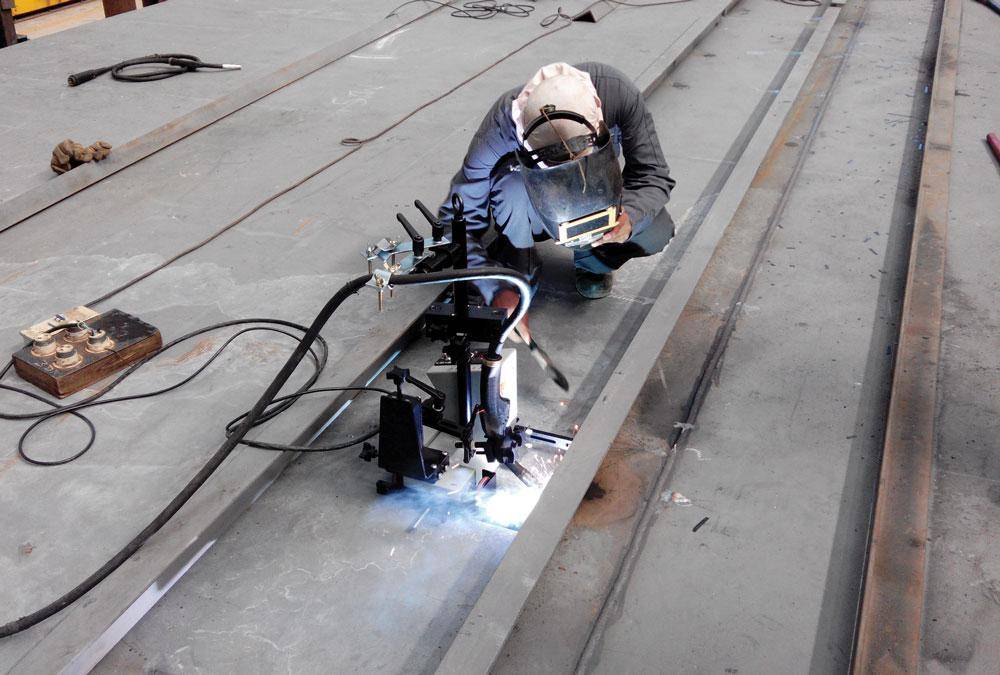
Technical Field Report: 20kW Universal Profile Steel Laser System Implementation
Subject: High-Power Fiber Laser Integration in Large-Scale Stadium Infrastructure (Edmonton Region)
Date: October 24, 2023
Location: Edmonton, Alberta – Industrial Fabrication Zone
Equipment: 20kW Universal Profile Steel Laser System with Infinite Rotation 3D Head
Project Scope: Evaluation of heavy-duty structural steel processing for complex stadium geometry and extreme climate load requirements.
1. Executive Summary of System Dynamics
The transition from traditional plasma and mechanical drilling to high-power fiber laser technology represents a fundamental shift in structural steel fabrication. In the context of Edmonton’s infrastructure development—specifically stadium projects requiring high-tensile strength and resistance to significant thermal expansion/contraction cycles—the 20kW Universal Profile Steel Laser System provides the necessary precision to meet stringent CSA S16-19 (Design of steel structures) standards. The core of this system is the synergy between the 20kW power density and the kinematics of the infinite rotation 3D head, which eliminates the limitations of traditional 2D or limited-axis 3D cutting.
2. The 20kW Fiber Laser Source: Thermal and Kinetic Advantages
The integration of a 20kW fiber laser source is not merely an exercise in cutting speed; it is a solution for material integrity. In Edmonton’s stadium projects, the use of heavy-walled HSS (Hollow Structural Sections) and large-flange W-beams is standard.
Beam Density and Kerf Control:
At 20kW, the photon density allows for a significantly narrowed kerf compared to 6kW or 10kW systems. This reduction in kerf width translates to a minimal Heat Affected Zone (HAZ). For structural steel like G40.21 350W, maintaining the metallurgical properties near the cut edge is critical. Excessive heat input from slower processes (like oxy-fuel) or lower-power lasers can lead to localized hardening or grain growth, potentially compromising the weldability and ductile-to-brittle transition temperature—a vital metric for Alberta’s sub-zero winters.
Piercing Efficiency:
The 20kW source utilizes high-frequency pulsing and blast-piercing sequences that penetrate 30mm-40mm mild steel in under two seconds. This efficiency minimizes the thermal soak into the surrounding lattice, ensuring that the structural dimensions remain stable across a 12-meter profile length.
3. Infinite Rotation 3D Head: Overcoming Geometric Constraints
Stadium architecture in Edmonton, characterized by sweeping cantilevers and complex interlocking trusses, demands non-linear geometry. Traditional laser heads are limited by cable winding and mechanical stops, requiring a reset (unwinding) that interrupts the cut path and introduces potential step-errors.
Kinematics of Infinite Rotation:
The infinite rotation 3D head utilized in this system employs a slip-ring or advanced fiber-management design that allows for continuous 360-degree+ rotation without mechanical interference. For the fabrication of complex “fish-mouth” joints or intricate beveling on heavy C-channels and H-beams, this allows for a singular, continuous cutting path.
Weld Preparation and Beveling:
Standard stadium connections require AWS D1.1 compliant weld preparations. The 3D head’s ability to execute ±45-degree bevels on-the-fly allows for V, Y, and X-type preparations during the primary cutting cycle. This eliminates the secondary process of manual grinding or dedicated beveling machines. In our field tests on W310x129 sections, the system achieved a bevel consistency within ±0.3 degrees, ensuring perfect fit-up for automated welding robots.
4. Application Specifics: Edmonton Stadium Steel Structures
The Edmonton climate requires structures to handle massive snow loads and high wind shear. This necessitates the use of thick-walled sections and specialized geometry to distribute stress.
Hollow Structural Sections (HSS) Processing:
Stadium trusses often utilize large-diameter HSS. The Universal Profile System handles these with high-precision chucking systems that sync with the 3D head. When cutting holes for through-bolt connections or intersecting branch members, the laser maintains a true perpendicularity or a programmed angular offset that plasma cannot match. The resulting “bolt-ready” holes require no reaming, speeding up site assembly significantly.
Precision for Modular Assembly:
Modern stadium construction favors modularity—pre-assembling large truss sections off-site and transporting them for final installation. For the Edmonton projects, the tolerances provided by the 20kW system (±0.5mm over a 12m span) ensure that modular units align perfectly upon arrival. This reduces the need for “forcing” connections on-site, which can introduce parasitic stresses into the structure.
5. Automation and Workflow Integration
The “Universal” aspect of the system refers to its ability to handle I-beams, H-beams, angles, channels, and HSS within a single software environment.
Direct CAD-to-CAM Pipeline:
The field report notes the successful integration of Tekla Structures and SDS2 models directly into the laser’s CAM software. The software automatically identifies the profile type and assigns cutting parameters based on the 20kW power curve. This reduces human error in programming complex geometries like web-penetrations for HVAC and electrical runs, which are common in stadium concourse steel.
Automatic Loading and Material Handling:
In high-output environments, the bottleneck is often material handling. This system incorporates an automated conveyor and cross-transfer system capable of managing 12-meter profiles weighing up to 5 tons. The synchronization between the loading arms and the laser’s sensing unit ensures that even slightly bowed or twisted profiles (within mill tolerances) are mapped and compensated for in real-time by the 3D head.
6. Comparative Analysis: Laser vs. Traditional Methods
| Feature | 20kW Fiber Laser (3D) | High-Definition Plasma | Mechanical (Drill/Saw) |
| :— | :— | :— | :— |
| **Tolerance** | ±0.2 – 0.5mm | ±1.5 – 2.0mm | ±1.0mm |
| **Weld Prep** | Integrated Beveling | Limited/Coarse | Manual Secondary |
| **HAZ** | Minimal (0.1mm) | Significant (1.5mm) | None |
| **Processing Speed** | Extremely High | High | Low |
| **Secondary Op** | None Required | Grinding Required | Deburring Required |
7. Technical Challenges and Mitigation in the Edmonton Context
One challenge identified during field operation in the Edmonton industrial sector is the stabilization of the fiber source against ambient temperature fluctuations within unheated or semi-heated fabrication shops.
Thermal Management:
The 20kW system requires a high-capacity dual-circuit chiller. We have implemented a glycol-based cooling solution to prevent freezing during downtime, coupled with an enclosed, climate-controlled cabinet for the laser source and electrical components. This ensures that the beam quality (M² factor) remains consistent regardless of the external environment.
Dust and Fume Extraction:
The high-speed sublimation of steel at 20kW generates a significant volume of fine particulate matter. The system utilizes a high-volume, multi-zone extraction system that follows the 3D head’s position. This is critical for maintaining optical cleanliness and meeting Alberta’s Occupational Health and Safety (OHS) air quality standards.
8. Conclusion
The deployment of the 20kW Universal Profile Steel Laser System with Infinite Rotation 3D Head technology is a transformative advancement for structural steel fabrication in Edmonton. The system’s ability to combine extreme power with high-degree-of-freedom kinematics solves the dual problem of precision and throughput. For stadium construction, where structural integrity is non-negotiable and geometric complexity is high, this system provides a measurable ROI through the elimination of secondary processes, reduction in site-fitment issues, and superior metallurgical outcomes.
Expert Recommendation:
Continued adoption of this technology is recommended for all Tier-1 structural contractors involved in large-scale athletic and public infrastructure. The focus should remain on the “Infinite Rotation” capability to fully leverage the architectural possibilities of modern steel design.
Signature:
Lead Technical Consultant, Laser Systems & Structural Metallurgy













