The Dawn of Ultra-High Power in Rayong’s Maritime Sector
Rayong has long been the industrial heartbeat of Thailand, but the maritime sector is currently undergoing a radical transformation. Historically, shipbuilding has relied on the brute force of plasma cutting or the slow, thermal intensity of oxy-fuel. While effective for thick plates, these methods introduce significant Heat-Affected Zones (HAZ) and distortion, requiring hours of manual rework. The introduction of the 20kW Universal Profile Steel Laser System changes this equation entirely.
At 20kW, the fiber laser is no longer just a tool for thin sheet metal; it is a heavy-industry workhorse. In the context of a Rayong shipyard, this power level allows for the high-speed sublimation of carbon steel up to 50mm, though its “sweet spot” remains the 16mm to 25mm range common in hull reinforcement and internal ribbing. The jump from 10kW to 20kW isn’t just about cutting thicker; it’s about cutting mid-range thicknesses at speeds that were previously unthinkable, often exceeding 4-5 meters per minute on structural grades.
Universal Profile Processing: Beyond Flat Sheets
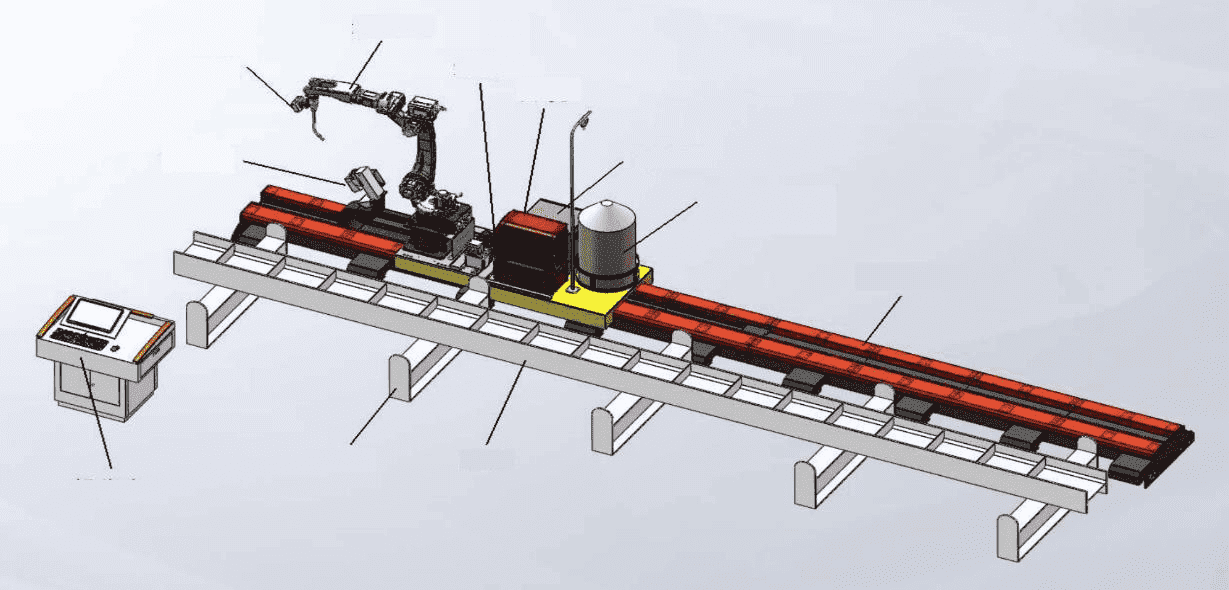
Shipbuilding is a three-dimensional puzzle. While flat plates form the skin of the vessel, the “bones” are made of profiles: bulb flats (HP-profiles), angles, channels, and massive I-beams. A “Universal Profile” laser system is distinct from a standard flatbed laser because it utilizes a multi-axis chuck system and often a robotic or 5-axis cutting head.
In Rayong’s specialized yards, these systems are designed to handle lengths of up to 12 or 15 meters. The challenge with profile steel is its inherent inconsistency; hot-rolled steel often arrives with slight bows or twists. The 20kW system compensates for this using advanced laser scanning and touch-probe sensors. Before the first spark flies, the system maps the geometry of the beam, adjusting the cutting path in real-time to ensure that bolt holes, notches, and weld preparations (bevels) are perfectly aligned across the entire length of the profile.
The 20kW Edge: Precision and Metallurgy
As a laser expert, the most significant advantage I observe with 20kW delivery is the beam quality and the resulting edge metallurgy. In shipbuilding, the quality of the “Weld Prep” is paramount. A 20kW fiber laser provides a concentrated energy density that produces a narrow kerf and a near-mirror finish on the cut edge.
Because the cutting speed is so high, the heat has less time to dissipate into the surrounding material. This results in a much smaller HAZ compared to plasma. For Rayong shipbuilders, this means the metallurgical properties of the high-tensile steel remain intact. Furthermore, the 20kW system allows for high-precision beveling (A, V, X, and K-cuts) in a single pass. This eliminates the need for CNC milling or manual grinding before welding, which is a massive bottleneck in traditional shipyard workflows.
Automatic Unloading: The Link in the Efficiency Chain
A 20kW laser cuts so fast that manual unloading becomes a physical impossibility for the workforce. If the laser is cutting a 12-meter I-beam every few minutes, the logistical “tail” must be able to keep up. This is where the Automatic Unloading System becomes critical.
The unloading mechanism in these systems typically employs a series of heavy-duty chain conveyors and hydraulic lifting arms designed to handle several tons of steel. Once a profile is cut, the system automatically detects the end-of-cycle and moves the finished part to a staging area. In a climate like Rayong—where heat and humidity can lead to rapid operator fatigue—automation ensures that the machine’s duty cycle remains near 90-95%. It removes the human element from the dangerous task of moving large, hot structural members, thereby increasing safety while maintaining a constant production heartbeat.
Strategic Location: Why Rayong Matters
The deployment of this technology in Rayong is a calculated move within the framework of the Eastern Economic Corridor (EEC). Rayong’s proximity to Laem Chabang and Map Ta Phut ports means that shipyards are often servicing international fleets and offshore oil and gas interests. These clients demand certifications (such as DNV or ABS) that are much easier to attain when the fabrication is done via high-precision laser.
Furthermore, Rayong’s industrial ecosystem provides the necessary support for such a high-tech installation. 20kW systems require significant power stability and a robust supply of industrial gases (Oxygen for carbon steel, Nitrogen for stainless). The localized supply chain in the Rayong-Chonburi corridor ensures that the operational costs of running a 20kW system are kept competitive on a global scale.
Technical Challenges: Managing the Rayong Environment
Operating a 20kW fiber laser in a tropical coastal environment like Rayong presents unique engineering challenges. High humidity and saline air are the enemies of high-voltage electronics and sensitive optics.
To combat this, the 20kW Universal Profile systems are housed in climate-controlled enclosures. The fiber laser source itself is hermetically sealed, and the chillers must be oversized to handle the ambient Thai heat while maintaining the precise temperature of the laser diodes and the cutting head. As an expert, I emphasize the importance of “Positive Pressure” within the optical path. By maintaining a constant flow of clean, dry air, we prevent the ingress of humid, salty air that could otherwise lead to “thermal lensing” or catastrophic failure of the protective windows.
ROI and the Economic Impact on Shipbuilding
The capital expenditure for a 20kW laser with automatic unloading is significant, but the Return on Investment (ROI) is driven by three factors: material utilization, labor reduction, and “Fit-up” speed.
1. **Material Utilization:** Advanced nesting software for profiles allows shipbuilders to minimize “drops” or scrap. With the precision of the laser, parts can be nested closer together than is possible with plasma.
2. **Labor Reduction:** The automatic unloading system and the elimination of secondary grinding allow a single operator to oversee a process that previously required a team of five or six workers.
3. **Fit-up Speed:** In shipbuilding, the most time-consuming phase is “fairing” and fitting plates and profiles together. Because the laser-cut profiles are dimensionally perfect, they “click” together like Lego blocks. This can reduce the overall assembly time of a vessel hull by up to 30%.
Future Outlook: Toward Industry 4.0 in Thai Yards
The 20kW Universal Profile Steel Laser System is more than just a cutting machine; it is a data hub. These systems in Rayong are increasingly integrated into the shipyard’s PLM (Product Lifecycle Management) software. Every cut, every gas cubic meter used, and every unloading cycle is tracked.
As we look toward the future, the integration of AI will allow these machines to predict maintenance needs—such as identifying when a nozzle is wearing out or when the chiller’s efficiency is dropping due to Rayong’s heat. For the Thai shipbuilding industry, this transition to ultra-high-power laser fabrication isn’t just about keeping up with the world; it’s about taking a leadership position in the high-tech maritime manufacturing of the 21st century. The 20kW system is the sharpest tool in that endeavor, carving out a new future for the Rayong industrial landscape.