The Dawn of High-Power Fiber Lasers in Indonesian Infrastructure
As a fiber laser expert witnessing the rapid industrialization of Southeast Asia, specifically within the Jabodetabek region, I have observed a significant transition from traditional fabrication to high-precision automated systems. The introduction of the 20kW Universal Profile Steel Laser System is not merely an upgrade in wattage; it is a total reimagining of how modular buildings are designed and assembled.
In Jakarta, where the demand for rapid, earthquake-resilient, and cost-effective housing is at an all-time high, the 20kW fiber source provides the necessary “punch” to penetrate thick structural steels (up to 50mm or more) that were previously the sole domain of plasma cutting or mechanical machining. The 20kW threshold is critical because it allows for high-speed “flying cuts” on medium-thickness profiles and high-quality oxygen or nitrogen cuts on the heavy-duty sections required for multi-story modular frames.
The Mechanics of 20kW Photonic Precision
At the heart of this system lies the 20kW ytterbium-doped fiber laser source. For the uninitiated, the leap from 6kW or 12kW to 20kW is exponential in terms of productivity. In a 20kW system, the power density at the focal point is immense, allowing the laser to reach the vaporization temperature of carbon steel almost instantaneously.
For modular construction in Jakarta, this means that the “Heat Affected Zone” (HAZ) is drastically reduced. In traditional welding and oxy-fuel cutting, the structural integrity of the steel can be compromised by excessive heat soak. With a 20kW fiber laser, the cut speed is so rapid that the heat has little time to dissipate into the surrounding material. This preserves the metallurgical properties of the H-beams and square tubes, ensuring that the modular units maintain their structural rated strength—a vital factor given Indonesia’s seismic activity.
Universal Profile Processing: Beyond Flat Sheets
The “Universal Profile” capability is what separates this system from standard flatbed lasers. Modular construction relies heavily on 3D shapes: I-beams (IPE, HEA, HEB), channels (UPN, PFC), and hollow structural sections (RHS, SHS).
This system utilizes a multi-axis chuck system and a 3D cutting head that can rotate and tilt. This allows for complex beveling, miter cuts, and the precise cutting of bolt holes and interlocking “Lego-style” notches in a single pass. In the context of Jakarta’s modular factories, this means a beam can enter the machine as a raw 12-meter length and exit as a fully finished component, ready for immediate assembly without the need for secondary deburring or drilling. This “one-hit” manufacturing process is the backbone of the “Just-in-Time” (JIT) delivery model used in modern pre-fab construction.
Automatic Unloading: Solving the Jakarta Throughput Challenge
In high-output environments like the industrial corridors of Cikarang or Tangerang, the bottleneck is rarely the laser itself; it is the material handling. A 20kW laser cuts so fast that manual unloading cannot keep pace, leading to machine downtime and safety risks.
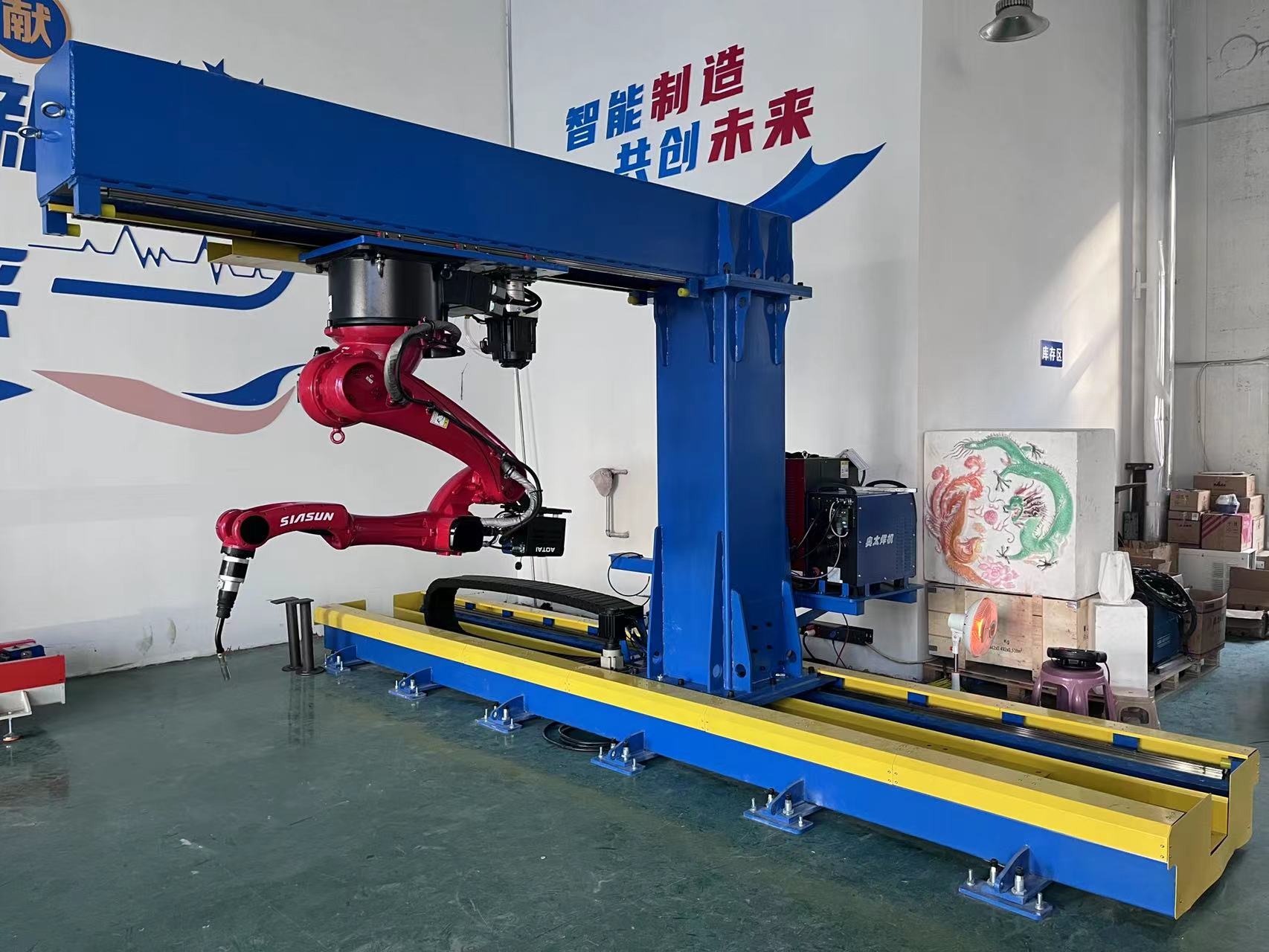
The Automatic Unloading System integrated into these units utilizes heavy-duty robotic arms or specialized conveyor lifters designed to handle profiles weighing several tons. Once the 3D cutting head completes its cycle, the system automatically detects the finished part, supports it to prevent sagging or “tip-ups,” and moves it to a designated stacking area. This synchronization ensures that the laser source has a “duty cycle” approaching 90-95%. For a modular construction firm, this translates to a predictable, 24/7 production schedule that isn’t dependent on the physical fatigue of manual laborers.
Applications in Jakarta’s Modular Construction Boom
Jakarta is currently undergoing a massive shift toward “off-site construction.” From rapid-response medical facilities to high-rise residential modules, the city is embracing pre-fabrication to bypass the logistical nightmares of inner-city construction sites.
1. **Precision Interlocking Joints:** The 20kW system allows for the creation of complex “tenon and mortise” joints in structural steel. These joints allow modular units to click together with millimeter precision, reducing the reliance on site-welding, which is often inconsistent and weather-dependent in Jakarta’s humid, rainy climate.
2. **Weight Optimization:** By using the laser to cut weight-reduction patterns into non-load-bearing sections of large beams (perforated webs), engineers can reduce the total weight of a module without sacrificing strength. This makes transportation through Jakarta’s congested streets more manageable and reduces the crane capacity required on-site.
3. **Integrated Utility Passages:** The system can pre-cut all holes for plumbing, electrical conduits, and HVAC ducting directly into the structural frame. When the module reaches the “fit-out” stage in the factory, the technicians don’t need to waste time measuring and hand-cutting holes; the paths are already there, accurate to 0.1mm.
The Economic Impact: ROI and Competitive Advantage
For an Indonesian fabrication firm, the capital expenditure (CAPEX) of a 20kW system is significant. However, the return on investment (ROI) is realized through three specific avenues:
* **Labor Reduction:** The automated unloading and “one-pass” processing reduce the headcount required for a typical fabrication line by up to 60%.
* **Material Savings:** Advanced nesting software for profiles minimizes the “remnant” or scrap metal. With the price of global steel fluctuating, saving 5-10% on material can be the difference between a profitable and a losing project.
* **Lead Time:** Projects that used to take weeks in a traditional machine shop can now be completed in days. In the competitive Jakarta real estate market, being able to deliver a 10-story modular building three months faster than a competitor is a massive advantage.
Technical Challenges and Environmental Considerations
Operating a 20kW laser in Jakarta comes with specific environmental challenges. The high humidity and ambient temperatures require specialized industrial chillers with high-precision thermal stability. Fiber lasers are sensitive to moisture; therefore, the optical path and the power source cabinets must be climate-controlled to prevent condensation.
Furthermore, the power stability of the local grid in some industrial zones may require the installation of high-capacity voltage stabilizers and UPS systems. A 20kW laser requires a significant “wall-plug” power draw, and any fluctuation can affect the beam quality or damage the delicate diode modules. As an expert, I always recommend a dedicated substation for installations of this magnitude to ensure the “M2” (beam quality factor) remains constant.
Safety and Training: The Human Element
With 20kW of invisible infrared radiation, safety is paramount. The system is fully enclosed (Class 1 safety rating) with laser-safe glass viewing windows. However, the shift to this technology requires a new breed of technician in Jakarta—less “welder” and more “systems operator.”
The workforce must be trained in CNC programming, CAD/CAM integration, and the nuances of laser gas mixtures (using Nitrogen for clean cuts or Oxygen for thicker carbon steel). This upskilling of the local Jakarta workforce is a secondary but vital benefit of the technology, as it pushes the Indonesian manufacturing sector toward the “Industry 4.0” standard.
Conclusion: The Future of the Jakarta Skyline
The 20kW Universal Profile Steel Laser System with Automatic Unloading is more than a piece of machinery; it is an industrial catalyst. As Jakarta continues to expand and modernize, the speed, precision, and efficiency of modular construction will become the standard, not the exception.
By eliminating the manual constraints of the past, this technology allows architects and engineers to dream bigger, building safer and more complex structures in a fraction of the time. For the modular construction industry in Indonesia, the “20kW revolution” is the key to unlocking a more sustainable, efficient, and technologically advanced urban future. The investment in such systems today will define the skyline of Jakarta for decades to come.