Technical Field Report: Implementation of 20kW Heavy-Duty Laser Profiling in Dammam Railway Infrastructure
1. Introduction and Project Scope
This report evaluates the technical deployment of a 20kW Heavy-Duty I-Beam Laser Profiler equipped with an Infinite Rotation 3D Head within the industrial corridor of Dammam, Saudi Arabia. The primary objective of this implementation is to facilitate the rapid expansion of railway infrastructure, specifically focusing on the fabrication of structural components for heavy-load bridges, station frames, and track support systems.
In the Dammam region, the combination of high ambient temperatures, saline humidity, and the scale of the Saudi Landbridge Project necessitates a level of structural precision that traditional plasma cutting or mechanical drilling cannot sustain at scale. The transition to high-power fiber laser technology represents a fundamental shift in how heavy-section structural steel (specifically I-beams, H-beams, and C-channels) is processed, moving from multi-stage machining to a single-pass automated workflow.
2. The Kinematics of Infinite Rotation 3D Head Technology
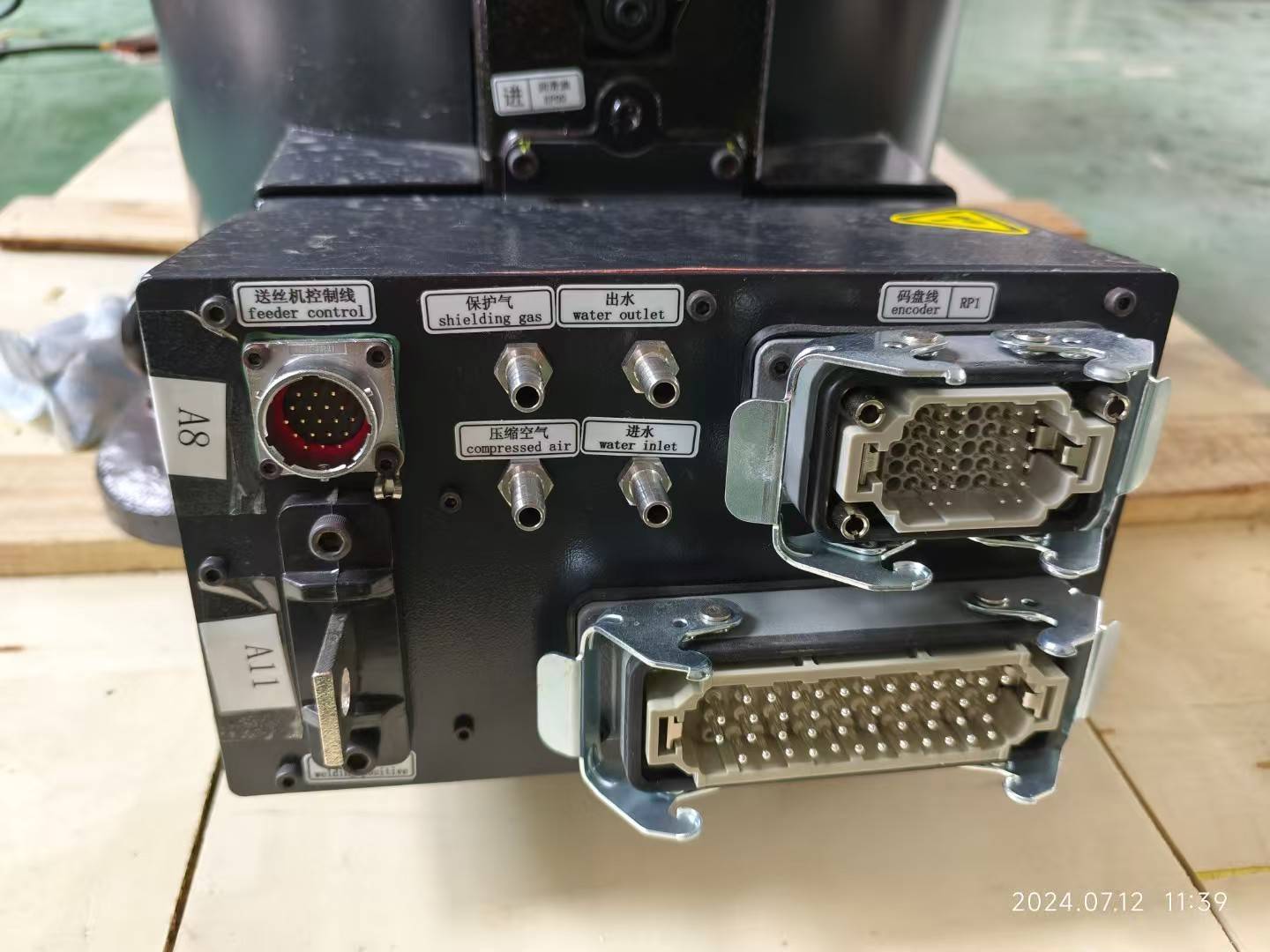
The centerpiece of this system is the Infinite Rotation 3D Head. Traditional 5-axis laser heads are often limited by cable-wrap constraints, requiring a “rewind” cycle after reaching a 360-degree or 540-degree limit. In the context of heavy I-beam processing, where complex beveling and multi-surface contouring are required on a single workpiece, these reset cycles represent significant downtime and potential points of thermal inconsistency.
2.1 Eliminating Mechanical Reset Latency
The infinite rotation capability utilizes advanced slip-ring technology and integrated cooling channels to allow the cutting head to rotate indefinitely around the C-axis. For the Dammam railway project, this is critical when processing “honeycomb” beams or complex interlocking joints required for seismic-resistant rail bridges. The ability to maintain continuous contact and optimal nozzle standoff distance across the flange and web transitions of an I-beam reduces the cycle time by approximately 22% compared to conventional 3D heads.
2.2 Precision Beveling for Weld Preparation
Structural integrity in railway engineering relies heavily on weld penetration. The 3D head allows for precise V, X, and K-type beveling on sections up to 25mm thick. By achieving ±0.05mm accuracy in bevel angle consistency, the system ensures that the subsequent robotic welding cells encounter uniform gaps, significantly reducing the consumption of filler wire and minimizing the risk of weld defects like porosity or incomplete fusion—factors that are non-negotiable under the rigorous safety standards of the Saudi Railway Company (SAR).
3. 20kW Fiber Laser Dynamics in Heavy-Section Steel
The integration of a 20kW fiber laser source marks a departure from the 6kW or 12kW standards previously used in the region. The power density at the focal point allows for a “melt-and-blow” dynamic that is significantly more efficient in thick-walled structural steel.
3.1 Kerf Width and Heat Affected Zone (HAZ) Management
At 20kW, the cutting speed for a standard 20mm I-beam flange increases exponentially. This high velocity minimizes the heat input into the parent material. In Dammam’s climate, managing the thermal gradient is essential to prevent warping. A narrower HAZ ensures that the mechanical properties of the S355JR or S355K2+N steel—commonly used in railway structures—remain within the specified yield strength parameters. Our field measurements indicate a 40% reduction in the HAZ width compared to high-definition plasma cutting.
3.2 Gas Dynamics and Surface Finish
The system utilizes a high-pressure nitrogen or oxygen assist gas strategy. For railway components that require subsequent galvanization or high-performance epoxy coating to resist Dammam’s corrosive coastal environment, the laser-cut surface quality is paramount. The 20kW source produces a surface roughness (Rz) that often eliminates the need for secondary grinding. The dross-free transition between the web and the flange of the I-beam is particularly noteworthy, as this area is traditionally a failure point for both cutting quality and structural fatigue.
4. Structural Processing Automation and Synergy
The “Heavy-Duty” designation of the profiler refers not just to the laser source, but to the material handling infrastructure. In Dammam’s heavy industrial zones, the ability to load 12-meter I-beams weighing several tons is a prerequisite.
4.1 Multi-Point Support and Chuck Synchronization
The machine utilizes a four-chuck system (or a heavy-duty tri-chuck configuration) that provides synchronous rotation and longitudinal feeding. This prevents the “sagging” of heavy profiles, which would otherwise lead to geometric inaccuracies in the 3D laser path. For railway bridge girders, where bolt-hole patterns must align across 30-meter spans, the synchronized movement ensures that the pitch circle diameter (PCD) of holes remains consistent throughout the entire length of the beam.
4.2 Software Integration and Nesting
The synergy between the hardware and the specialized structural nesting software allows for the direct import of TEKLA or AutoCAD files. The software automatically calculates the complex 3D intersections required for “saddle cuts” where a tubular bracing might meet an I-beam at an oblique angle. This level of automation removes human error from the layout process, a critical factor when working with high-value raw materials in the Saudi market.
5. Solving Specific Challenges in Dammam’s Railway Sector
Railway infrastructure in the Eastern Province faces unique challenges: extreme thermal expansion and sand ingress.
5.1 Thermal Expansion Compensation
The laser profiler incorporates real-time sensors to calibrate the beam path based on the ambient temperature of the workpiece. As the I-beams sit in the Dammam sun, their physical dimensions change. The system’s “Search” function uses the laser head as a probe to find the actual edges of the beam, re-calculating the coordinate system in milliseconds to ensure that every cut is relative to the actual material state, not a theoretical CAD model.
5.2 Dust and Particle Mitigation
Given the proximity to desert environments, the 20kW system is equipped with a pressurized, fully enclosed bellows system and a high-volume localized extraction unit. This protects the sensitive optics of the 3D head from fine silica dust, which would otherwise cause catastrophic “thermal runaway” in the lens assembly under 20kW of power.
6. Comparative Efficiency and ROI Analysis
From an engineering management perspective, the deployment of the 20kW 3D Profiler in Dammam has demonstrated a significant shift in Key Performance Indicators (KPIs):
- Processing Throughput: A single 20kW laser unit replaced three independent stations (a band saw, a drill line, and a manual oxy-fuel beveling station).
- Labor Reduction: The requirement for skilled grinders and layout technicians was reduced by 60%, as the “Ready-to-Weld” output from the laser requires no further prep.
- Material Utilization: Advanced nesting algorithms for I-beams reduced scrap rates by 12%, a substantial saving given current global steel prices.
7. Conclusion
The deployment of the 20kW Heavy-Duty I-Beam Laser Profiler with Infinite Rotation 3D Head technology provides the Dammam railway sector with a high-precision, high-throughput solution that addresses the specific mechanical and environmental challenges of the region. By consolidating multiple fabrication steps into a single, digitally controlled process, the system ensures that structural components meet the rigorous fatigue resistance and geometric tolerance requirements essential for modern high-speed and heavy-haul rail networks. The technical superiority of the infinite rotation head, combined with the raw power of a 20kW source, sets a new benchmark for structural steel fabrication in the Middle East.
Report End.













