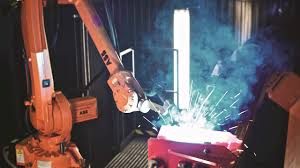
The Dawn of 20kW Fiber Laser Power in Brazilian Infrastructure
The global shift toward renewable energy has placed immense pressure on the manufacturing sector to produce larger, stronger, and more efficient wind turbine components. In Sao Paulo, the industrial epicenter of Latin America, the deployment of 20kW H-Beam laser cutting Machines is a direct response to this demand. As an expert in fiber laser technology, I have observed the evolution from 6kW to 20kW, and the difference is transformative.
A 20kW fiber laser source provides a power density that allows for the vaporization of thick structural steel—often used in the flanges and webs of H-beams—at speeds that were previously unthinkable. For wind turbine towers, which require massive internal platforms, ladders, and structural supports, the ability to cut through 30mm to 50mm carbon steel with a narrow heat-affected zone (HAZ) is critical. This high power output ensures that the beam maintains its stability and focus even when penetrating the dense molecular structure of industrial-grade structural steel, resulting in a finish that requires zero post-processing.
Precision Engineering for Wind Turbine Towers
Wind turbine towers are not merely hollow tubes; they are complex engineering marvels that must withstand extreme fatigue loads over a 25-year lifespan. The internal structural components, often fabricated from H-beams and heavy-duty channels, must fit perfectly to ensure the structural integrity of the entire assembly.
The 20kW H-beam laser cutting machine utilizes a multi-axis head capable of 3D beveling. This is essential for wind tower fabrication where “V” or “K” shaped weld preparations are required. Traditional plasma cutting often leaves dross and a significant heat-affected zone that can lead to micro-fractures under the rhythmic stress of a rotating turbine. In contrast, the 20kW fiber laser produces a clean, surgical cut. By minimizing the thermal input into the material, we preserve the metallurgical properties of the steel, ensuring that the H-beams used in the tower’s foundation and internal scaffolding meet the rigorous safety standards of the global wind energy market.
Zero-Waste Nesting: The Economic Engine of Sao Paulo Fabrication
In the competitive landscape of Sao Paulo’s manufacturing sector, the margin for error is slim, and material costs are high. This is where “Zero-Waste Nesting” software becomes the “brain” of the 20kW laser system. Zero-waste nesting is an advanced computational approach that arranges parts on a beam or plate in a way that maximizes material utilization, often exceeding 95% efficiency.
For H-beam processing, this involves intelligent “common-line cutting,” where two parts share a single cut path. The software calculates the optimal orientation of brackets, holes, and notches across the length of the beam. In the context of wind turbine towers—where thousands of tons of steel are processed annually—a 5% to 10% reduction in material waste translates to millions of Reais in savings. Furthermore, reducing waste aligns with the “Green Manufacturing” initiatives that many energy companies now require from their tier-one suppliers in Brazil.
Strategic Advantages of the Sao Paulo Industrial Hub
Sao Paulo is uniquely positioned to lead the wind energy fabrication surge. With its proximity to the Port of Santos and a robust network of raw material suppliers, the region serves as the perfect staging ground for the 20kW laser revolution.
Operating a 20kW machine requires more than just a power outlet; it requires a sophisticated ecosystem. This includes high-purity gas supplies (Oxygen or Nitrogen) for the cutting process, a stable power grid, and, most importantly, skilled technicians. Sao Paulo’s technical institutes and established industrial base provide the human capital necessary to operate these CNC (Computer Numerical Control) marvels. By centralizing the production of wind tower internals in Sao Paulo using high-power lasers, companies can leverage local logistics to ship completed, high-precision assemblies to wind farms in the Northeast or the South, significantly reducing the “error-at-site” risks that plague remote assembly.
Technical Superiority: Fiber Over Plasma and CO2
For decades, the heavy structural industry relied on plasma or CO2 lasers. However, as an expert, I can confidently state that the 20kW fiber laser has rendered those technologies obsolete for wind tower applications.
First, the wall-plug efficiency of fiber lasers is roughly 35-40%, compared to the 10% of CO2 lasers. This leads to significantly lower electricity bills—a vital factor in Brazil’s fluctuating energy market. Second, the wavelength of a fiber laser (1.06 microns) is absorbed much more readily by metals than the 10.6 microns of a CO2 laser, allowing for faster cutting and the ability to process reflective materials like the aluminum or copper often found in a turbine’s electrical housing.
Compared to plasma, the 20kW fiber laser offers a kerf width that is a fraction of the size. This precision allows for the cutting of complex bolt-hole patterns directly into the H-beam flanges with tolerances of +/- 0.1mm. This eliminates the need for secondary drilling operations, streamlining the production line and reducing labor costs.
Environmental Impact and Sustainability
The wind energy sector is built on the premise of sustainability, and it is only fitting that the machines used to build its infrastructure reflect those values. The 20kW H-beam laser cutting machine is a cleaner technology. It produces fewer fumes than plasma cutting, and the “Zero-Waste” software ensures that we are extracting the maximum value from every kilogram of steel.
In Sao Paulo, where environmental regulations are becoming increasingly stringent, the low environmental footprint of fiber lasers is a significant advantage. The reduction in scrap metal also reduces the carbon footprint associated with the transport and recycling of waste material. We are essentially building the future of green energy using the greenest heavy-fabrication technology available today.
Overcoming Challenges in High-Power Laser Integration
Implementing 20kW technology is not without its challenges. The sheer intensity of the beam requires advanced optics and robust cooling systems. In the humid climate of Sao Paulo, moisture control in the cutting head environment is paramount to prevent lens contamination.
Furthermore, the “Zero-Waste Nesting” requires a shift in mindset for CAD/CAM designers. They must design with the laser’s capabilities in mind, utilizing tabs and micro-joints to ensure that parts remain stable during the high-speed cutting process. As an expert, I emphasize training programs for local operators, focusing on beam parameter optimization and nozzle maintenance, which are the keys to maintaining the 20kW machine’s performance over long shifts.
Conclusion: The Future of Brazilian Wind Energy
The integration of 20kW H-beam laser cutting machines with Zero-Waste Nesting in Sao Paulo is a defining moment for the Brazilian wind energy supply chain. It represents a shift from “traditional heavy industry” to “high-tech precision fabrication.” By producing wind turbine tower components that are more accurate, more durable, and less expensive, Sao Paulo is not just supplying a local market; it is positioning itself as a global leader in renewable energy infrastructure.
As we look toward the future, the continued evolution of laser power and artificial intelligence in nesting software will only further drive down costs and increase the viability of wind power. For the engineers and manufacturers in Sao Paulo, the 20kW fiber laser is more than just a tool—it is the engine of a sustainable industrial revolution.