The Dawn of Ultra-High-Power Fiber Lasers in Monterrey’s Steel Belt
Monterrey, often hailed as the industrial capital of Mexico, has long been a hub for steel production and heavy manufacturing. However, the recent introduction of 20kW fiber laser systems designed specifically for beam and channel cutting is transforming the local landscape from traditional fabrication to high-precision engineering. For decades, bridge engineering relied on plasma cutting, oxy-fuel, or mechanical drilling—processes that, while functional, were fraught with limitations regarding speed, precision, and secondary finishing requirements.
A 20kW fiber laser is not merely a “faster version” of its predecessors; it is a fundamental shift in material interaction. At this power level, the photon density is sufficient to vaporize thick-gauge structural steel almost instantaneously. For bridge engineers, this means the ability to slice through 1-inch to 2-inch thick steel flanges with a “surgical” edge quality that was previously impossible. In Monterrey’s competitive market, where proximity to major steel mills like Ternium provides a raw material advantage, the ability to process that material with 20kW precision offers a massive logistical and economic edge.
Revolutionizing Structural Profiles: Beams, Channels, and Beyond
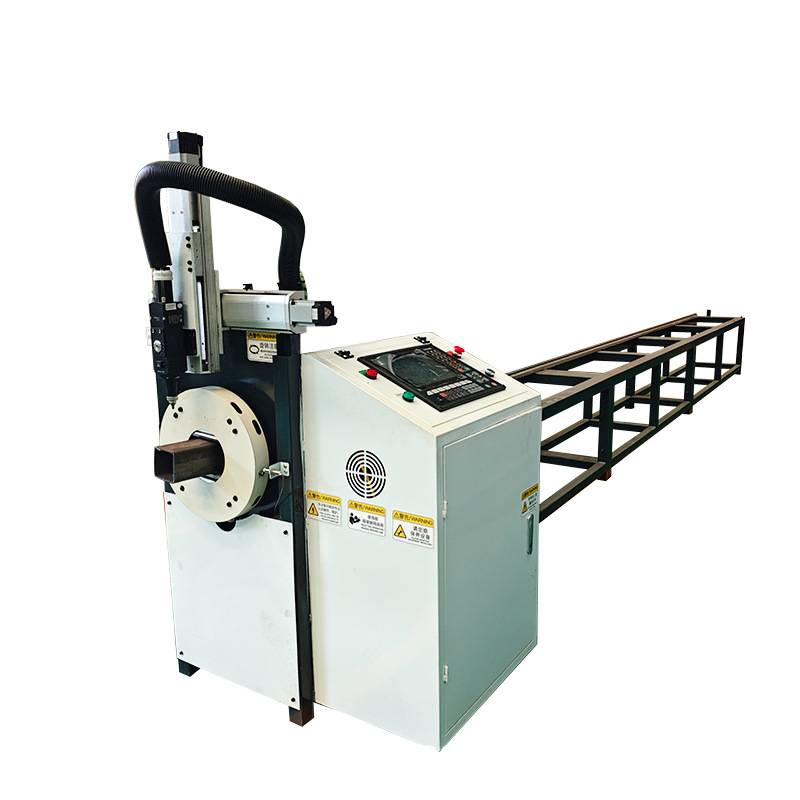
Bridge engineering depends on the structural integrity of I-beams, H-beams, and C-channels. Traditional methods of preparing these profiles—such as manual layout, drilling, and sawing—are labor-intensive and prone to human error. A 20kW CNC beam laser cutter automates this entire workflow. These machines are equipped with advanced multi-axis heads and rotary chucks that allow the laser to move around the profile, cutting holes, slots, notches, and complex bevels in a single pass.
The “CNC” aspect is critical. By importing BIM (Building Information Modeling) and CAD files directly into the laser’s interface, the machine can execute complex geometries required for bridge trusses and supports with tolerances measured in fractions of a millimeter. This eliminates the need for manual “marking out” and ensures that when components arrive at the construction site—whether it is a highway overpass in Nuevo León or a suspension bridge in the United States—they fit together perfectly. This “plug-and-play” structural assembly is a direct result of the high-fidelity cutting provided by 20kW fiber systems.
The Science of Zero-Waste Nesting in Structural Fabrication
One of the most significant costs in bridge engineering is material waste. Structural steel is sold by weight, and in large-scale infrastructure projects, the “scrap rate” can often reach 15% to 20% using traditional cutting methods. Zero-waste nesting software, integrated with the 20kW CNC system, addresses this challenge through advanced geometric algorithms.
Nesting in the context of beams and channels is more complex than flat-sheet nesting. It involves “common line cutting,” where a single laser pass creates the edges of two separate parts simultaneously, and “remnant management,” which allows the software to calculate how smaller gusset plates or reinforcement brackets can be cut from the “windows” or “web-outs” of larger beams.
In Monterrey, where sustainability is becoming a key metric for international contracts, zero-waste nesting provides a dual benefit: it lowers the carbon footprint of the project by maximizing material utilization and significantly improves the profit margins of the fabricator. For a bridge project requiring thousands of tons of steel, a 10% reduction in waste translates into millions of pesos saved in raw material costs and disposal fees.
Precision Beveling and Weld Preparation for Bridge Safety
Bridge engineering is governed by strict codes regarding weld quality and fatigue resistance. A critical advantage of the 20kW fiber laser is its ability to perform high-speed beveling (V, Y, K, and X-shaped cuts). Because the laser head can tilt, it can prepare the edges of a thick channel or beam for welding during the initial cutting process.
In older methods, a beam would be cut to length, then moved to a different station where a technician would use a hand-held grinder or plasma torch to create a weld prep bevel. This introduced variability. The 20kW CNC laser ensures that every bevel angle is identical and every edge is clean. Furthermore, the high speed of a 20kW laser minimizes the Heat Affected Zone (HAZ). A smaller HAZ means the molecular structure of the steel remains largely unchanged near the cut, reducing the risk of brittleness or fatigue cracking—factors that are non-negotiable in bridge construction where seismic activity or heavy traffic loads are expected.
Monterrey as a Strategic Hub for Infrastructure Technology
The geographic and economic positioning of Monterrey makes it the ideal theater for the deployment of 20kW laser technology. As part of the USMCA (United States-Mexico-Canada Agreement) framework, Monterrey-based fabricators are increasingly providing structural components for infrastructure projects across North America. The ability to meet American and Canadian engineering standards—such as those set by the AISC (American Institute of Steel Construction)—is made significantly easier through the use of high-power CNC lasers.
Local engineers in Monterrey are now specializing in “Laser-Optimized Design.” Instead of designing bridges around the limitations of old machinery, they are pushing the boundaries of what is possible. They are incorporating lighter, more complex lattice structures and more efficient joint designs, knowing that the 20kW laser can execute these designs with absolute fidelity. The presence of a highly skilled technical workforce in the region ensures that these machines are operated, maintained, and programmed to their highest potential.
The Environmental and Economic Impact of Fiber Laser Efficiency
From an expert’s perspective, the “wall-plug efficiency” of a 20kW fiber laser is a hidden hero in the story of Monterrey’s industrial evolution. Fiber lasers convert electricity into light much more efficiently than older CO2 lasers or plasma systems. When combined with the speed of 20kW cutting, the “energy per meter” of cut is significantly lower.
When you factor in the “Zero-Waste” software, the economic argument becomes undeniable. Reduced electricity consumption, zero manual rework, minimal scrap, and faster throughput create a “compounding efficiency” effect. For bridge engineering firms, this means they can bid more competitively on international tenders. They can promise faster delivery times and higher structural quality while maintaining a smaller environmental footprint—a requirement that is increasingly being written into government contracts worldwide.
Conclusion: The Future of Bridge Fabrication
The 20kW CNC Beam and Channel Laser Cutter is more than just a tool; it is a catalyst for a new era of infrastructure. In the workshops of Monterrey, this technology is bridging the gap between digital design and physical reality. By mastering the art of zero-waste nesting and the raw power of 20,000 watts of fiber-delivered light, Mexican fabricators are setting a new global standard for how bridges are built.
As we look toward the future, the integration of AI-driven nesting and even higher-power lasers will continue to refine this process. However, the current milestone—the 20kW system—already provides everything a bridge engineer requires: strength, precision, and efficiency. For the valleys of Monterrey and the highways of the world, this technology ensures that the foundations we build today are safer, smarter, and more sustainable than ever before.