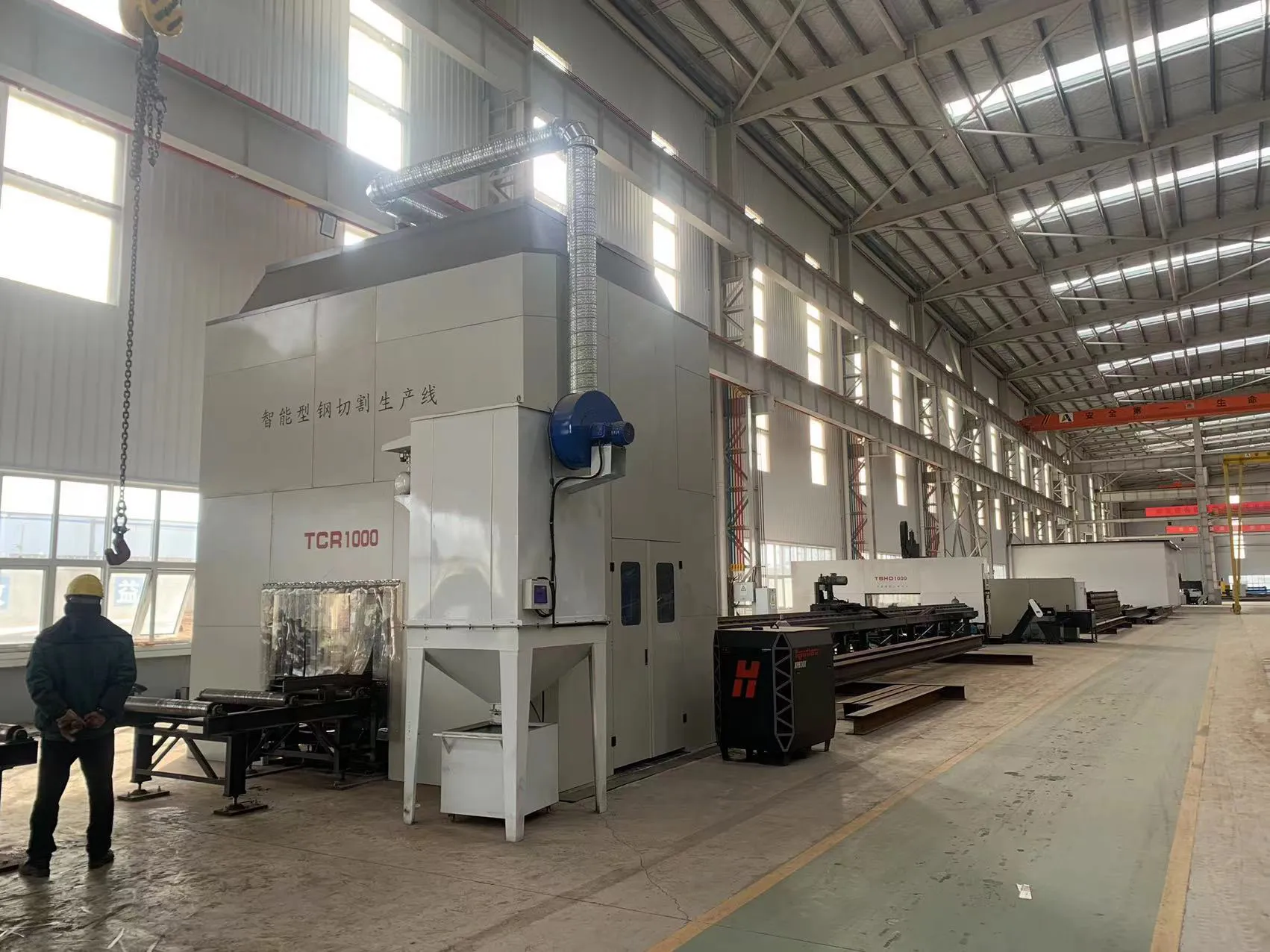
Field Technical Report: Integration of 20kW Fiber Laser Systems in Maritime Structural Processing
1. Introduction and Regional Context
The following report details the technical validation and operational deployment of a 20kW CNC Beam and Channel laser cutting system, equipped with an integrated Automatic Unloading module, within the shipbuilding sector of Hamburg, Germany. As the maritime industry moves toward “Industry 4.0” standards, the transition from conventional plasma and mechanical processing to high-power fiber laser technology has become a requisite for maintaining structural integrity and production velocity.
In the Hamburg yard environment, where the fabrication of complex hulls and modular offshore structures demands extreme tolerances, the 20kW threshold represents a critical shift. This power level allows for the high-speed processing of structural steel grades common in shipbuilding, such as AH36, DH36, and EH36, while maintaining a heat-affected zone (HAZ) significantly smaller than that produced by oxy-fuel or plasma arc systems.
2. 20kW Fiber Laser Source: Thermal Dynamics and Material Penetration
The heart of this system is the 20kW fiber laser source. In heavy-duty beam processing (I-beams, H-beams, and U-channels), the energy density of a 20kW beam enables “vaporization-dominated” cutting even at significant material thicknesses.
Key Technical Observations:
- Gas Dynamics: At 20kW, the utilization of nitrogen as a shielding gas for thinner webs (up to 12mm) allows for oxide-free edges, eliminating the need for post-cut grinding before welding. For thicker flanges (25mm+), high-pressure oxygen cutting is optimized through specialized nozzles that minimize dross adhesion.
- Beam Modulation: The system employs dynamic beam shaping. When processing a 300mm I-beam, the laser adjusts its focal point and beam profile in real-time to account for the varying thickness between the web and the flange, ensuring consistent kerf width.
- HAZ Reduction: The high feed rates afforded by 20kW—often exceeding 3.5m/min on 10mm sections—drastically reduce the thermal input. This is vital for maritime components where excessive heat can lead to crystalline grain growth, compromising the fatigue resistance of the vessel’s skeleton.
3. Advanced Kinematics in Beam and Channel Processing
Shipbuilding requires more than simple perpendicular cuts. The CNC system evaluated utilizes a 5-axis or 6-axis 3D cutting head capable of complex beveling (V, Y, K, and X-type joints).
In the Hamburg facility, the primary application involves the preparation of “Bulb Flats” (HP-profiles), a geometry unique to the maritime sector. The CNC control software must calculate the complex intersection of the bulb’s radius with the web. Conventional mechanical sawing or manual plasma cutting often results in 2mm to 5mm deviations. The 20kW laser system, guided by integrated laser scanning for profile mapping, compensates for “structural twist” in the raw material, bringing the finished cut precision to within +/- 0.2mm.
This precision is critical for automated “fit-up” in the assembly block stage. In the Hamburg yard, where modular blocks are joined, the reduction in gap variance from 3mm to 0.5mm has resulted in a 40% reduction in welding wire consumption and a proportional decrease in rework.
4. Automatic Unloading: Solving the Heavy Steel Bottleneck
The most significant operational leap documented in this field report is the implementation of Automatic Unloading technology. Historically, the processing of heavy channels (up to 12 meters in length and weighing several tons) was bottlenecked by overhead crane availability.
The Mechanics of the Unloading System:
The system utilizes a heavy-duty synchronized roller bed combined with hydraulic lift-and-transfer arms. As the 20kW laser completes a part, the CNC triggers a “part separation” sequence. The finished beam is moved to an unloading zone while the next raw profile is simultaneously fed into the cutting cabinet.
Impact on Efficiency:
- Continuous Duty Cycle: By automating the removal of processed beams, the “Beam-on” time for the laser source increased from 55% to 88%. The system no longer waits for an operator or a crane.
- Material Sorting: The unloading module is programmed to sort parts based on their destination in the yard—separating longitudinal stiffeners from transverse frames—which streamlines downstream logistics.
- Safety and Ergonomics: Eliminating the need for manual slinging of hot, freshly cut steel significantly reduces the risk of workplace injuries, a high priority under EU safety regulations.
5. Structural Integrity and Precision in Maritime Applications
The synergy between the 20kW source and the automatic unloading module allows for the high-volume production of “lightweighting” features. In modern ship design, weight reduction is achieved by cutting non-structural circular or elliptical holes in the webs of internal beams.
Manual cutting of these holes is time-profoundly inefficient. The 20kW laser executes these patterns with “flight-cutting” logic. Because the unloading is automated, the machine can process a high volume of these perforated beams without manual intervention.
Furthermore, the “marking” capability of the fiber laser is utilized during the cutting process. The system etches welding instructions, part numbers, and alignment notches directly onto the beams. This data remains legible through the priming process, ensuring that the assembly teams in Hamburg have an unambiguous roadmap for structural integration.
6. Thermal Management and Environmental Considerations
Operating a 20kW laser in a shipyard environment presents challenges regarding dust and fume extraction. The evaluated system features a high-capacity, multi-zone extraction unit that tracks the laser head’s position along the 12-meter bed.
Moreover, the “Hamburg Climate Initiative” necessitates reduced energy consumption. While 20kW sounds high-energy, the fiber laser’s “Wall-Plug Efficiency” (WPE) is approximately 35-40%, compared to the 10% of older CO2 lasers. The speed of the 20kW source means that the energy used per meter of cut is actually lower than that of a 6kW system, as the job is completed in a fraction of the time.
7. ROI and Conclusion
The technical data gathered from the Hamburg deployment confirms that the integration of 20kW power with automated unloading is the current “gold standard” for structural steel processing.
Summary of Quantitative Improvements:
- Throughput: 300% increase compared to 6kW systems with manual unloading.
- Secondary Ops: 90% reduction in edge preparation (grinding/beveling) time.
- Accuracy: Reduction of assembly-level rework by 25% due to superior fit-up tolerances.
In conclusion, for shipyards specializing in high-tonnage vessels or complex offshore platforms, the 20kW CNC Beam and Channel Laser is no longer an optional upgrade but a fundamental requirement for global competitiveness. The automated unloading component, specifically, transforms the laser from a standalone tool into a fully integrated production cell, capable of operating with minimal oversight while producing high-integrity structural components that meet the rigorous standards of the maritime industry.
Report Prepared By:
Senior Engineering Lead
Laser Systems & Structural Steel Division
Field Office: Hamburg, DE













