The Dawn of Ultra-High Power: Why 20kW Matters
In the realm of fiber lasers, the transition from 10kW to 20kW is not merely an incremental upgrade; it is a transformative leap in material capability. For structural steel—the backbone of railway infrastructure—thickness and density have traditionally been handled by plasma cutting or mechanical sawing and drilling. However, the 20kW fiber laser introduces a power density capable of vaporizing thick-walled carbon steel in seconds.
At 20kW, the laser achieves a “keyhole” welding-like penetration during the cutting process, allowing for the effortless slicing of steel sections up to 50mm or even 60mm in thickness. In the context of railway infrastructure, where girders and support columns must withstand immense dynamic loads, the ability to cut thick material with a minimal Heat Affected Zone (HAZ) is paramount. A 20kW source ensures that the structural integrity of the steel is maintained at the molecular level, preventing the brittleness often associated with slower, high-heat cutting methods.
3D Structural Processing: Beyond the Flatbed
Traditional laser cutting was long confined to 2D sheets. However, railway infrastructure demands three-dimensional complexity. The 20kW 3D Structural Steel Processing Centers now being deployed in Istanbul utilize sophisticated 5-axis robotic heads or specialized chuck systems that can rotate massive beams and profiles.
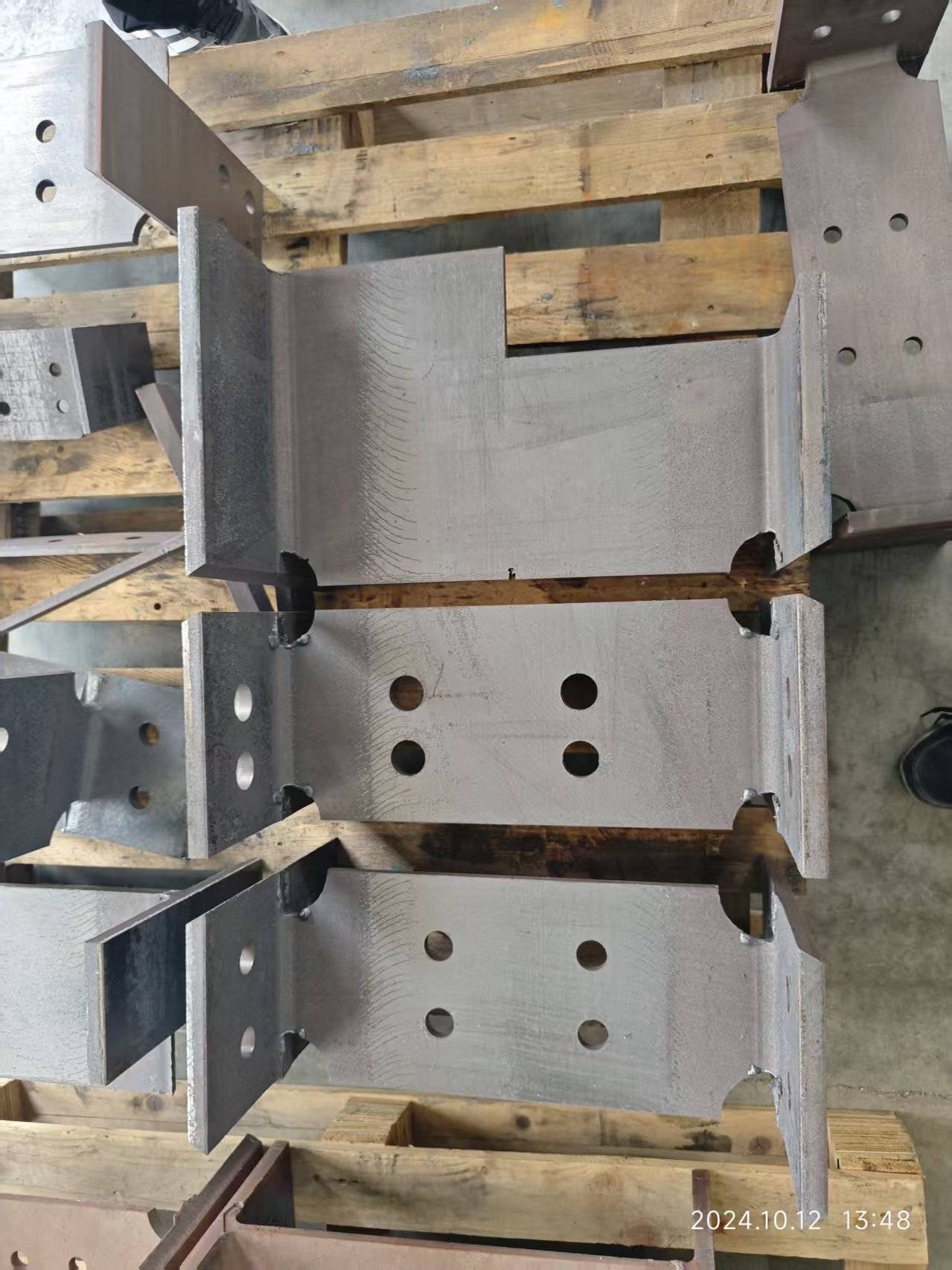
This 3D capability allows for complex geometries such as miter cuts, bevels for weld preparation, and intricate bolt-hole patterns to be executed in a single pass. In railway bridge construction, for example, H-beams often require precise cope cuts to interlock with transverse members. Previously, this required three different machines: a saw, a drill, and a manual oxy-fuel torch for the coping. The 3D fiber laser replaces all three, performing the tasks with sub-millimeter accuracy and eliminating the cumulative tolerances that occur when moving a part between workstations.
Istanbul: The Strategic Nexus of Rail Innovation
Istanbul serves as the epicenter of Turkey’s “Iron Silk Road” ambitions. With the expansion of the Marmaray line, the development of high-speed rail links to Europe, and the constant growth of the city’s metro network, the demand for structural steel is insatiable. The city’s industrial zones are uniquely positioned to serve as a manufacturing hub for these projects.
By locating 20kW processing centers in Istanbul, contractors can drastically reduce the logistics chain. Steel sourced from local Turkish mills can be processed and delivered to rail construction sites “just-in-time.” This localized high-tech manufacturing ecosystem reduces the carbon footprint of transport and allows for rapid prototyping. If a tunnel segment or a station canopy design changes, the digital nature of fiber laser processing allows for immediate adjustments to the cutting files, ensuring that the infrastructure projects remain on schedule.
Zero-Waste Nesting: The Economics of Efficiency
One of the most significant advancements in this technology is the implementation of “Zero-Waste Nesting” software. In structural steel processing, “tailings”—the leftover ends of beams and tubes—have historically accounted for 10% to 15% of material loss. On a multi-million-dollar railway project, this represents a staggering financial and environmental cost.
Zero-waste nesting uses artificial intelligence to analyze the entire production queue. Instead of cutting parts for a single assembly from one beam, the software looks at all required parts across various projects and nests them onto the available raw material. Advanced algorithms allow for “common-line cutting,” where a single laser pass creates the edge for two different parts. Furthermore, the 3D laser’s ability to cut extremely close to the chucks or supports means that the “remnant” length is reduced to an absolute minimum. In many cases, these systems can achieve material utilization rates exceeding 98%, a figure previously thought impossible in heavy structural fabrication.
The Precision of Railway Standards: EN 1090 and Beyond
Railway infrastructure is subject to some of the most rigorous safety standards in the world. In the European Union and Turkey, the EN 1090 standard dictates the execution of steel structures. A critical component of this standard is the quality of the cut edges and the precision of bolt holes.
Fiber lasers operating at 20kW provide a level of edge quality that often requires no secondary grinding. The holes produced are perfectly cylindrical with no taper, ensuring that high-strength friction grip (HSFG) bolts fit perfectly. This precision is vital for railway bridges that must endure millions of cycles of vibration and stress. By eliminating the human error associated with manual layout and cutting, the 20kW 3D center ensures that every component is a digital twin of the engineering model, facilitating a seamless assembly process in the field.
Integrating Industry 4.0: The Digital Backbone
The 20kW 3D Structural Steel Processing Center is not a standalone island of automation; it is a node in a digital network. These machines are equipped with sensors that monitor beam quality, gas consumption, and nozzle wear in real-time. In an Istanbul-based facility, this data can be fed back to a central Management Execution System (MES), allowing project managers to track the progress of specific rail components from the moment the raw beam enters the factory to its final installation at the site.
Predictive maintenance is another crucial aspect. The high-power components of a 20kW system are precision instruments. IoT-enabled monitoring ensures that potential issues are identified before they cause downtime. For critical infrastructure projects where a delay of a single day can result in massive financial penalties, the reliability afforded by this “smart” technology is a significant competitive advantage.
Environmental Impact and Sustainability
As the world moves toward “Green Steel,” the processing methods must also evolve. Fiber lasers are inherently more efficient than CO2 lasers, consuming significantly less electricity per kilowatt of output. Furthermore, by eliminating the need for cooling water in the cutting process (unlike waterjet) and reducing the reliance on chemical cleaning (unlike traditional welding prep), the 20kW fiber laser is a much cleaner technology.
The zero-waste nesting feature contributes directly to a circular economy. By minimizing scrap, we reduce the energy required to recycle steel. For the Istanbul municipality and the Turkish State Railways (TCDD), choosing components manufactured through these high-efficiency methods aligns with global sustainability goals and reduces the overall “embodied carbon” of the rail network.
Conclusion: The Future of Turkish Infrastructure
The arrival of 20kW 3D Structural Steel Processing Centers in Istanbul marks the end of the era of “brute force” fabrication. We are entering an era of “intelligent power.” For the railway infrastructure of the future—faster, safer, and more extensive—the precision of the fiber laser is the only way to meet the dual demands of high volume and high quality.
As a fiber laser expert, I see these centers not just as tools, but as the catalysts for a new industrial revolution in the Middle East and Europe. By leveraging Istanbul’s geographic and industrial strengths with the pinnacle of laser technology, Turkey is not just building railways; it is engineering the future of global connectivity. The synergy of 20kW power, 3D versatility, and zero-waste efficiency ensures that the tracks laid today will stand as a testament to industrial excellence for the next century.