The Dawn of Ultra-High Power: Why 20kW Matters for Monterrey’s Heavy Industry
Monterrey, Mexico, has solidified its position as the “Sultan of the North,” acting as the industrial heartbeat of Latin America. For crane manufacturers in this region—suppliers to the automotive, aerospace, and construction sectors—the transition from traditional plasma or oxy-fuel cutting to 20kW fiber laser technology is not merely an upgrade; it is a fundamental transformation.
At 20kW, the fiber laser transcends the limitations of lower-power systems. In the context of crane manufacturing, where structural components often involve carbon steel plates exceeding 25mm (1 inch) in thickness, the 20kW power level provides the “optical punch” necessary to maintain high feed rates without sacrificing edge quality. The high energy density allows for a narrower kerf and a significantly reduced Heat-Affected Zone (HAZ). For a crane girder, which must withstand cyclical loading and immense stress, maintaining the metallurgical integrity of the steel edge is critical. Traditional thermal cutting methods often leave a hardened edge that requires secondary grinding to prevent stress fractures; the 20kW fiber laser eliminates this bottleneck.
3D Structural Processing: Beyond the Flatbed
Crane manufacturing relies heavily on structural profiles—I-beams, H-beams, C-channels, and large-diameter square tubing. A 3D Structural Steel Processing Center equipped with a 5-axis head allows the laser to move around the workpiece, performing complex cuts that were previously impossible or required multiple setups.
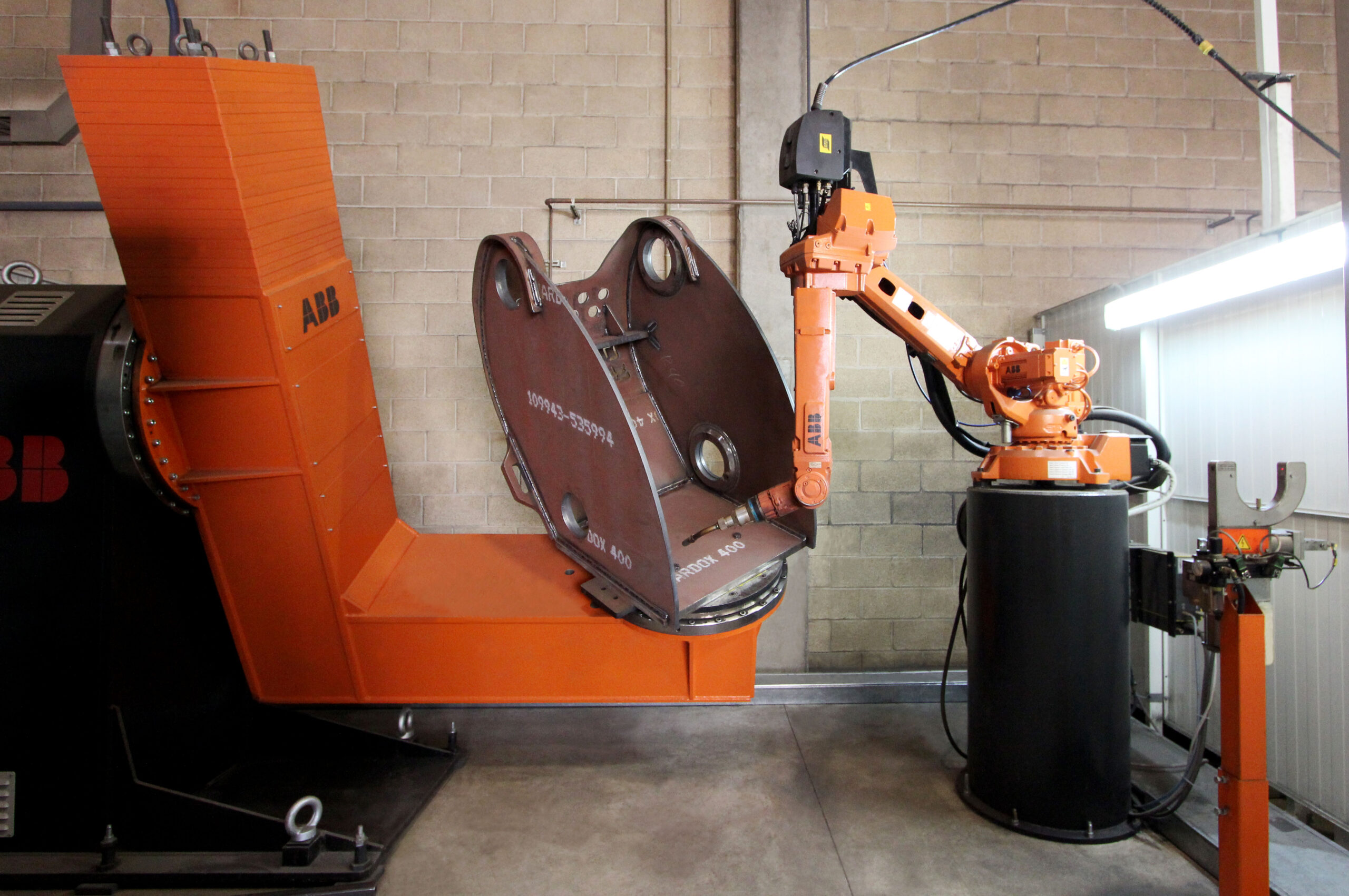
The “3D” aspect refers to the ability to perform chamfering and beveling in a single pass. For instance, when fabricating the end carriages or the main bridge of a gantry crane, weld preparation is the most labor-intensive stage. A 20kW 3D laser can cut a V, Y, or K-shaped bevel directly into a 20mm plate or a heavy beam profile. This precision ensures that the fit-up for welding is airtight, reducing the amount of filler wire needed and significantly lowering the risk of weld defects. In Monterrey’s competitive landscape, the ability to move a beam from the laser center directly to the welding robot without manual edge preparation is a massive competitive advantage.
Zero-Waste Nesting: The Mathematics of Profitability
In the manufacturing of heavy-duty cranes, material costs can account for up to 70% of the total production cost. “Zero-waste nesting” is a misnomer in a literal sense—some scrap is inevitable—but in the context of advanced fiber laser software, it represents a move toward 95%+ material utilization.
Advanced nesting algorithms specifically designed for 20kW systems take into account the “common line cutting” technique. Because the 20kW laser produces such a stable and narrow beam, parts can be nested so close together that they share a single cut line. This is particularly effective for the reinforced gussets, brackets, and stiffener plates that populate crane designs.
Furthermore, the software utilizes “remnant tracking.” In Monterrey’s large-scale facilities, a half-used sheet of 30mm steel is an asset, not scrap. The processing center’s software catalogs these remnants, allowing engineers to nest smaller components—like hoist mounting plates or electrical box brackets—into the “holes” left by larger girder sections. This level of granular efficiency ensures that every kilogram of steel purchased contributes to the final product.
Optimizing the Crane Supply Chain in the Nearshoring Era
The push for nearshoring has brought global scrutiny to Monterrey’s manufacturing standards. Crane manufacturers are now required to meet stringent international certifications (such as CMAA or DIN). The precision of a 20kW fiber laser ensures that every bolt hole is perfectly circular and every interlocking joint fits with sub-millimeter tolerances.
For overhead crane manufacturers, the “camber” of the bridge—the slight upward curve engineered to compensate for the weight of the load—is a critical design element. Laser-cutting the web plates of a box girder with 20kW precision allows for the exact camber profile to be replicated every time. This consistency is nearly impossible to achieve with manual layout or older CNC plasma systems, which are prone to thermal distortion. By reducing distortion, the 20kW center ensures that the final crane structure is straighter, stronger, and easier to assemble.
Technical Synergy: Fiber Laser Physics and Structural Integrity
From a technical standpoint, the 20kW fiber laser operates at a wavelength of approximately 1.06 microns. This wavelength is highly absorbed by carbon steel, the primary material in crane manufacturing. At 20kW, we see the emergence of “high-speed nitrogen cutting” for medium thicknesses and “optimized oxygen cutting” for the thickest plates.
In Monterrey’s climate, where humidity can fluctuate, the stability of the fiber delivery system is paramount. Unlike CO2 lasers, which require complex mirror paths and gas mixtures, the fiber laser is delivered through a flexible transport fiber. This makes it ideal for the massive 3D gantry systems required to process 12-meter long structural beams. The 20kW power source is also significantly more energy-efficient, boasting a “wall-plug efficiency” of around 40%, compared to the 10% of older laser technologies. For a high-capacity crane factory, this translates to hundreds of thousands of pesos saved in annual electricity costs.
The Role of Automation and AI in Monterrey’s Facilities
The 20kW 3D Structural Steel Processing Center is rarely a standalone machine. In the most advanced Monterrey plants, it is the heart of an automated ecosystem. Large-scale loading and unloading systems handle the massive weight of structural steel, while AI-driven sensors monitor the cutting process in real-time.
If the laser detects a potential “tip-up” (where a cut part tilts and threatens to collide with the head), the system automatically recalibrates the path. For crane manufacturers, who are often cutting expensive, high-tensile Strength steels like S355 or ASTM A572, avoiding a “head crash” or a ruined part is vital. The integration of IoT (Internet of Things) allows plant managers to monitor gas consumption, cutting hours, and nesting efficiency from their mobile devices, providing a level of data-driven oversight that defines the modern “Smart Factory.”
Safety and Environmental Impact
Crane manufacturing is an industry where safety is non-negotiable. The structural integrity of a 50-ton overhead crane starts with the quality of the first cut. By using a 20kW fiber laser, manufacturers reduce the risk of micro-cracking and heat stress that can compromise the steel’s molecular structure.
Environmentally, the “Zero-Waste” approach aligns with global ESG (Environmental, Social, and Governance) goals. By reducing scrap, Monterrey manufacturers decrease their carbon footprint associated with steel production and recycling. Additionally, the fiber laser process produces fewer fumes and requires no hazardous chemicals compared to traditional etching or mechanical cleaning processes.
Conclusion: A New Standard for Monterrey
The investment in a 20kW 3D Structural Steel Processing Center represents a bold commitment to the future of Mexican manufacturing. For the crane industry, this technology provides the tools to build bigger, safer, and more complex lifting systems with a degree of efficiency that was previously unthinkable.
As Monterrey continues to attract global industrial giants, the local crane manufacturers who embrace 20kW fiber technology will be the ones who lead the market. They are no longer just cutting steel; they are precision-engineering the backbone of the global supply chain, one perfectly nested, zero-waste beam at a time. The 20kW fiber laser is not just a tool—it is the catalyst for a new era of structural excellence in the heart of Mexico’s industrial powerhouse.