The Dawn of High-Power Fiber Lasers in Heavy Marine Fabrication
For decades, the shipbuilding industry relied on plasma and oxy-fuel cutting as the primary methods for processing structural steel. While effective for basic shapes, these methods often struggled with the precision required for modern modular ship construction. The introduction of the 20kW fiber laser into an Edmonton-based shipyard environment marks a departure from “good enough” tolerances to aerospace-grade precision on a massive scale.
At 20,000 watts, the fiber laser is no longer restricted to thin sheet metal. It is a high-energy tool capable of piercing 50mm carbon steel with ease and maintaining high-speed feed rates on the 12mm to 25mm plates and profiles common in hull construction and internal stiffeners. In the context of Edmonton—a city known for its robust energy-sector fabrication—applying this technology to shipbuilding allows local yards to compete on a global scale by drastically reducing “time-to-hull.”
The Kinematics of 3D Structural Processing
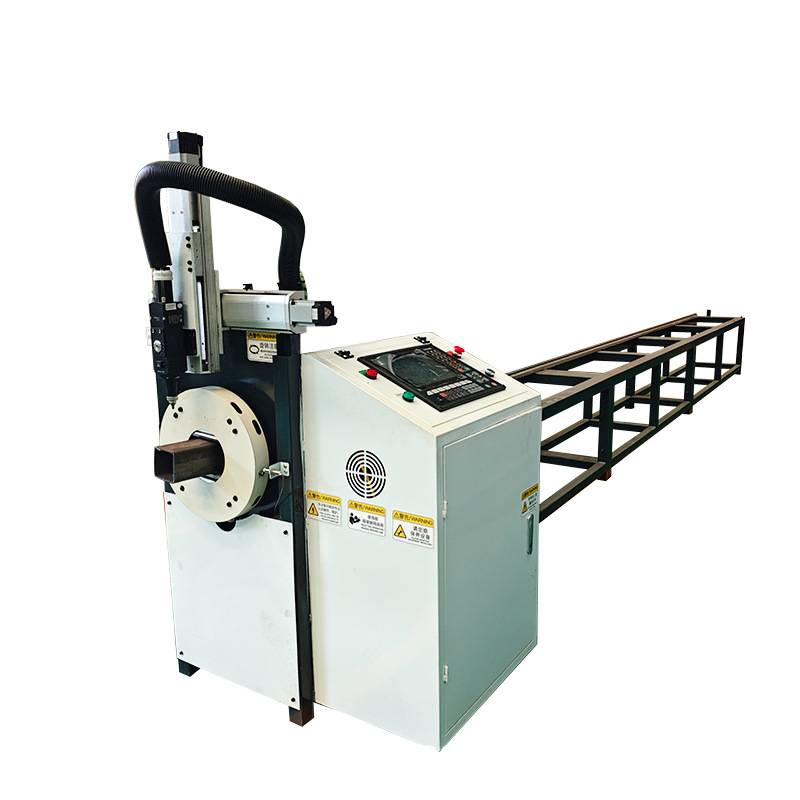
Unlike traditional flatbed lasers, a 3D Structural Steel Processing Center is designed to handle the complexity of H-beams, I-beams, channels, and hollow structural sections (HSS). In a shipbuilding yard, the structural backbone of a vessel often relies on these profiles to provide rigidity without adding excessive weight.
The 3D aspect of the machine involves a sophisticated gantry and chuck system that can rotate and position heavy steel members with sub-millimeter accuracy. When you combine this with a 20kW power source, the machine can execute complex “fish-mouth” cuts, cope joints, and precision notches that would otherwise require hours of manual layout and torch work. The fiber laser’s beam quality ensures that the kerf remains narrow even when cutting through the thickest part of a flange, ensuring that every structural member fits perfectly into the next during the assembly phase.
Mastering the ±45° Bevel: The Key to Weld Integrity
In shipbuilding, the weld is everything. To ensure the structural integrity of a vessel facing the high-stress environments of the North Atlantic or Arctic waters, full-penetration welds are mandatory. This requires precise beveling—the angling of the edge of the steel to create V, Y, X, or K-shaped joints for welding.
The ±45° beveling head on a 20kW laser is a masterpiece of engineering. By articulating the laser head during the cutting process, the machine can create complex bevels along curved or straight paths. Because the 20kW source provides such an intense concentration of energy, the “Heat Affected Zone” (HAZ) is remarkably small compared to plasma. This means the metallurgical properties of the steel remain intact, and the edge is “weld-ready” straight off the machine. In an Edmonton shipyard, eliminating the need for a secondary team of grinders to prep edges translates to a 30-40% increase in throughput.
Edmonton’s Industrial Advantage and Environmental Considerations
Operating a 20kW fiber laser in Edmonton presents unique geographical and environmental challenges. The region’s extreme temperature fluctuations—ranging from +30°C in summer to -40°C in winter—necessitate a highly controlled internal environment for the processing center.
Fiber lasers are sensitive to ambient conditions; therefore, the 20kW system must be integrated with advanced chiller units and climate-controlled enclosures for the power cabinets. Furthermore, Edmonton’s position as a logistics hub for the oil sands and heavy industry means that the yard can leverage a local supply chain of high-grade steel. The 20kW laser allows the yard to process this steel locally, turning Edmonton into a “dry-dock” fabrication powerhouse that can ship completed modular sections to coastal launch sites via rail or heavy-haul transport.
Revolutionizing the Shipbuilding Workflow
The traditional shipbuilding workflow is often linear and prone to bottlenecks. A part is cut, moved to a different station for beveling, moved again for hole drilling, and finally to assembly. The 20kW 3D Processing Center collapses these steps into a single station.
1. **Direct CAD-to-Part Integration:** Using software like Tekla or ShipConstructor, engineers can send 3D models directly to the laser’s controller. The machine automatically calculates the nesting and the complex 5-axis toolpaths required for beveling.
2. **Accuracy in Assembly:** Because the laser maintains tolerances within ±0.1mm, the “puzzle pieces” of the ship fit together without the need for excessive “pounding” or gap-filling welds. This precision is vital for the automated welding robots that are increasingly being used in modern shipyards.
3. **Hole Quality:** At 20kW, the laser can produce bolt holes that are perfectly cylindrical and free of the taper often seen with lower-power lasers or plasma. This is critical for the bolted connections in engine mounts and modular deck housings.
The Economic Impact: ROI and Labor Efficiency
Investing in a 20kW 3D laser center is a significant capital expenditure, but the Return on Investment (ROI) in a shipbuilding context is driven by speed and the reduction of secondary labor. In the Edmonton market, where skilled fitters and welders are in high demand and command high wages, the ability to automate the most tedious parts of the fabrication process is a massive competitive advantage.
By reducing the time spent on manual beveling and fit-up, a yard can take on more projects per year. Furthermore, the 20kW fiber laser is significantly more energy-efficient than older CO2 lasers or high-def plasma systems when measuring the cost-per-inch of cut. The speed of the 20kW source also means that the machine can often keep up with the output of three or four traditional plasma tables.
Safety and Sustainability in the Yard
High-power lasers come with significant safety responsibilities. A 20kW beam is invisible and highly reflective. The processing center in Edmonton must be fully enclosed in a Class 1 laser-safe housing. This not only protects the operators from stray radiation but also contains the fumes and dust generated during the cutting of galvanized or primed ship-building steel.
From a sustainability perspective, the fiber laser is a “green” technology. It produces less waste (narrower kerf), uses no consumable gases like oxygen-fuel torches (in some nitrogen-cutting applications), and has a much smaller carbon footprint due to its high wall-plug efficiency. For Edmonton shipyards looking to meet new federal environmental standards for manufacturing, the fiber laser is the clear path forward.
Conclusion: The Future of Maritime Fabrication
The installation of a 20kW 3D Structural Steel Processing Center with ±45° beveling capability is more than just an equipment upgrade; it is a statement of intent. It signals that Edmonton’s fabrication industry is ready to tackle the complexities of modern naval architecture, from icebreakers to offshore support vessels.
By mastering the intersection of high-power photonics and 3D kinematics, shipbuilders can ensure that every beam, plate, and stiffener is a testament to precision. As the maritime industry moves toward more complex, efficient, and modular designs, the 20kW fiber laser stands as the foundational tool that will cut the path to the future of shipbuilding in Western Canada.