Technical Field Report: Deployment of 12kW Universal Profile Steel Laser System in Edmonton Stadium Infrastructure
1. Executive Summary and Site Context
This report details the technical implementation and performance validation of a 12kW Universal Profile Steel Laser System, equipped with Zero-Waste Nesting technology, at a major fabrication site in Edmonton, Alberta. The project scope involves the production of complex structural components for large-span stadium frameworks. Given Edmonton’s rigorous climate—characterized by extreme thermal cycling and heavy snow loads—the structural integrity of stadium steel must adhere to the highest CSA S16 standards. The shift from traditional plasma-arc cutting and mechanical drilling to a high-density 12kW fiber laser source represents a critical evolution in achieving the required fatigue resistance and geometric precision for long-span cantilevered sections.
2. 12kW Fiber Laser Synergy and Thermal Dynamics
The core of the system is a 12kW ytterbium fiber laser source. In the context of “Universal Profile” processing (which includes H-beams, I-sections, C-channels, and Rectangular Hollow Sections), the 12kW threshold is not merely a speed enhancement but a qualitative leap in edge chemistry and piercing efficiency.
In heavy-duty stadium fabrication, material thickness typically ranges from 12mm to 35mm. A 12kW source allows for high-pressure nitrogen or compressed air cutting on sections where oxygen was previously the only viable medium. This transition is vital for Edmonton’s structural projects because nitrogen cutting eliminates the oxide layer, significantly improving the adherence of cold-weather protective coatings and zinc-rich primers without the need for secondary grinding. Furthermore, the 12kW power density minimizes the Heat-Affected Zone (HAZ). For the Grade 350W steel used in these structures, a narrower HAZ ensures that the base metal’s yield strength and ductility are preserved, particularly around high-stress bolt-hole clusters.
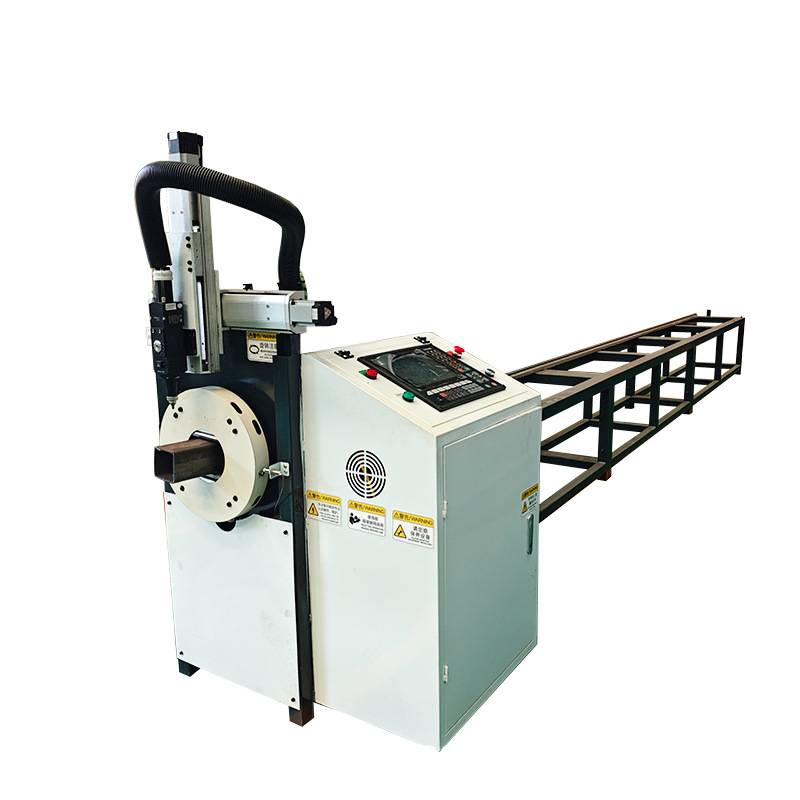
3. Zero-Waste Nesting: Algorithmic Efficiency in 3D Space
Traditional profile cutting often results in “crop ends” or “tails” of 300mm to 600mm per section due to the physical clamping requirements of the material handling system. The Zero-Waste Nesting technology implemented here utilizes a dual-chuck or multi-chuck “leap-frog” mechanism integrated with advanced nesting software (utilizing BIM data from TEKLA/Revit).
The logic of Zero-Waste Nesting in this 12kW system operates on three levels:
- Common-Line Cutting for Profiles: Unlike flat-sheet nesting, common-line cutting on H-beams requires precise 3D synchronization. The system calculates the kerf width of the 12kW beam and aligns the end-cut of one component with the start-cut of the next, effectively removing the skeleton gap.
- End-to-End Utilization: The laser head is capable of processing within the footprint of the clamping chucks. By shifting the “dead zone” through synchronized rotation and longitudinal movement, the system reduces scrap to less than 50mm per 12-meter stock length.
- Dynamic Nesting of Sub-Components: For stadium trusses, multiple small gusset plates or connection brackets are often required. The software identifies “interstitial waste” areas—such as the web space between large bolt holes in a beam—and nests smaller components within those voids.
4. Application in Stadium steel structures
Stadiums in the Edmonton region require complex geometries to accommodate architectural aesthetics and aerodynamic snow-shedding requirements. This involves intricate “fish-mouth” cuts, eccentric beveling for weld preparation, and high-precision bolt holes for slip-critical connections.
4.1 Geometric Precision in Cantilevered Members
The 12kW system’s ability to execute 45-degree bevels on 20mm thick RHS (Rectangular Hollow Sections) is paramount. These sections form the primary roof trusses. Traditional methods require manual layout and oxy-fuel beveling, which are prone to human error. The automated laser system maintains a volumetric accuracy of ±0.2mm over a 12-meter span, ensuring that when components are hoisted into place in the field, the fit-up is seamless. This reduces the need for “forcing” connections, which can introduce parasitic stresses into the structure.
4.2 Bolt Hole Integrity and Fatigue Resistance
Stadium structures are subject to dynamic loading (wind and spectator-induced vibrations). The 12kW laser produces holes with a taper of less than 0.1mm on 25mm plate sections. This level of precision ensures 100% bearing surface for high-strength bolts (A325 or A490). Mechanical punching often creates micro-fissures that can propagate under cyclic loads; the laser’s high-frequency pulsing avoids these stress risers, enhancing the long-term fatigue life of the assembly.
5. Automation and Integration with Structural Workflows
The “Universal” aspect of the system refers to its ability to handle various profiles without manual re-tooling. In the Edmonton field test, the system transitioned from 400mm H-beams to 200mm C-channels in under three minutes, including the automatic adjustment of the V-shaped support rollers and chuck jaws.
The 12kW system is interfaced directly with the fabrication shop’s Management Information System (MIS). As raw steel arrives, the system reads the heat numbers and adjusts cutting parameters (feed rate, gas pressure, focal position) based on the specific metallurgical composition of that batch. This level of traceability is essential for the quality assurance (QA) protocols required in public infrastructure projects.
6. Environmental and Economic Impact in the Edmonton Market
Edmonton’s industrial sector is increasingly sensitive to energy efficiency and material costs. The implementation of Zero-Waste Nesting has demonstrated a 12-15% reduction in raw material procurement costs for the stadium project. Given the current price of structural steel, the ROI on the 12kW system is accelerated. Furthermore, the 12kW fiber source is significantly more energy-efficient than older CO2 or plasma systems, reducing the carbon footprint of the fabrication process—a key metric for modern “Green Building” certifications.
7. Technical Challenges and Mitigation
Operating a high-power laser in a northern climate presents unique challenges. Thermal stability of the machine bed was addressed through a climate-controlled enclosure and an active chilling system for the 12kW resonator and cutting head. Additionally, the system includes a “Winter-Mode” startup sequence to ensure that the fiber optics and gas delivery systems are at optimal temperature before high-power piercing commences, preventing condensation and thermal shock.
8. Conclusion
The integration of a 12kW Universal Profile Steel Laser System with Zero-Waste Nesting represents a paradigm shift for heavy steel fabrication in Edmonton. The synergy of high-wattage fiber laser technology and intelligent 3D nesting algorithms addresses the dual demands of structural safety and economic efficiency. For the stadium sector, where geometric complexity meets rigorous safety standards, this system provides a level of precision and material utilization that traditional methods cannot replicate. Future deployments should focus on further integrating AI-driven defect detection to complement the 12kW cutting capability.
Report Certified By:
Senior Engineering Lead, Steel Structures Division
Field Operations – Edmonton Site













