The Evolution of Metal Fabrication: 12kW Tube laser cutting in Guadalajara
The industrial landscape of Guadalajara, often referred to as the “Silicon Valley of Mexico,” is undergoing a massive transformation in its metalworking sector. As the region continues to attract automotive, aerospace, and structural engineering firms, the demand for high-precision, high-speed fabrication has skyrocketed. At the center of this revolution is the 12kW tube laser cutting machine. This specific power rating represents a significant leap forward in fiber laser technology, offering a unique balance between raw cutting force and delicate precision, particularly when processing challenging materials like galvanized steel.
For manufacturers in Jalisco, the adoption of 12kW systems is not merely an upgrade; it is a strategic necessity. The ability to process thick-walled tubes and complex profiles with minimal secondary finishing allows local shops to compete on a global scale. This guide explores the technical intricacies of utilizing a 12kW fiber laser for tube processing, with a specialized focus on the nuances of galvanized steel—a material ubiquitous in the region’s construction and automotive industries.
Technical Specifications of the 12kW Fiber Laser System
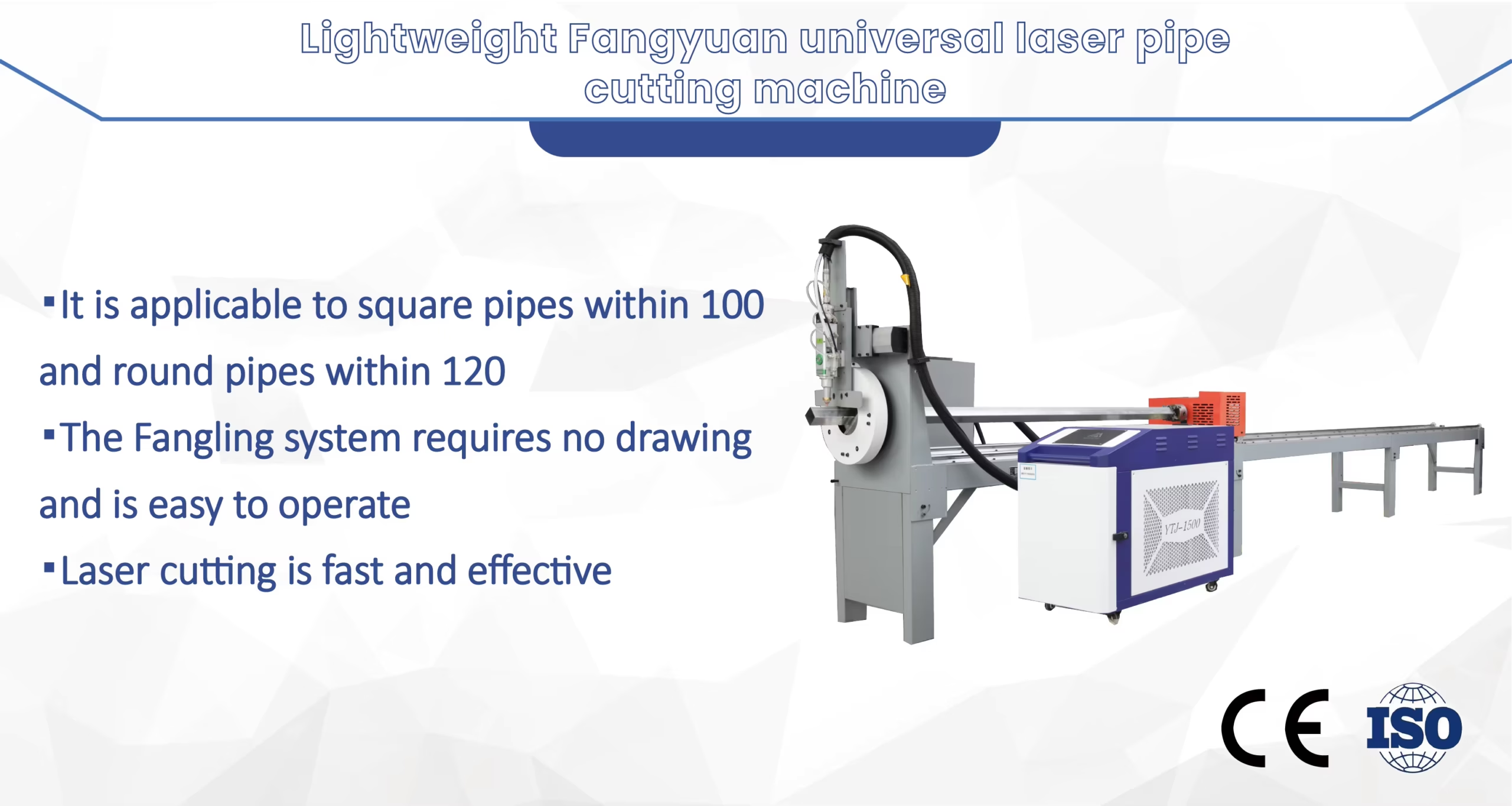
A 12kW tube laser cutting system is engineered for heavy-duty industrial environments. Unlike lower-wattage machines, the 12kW power source provides the energy density required to maintain high feed rates even when dealing with reflective or coated materials. The system typically consists of a fiber laser generator, a specialized cutting head with autofocus capabilities, and a robust mechanical bed designed to handle long tube lengths, often up to 6 or 12 meters.
The “tube” aspect of the machine involves complex chucking systems. High-end 12kW machines utilize pneumatic or electric four-chuck systems that minimize material waste (tailings) and ensure the tube remains perfectly centered during high-speed rotation. This is critical for 12kW operations because the sheer speed of the laser cutting process requires absolute mechanical stability to prevent vibrations from affecting the cut quality.
The Engineering Challenge: Laser Cutting Galvanized Steel
Galvanized steel presents a unique set of challenges for laser cutting. The material is essentially carbon steel coated with a layer of zinc to prevent corrosion. However, zinc has a significantly lower melting point (approx. 419°C) than the underlying steel (approx. 1370°C). When the 12kW laser beam hits the surface, the zinc layer vaporizes almost instantly, often before the steel itself begins to melt.
This discrepancy in thermal properties can lead to several issues:
1. **Dross Attachment:** The vaporized zinc can interfere with the molten steel, leading to “beard” or dross at the bottom of the cut.
2. **Process Instability:** The zinc vapor can blow back into the nozzle, potentially damaging the protective window of the laser head.
3. **Fume Generation:** Zinc oxide fumes are hazardous and require high-efficiency filtration systems, which are standard in Guadalajara’s modern industrial parks.
To overcome these hurdles, the 12kW power rating is advantageous. The high energy density allows for a faster “pierce” and a higher cutting velocity. By moving the laser faster, the heat-affected zone (HAZ) is minimized, which prevents the zinc coating from delaminating or burning too far back from the cut edge, maintaining the material’s corrosion resistance.
Optimizing Gas Selection for 12kW Applications
In the context of 12kW laser cutting, the choice of assist gas is paramount, especially for galvanized tubes. While oxygen is often used for carbon steel to speed up the process through an exothermic reaction, it can cause excessive charring of the zinc layer. Nitrogen is the preferred assist gas for 12kW systems when a clean, oxide-free edge is required.
Nitrogen acts as a cooling agent and a mechanical force to blow the molten metal out of the kerf without reacting with the steel. At 12kW, the machine can utilize high-pressure nitrogen to achieve “high-speed evaporation cutting.” This results in a silver, weld-ready edge that is essential for the high-quality standards demanded by Guadalajara’s export-oriented manufacturers. For thicker galvanized tubes (above 6mm), some engineers utilize a “compressed air” approach, which is more cost-effective while still providing enough pressure to clear the zinc-laden melt pool.

Mechanical Dynamics and Tube Handling
A 12kW machine is only as good as its motion control system. In Guadalajara’s fabrication shops, the variety of tube shapes—round, square, rectangular, and even D-shaped or elliptical profiles—requires sophisticated CNC software. The 12kW laser cutting process for tubes involves five or more axes of motion. The laser head must move in X, Y, and Z, while the tube rotates (W-axis) and the chucks move along the bed (Y-axis).
The 12kW power allows for the cutting of thick-walled structural tubes (up to 20mm or more depending on the material). To handle this, the machine’s bed must be reinforced to prevent sagging. Precision in the chucking system ensures that as the tube is rotated, the laser remains perfectly perpendicular to the surface, which is vital for creating complex interlocking joints or “bird-mouth” cuts used in frame construction.
Applications in the Guadalajara Industrial Sector
Guadalajara’s economy is heavily reliant on sectors that benefit directly from 12kW tube laser cutting.
1. **Automotive and Heavy Machinery:** The production of chassis, roll cages, and exhaust systems requires high-precision tube processing. 12kW machines allow for the rapid cutting of high-strength steel tubes used in these applications.
2. **Construction and Infrastructure:** Galvanized steel is the standard for outdoor structures, telecommunication towers, and solar panel racking. The 12kW laser can process the heavy-duty galvanized piping used in these sectors with unmatched speed.
3. **Furniture and Logistics:** The local furniture industry uses thinner-walled galvanized tubes for outdoor sets. The 12kW laser cutting technology allows for intricate decorative patterns and precise bolt holes, eliminating the need for drilling or manual sawing.
Maintenance and Safety Protocols
Operating a 12kW fiber laser requires a rigorous maintenance schedule, particularly when processing galvanized materials. The zinc dust generated during the laser cutting process is fine and conductive. If not properly managed, it can settle on electronic components or the motion rails, leading to premature wear or short circuits.
Daily maintenance should include:
– **Nozzle Inspection:** Ensuring the nozzle is free of zinc splatter to maintain beam consistency.
– **Dust Extraction:** Checking the filters of the fume extractor to ensure the hazardous zinc oxide fumes are being effectively removed from the workspace.
– **Lens Protection:** Regularly checking and replacing the protective windows to prevent the 12kW beam from being distorted by contaminants.
Furthermore, safety in the Guadalajara workshop environment must include proper PPE for operators. While the fiber laser is fully enclosed (Class 1 safety rating), the maintenance of the internal chamber involves handling zinc residues, which requires respiratory protection and skin coverage.
The Economic Impact of 12kW Technology in Jalisco
The transition to 12kW laser cutting represents a significant capital investment for Guadalajara businesses, but the Return on Investment (ROI) is often realized within 18 to 24 months. The primary driver of this ROI is “throughput.” A 12kW machine can cut 3mm galvanized tube up to three times faster than a 4kW machine. Additionally, the precision of the laser cutting process reduces the need for “re-work.” Parts coming off the machine are often ready for immediate assembly or welding, which drastically reduces labor costs.
Moreover, the versatility of the 12kW source means a single machine can handle everything from thin-walled decorative tubes to heavy structural beams. This flexibility allows local fabricators to diversify their service offerings, taking on projects from different industries without needing multiple specialized machines.
Conclusion: The Future of Fabrication in Guadalajara
As Guadalajara continues to solidify its position as a manufacturing powerhouse, the integration of high-power 12kW tube laser cutting systems will be a defining factor in the region’s industrial growth. The ability to master the complexities of galvanized steel—balancing speed, gas pressure, and thermal management—allows local engineers to produce world-class components.
By investing in 12kW technology, fabricators are not just buying a machine; they are adopting a high-efficiency production philosophy. The precision, speed, and reliability of these systems ensure that “Made in Jalisco” remains a mark of quality in the global metalworking market. Whether it is for the automotive lines in El Salto or the structural projects in Zapopan, the 12kW tube laser is the tool that will drive the next generation of Mexican engineering excellence.













