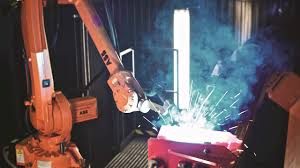
The Evolution of Structural Steel Fabrication in Istanbul
Istanbul has long served as the heartbeat of Eurasia’s industrial manufacturing, bridging the gap between European precision engineering and Asian production scale. In recent years, the city’s surrounding industrial zones and its proximity to the massive shipyards in Tuzla and Yalova have spurred a demand for high-performance structural steel processing. The offshore platform industry—encompassing oil and gas rigs, offshore wind farms, and subsea infrastructure—demands materials that can withstand extreme hydrostatic pressure and corrosive environments.
Traditionally, the fabrication of heavy-duty I-beams for these applications relied on a combination of band sawing, mechanical drilling, and manual oxy-fuel or plasma torching. These methods, while functional, introduced significant margins of error and large Heat Affected Zones (HAZ), which can compromise the metallurgical integrity of the steel. The introduction of the 12kW Heavy-Duty I-Beam Laser Profiler has effectively rendered these legacy methods obsolete for high-tier offshore projects.
Technical Prowess: The 12kW Fiber Laser Advantage
In the realm of fiber lasers, wattage is not merely about speed; it is about the capability to maintain a stable “keyhole” welding and cutting effect through thick-walled structural sections. A 12kW laser source provides the photon density necessary to slice through high-tensile carbon steel and stainless steel sections with wall thicknesses exceeding 25mm to 30mm with surgical precision.
For an I-beam, the challenge lies in the transition between the flange and the web. The 12kW power allows the laser to maintain a consistent kerf width even when the beam’s geometry fluctuates. This power level ensures that the cutting speed remains economically viable, often outperforming high-definition plasma by a factor of three while providing a surface finish that requires zero secondary grinding. In offshore construction, where every weld must be X-ray quality, the clean, dross-free edge produced by a 12kW laser is a foundational requirement.
Heavy-Duty Kinematics and 3D Profiling
A standard tube laser cannot handle the massive structural members required for offshore platforms. The “Heavy-Duty” designation refers to the machine’s bed capacity and its chuck system. These profilers are designed to support beams that can weigh several tons and span up to 12 meters in length.
The 12kW systems in Istanbul typically utilize a sophisticated 5-axis or 6-axis head configuration. This allows for “3D cutting,” enabling the laser to perform complex bevels, miter cuts, and “bird’s mouth” joints. In the construction of offshore jackets—the lattice structures that support platforms—beams often meet at complex angles. The ability of the laser profiler to cut these geometries in a single pass, including the bolt holes and weld preparations, ensures that when the components reach the assembly site, they fit together with sub-millimeter accuracy. This “Lego-style” assembly is critical in the tight confines of a shipyard.
The Role of Automatic Unloading in Continuous Production
One of the most significant advancements in these systems is the integration of automatic unloading mechanisms. In the past, the bottleneck of laser cutting was not the cut itself, but the logistics of moving massive beams off the machine. An I-beam used in offshore construction is not something a single operator can move.
Automatic unloading systems use a combination of synchronized hydraulic lifters, lateral conveyor belts, and robotic sorting arms. Once the laser finishes profiling a section, the system automatically transitions the finished part to a staging area while the next raw beam is loaded. This creates a “lights-out” manufacturing environment. For Istanbul-based fabricators, this automation offsets the rising costs of specialized labor and drastically reduces the risk of workplace injuries associated with handling heavy steel. Furthermore, the software-driven unloading allows for “kit-based” production, where parts are unloaded in the specific order they are needed for the welding assembly line.
Offshore Platforms: Precision for Extreme Environments
Offshore platforms are subject to some of the most violent forces on Earth, from hurricane-force winds to the constant corrosive spray of salt water. The structural integrity of the I-beams and H-beams used in the topsides and jackets is paramount.
When a 12kW laser cuts these beams, the precision of the holes and notches ensures that the structural load is distributed exactly as the engineers designed. In traditional drilling, “walking” of the drill bit can lead to misaligned bolt holes, forcing onsite workers to “ream” the holes, which weakens the joint. The laser profiler eliminates this. Furthermore, the 12kW fiber laser’s ability to etch part numbers and weld instructions directly onto the steel surface ensures full traceability—a mandatory requirement for maritime certification bodies like Lloyd’s Register or Bureau Veritas.
Istanbul: A Strategic Hub for Laser Integration
Why is Istanbul the epicenter for this technology? The answer lies in the synergy between Turkey’s domestic machine tool manufacturing and its massive export-oriented construction sector. Local firms in Istanbul have become experts at integrating global laser sources (such as IPG or nLIGHT) into locally engineered heavy-duty frames.
By hosting these machines in Istanbul, fabricators can serve the North Sea, the Mediterranean, and the Caspian Sea markets with ease. The city’s logistical advantages allow for the rapid transport of processed structural steel to major offshore projects. Moreover, the technical expertise in Istanbul has evolved; local engineers are now proficient in the sophisticated CAD/CAM software (like Lantek or SigmaNEST) required to program these 6-axis machines, ensuring that the transition from a digital 3D model to a physical beam is seamless.
Economic Impact and ROI for Fabricators
The capital investment in a 12kW heavy-duty laser profiler is substantial, yet the Return on Investment (ROI) is realized through the radical compression of the fabrication cycle. A process that once took four machines (saw, drill, plasma, and grinder) and six operators can now be completed on a single laser line with one supervisor.
For offshore projects, where “Time to First Oil” or “Time to Grid” is a vital metric, the speed of Istanbul’s laser-equipped fabricators provides a massive competitive edge. The reduction in scrap material—thanks to advanced nesting algorithms—further bolsters the bottom line. In heavy-duty beams, saving even 3% of material through tighter nesting can equate to tens of thousands of dollars over the course of a single project.
Environmental Considerations and the Green Transition
As the offshore industry pivots toward wind energy, the “green” credentials of the fabrication process are becoming more important. Fiber lasers are significantly more energy-efficient than CO2 lasers or plasma systems. The 12kW fiber laser converts electrical energy into light with high efficiency, and because the process is so fast, the total energy consumed per meter of cut is relatively low.
Additionally, the precision of the 12kW cut minimizes the need for chemical cleaning and secondary processing, reducing the environmental footprint of the shipyard. As Istanbul aligns itself with European Green Deal standards, the transition to high-efficiency laser profiling is not just a technological choice, but a regulatory one.
Conclusion: The Future of Offshore Structural Fabrication
The 12kW Heavy-Duty I-Beam Laser Profiler with Automatic Unloading represents the pinnacle of current fabrication technology. In the bustling industrial landscape of Istanbul, these machines are doing more than just cutting steel; they are enabling a new era of offshore engineering. By providing the power to cut thick sections, the intelligence to handle complex 3D geometries, and the automation to operate continuously, this technology ensures that the next generation of offshore platforms—whether they are extracting energy or generating it from the wind—are built with a level of precision and efficiency that was previously unimaginable. For the expert in fiber lasers, the message is clear: the future of heavy structural steel is light-driven.