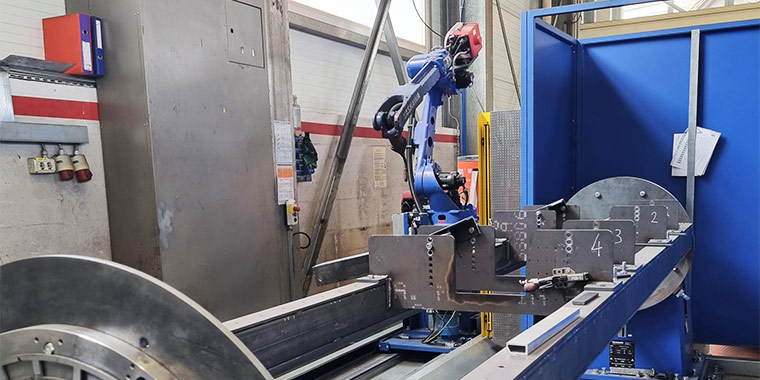
The Dawn of 12kW Fiber Laser Power in Structural Steel
As a fiber laser expert, I have witnessed the rapid evolution of power outputs over the last decade. While 3kW and 6kW systems were once the industry standard for sheet metal, the structural steel sector—specifically the processing of H-beams, I-beams, and heavy channels—requires a different magnitude of energy. The 12kW fiber laser represents the “sweet spot” for modern industrial applications.
At 12kW, the laser density allows for high-speed sublimation and melting of thick carbon steel walls common in H-beams. Unlike mechanical sawing or plasma cutting, a 12kW fiber laser delivers a concentrated beam of light that creates a narrow kerf width, resulting in minimal Heat Affected Zones (HAZ). For storage racking manufacturers in Queretaro, this means the structural integrity of the steel is preserved, and the edges are so clean they require zero post-processing. The speed advantage is equally staggering; a 12kW system can process structural profiles up to 4-5 times faster than traditional mechanical methods, turning what was once a bottleneck into the most efficient part of the production line.
Queretaro: The Strategic Hub for Storage Racking Production
Queretaro has solidified its position as the logistics heartbeat of Mexico. Situated in the center of the country with direct access to the NAFTA (USMCA) corridors, the state has seen a massive influx of distribution centers for e-commerce giants and automotive suppliers. This expansion creates an insatiable demand for high-capacity storage racking systems.
Storage racking is not merely “shelving”; it is precision-engineered structural support. The uprights and H-beams used in these systems must withstand immense static and dynamic loads. Manufacturers in Queretaro’s industrial parks, such as El Marqués or Parque Industrial Querétaro, are moving away from legacy manufacturing toward 12kW fiber lasers to meet the stringent safety and tolerance standards required by international clients. The ability to produce complex hole patterns, interlocking tabs, and beveled edges on a single machine gives Queretaro-based firms a competitive edge in the global market.
The Mechanics of H-Beam Laser Processing
Cutting an H-beam is significantly more complex than cutting a flat sheet. It involves a three-dimensional workpiece with varying thicknesses and “blind” areas. A state-of-the-art 12kW H-beam laser machine utilizes a 5-axis or 3D cutting head capable of tilting and rotating around the profile.
The machine’s architecture usually involves a massive rotary chuck system that feeds the H-beam through the cutting zone. The 12kW laser source must be paired with high-end sensors that can compensate for the slight structural deviations (bowing or twisting) common in hot-rolled steel. By using real-time capacitive sensing, the laser head maintains a constant focal distance from the beam’s surface, ensuring that every bolt hole for the racking system is perfectly circular and every notch is mathematically precise. This precision is vital for the “bolt-together” assembly of racking systems, where even a 1mm deviation can lead to structural misalignment during warehouse installation.
Zero-Waste Nesting: The Economics of Sustainability
In the world of structural steel, material is the highest cost. Traditional H-beam processing often leaves “tailings”—remnant pieces of the beam that are too short to be clamped by the machine but too long to be ignored as scrap. For a high-volume racking manufacturer, these 200mm to 500mm scraps represent thousands of dollars in lost profit every week.
“Zero-waste nesting” is the technological answer to this inefficiency. Advanced software takes the production requirements for an entire project and “nests” the parts along the length of the raw H-beam with minimal spacing. However, the true “zero-waste” capability comes from the hardware—specifically, a multi-chuck (often three or four chucks) movement system. These chucks work in a “leapfrog” fashion, handing off the beam to one another so that the laser can cut right up to the very end of the material. By reducing the “dead zone” of the clamp, manufacturers can achieve material utilization rates of up to 99%. In Queretaro, where steel prices fluctuate with global markets, this efficiency is the difference between a profitable contract and a loss.
Impact on Storage Racking Design and Assembly
The 12kW H-beam laser allows designers to rethink how storage racking is built. Traditionally, H-beams were cut to length, moved to a drilling station, and then perhaps to a milling station for notches. Each move introduced potential for human error and increased labor costs.
With the 12kW laser, all these processes are consolidated. We can now design “lock-and-key” joints where the horizontal H-beams have laser-cut tabs that fit perfectly into the vertical uprights. This reduces the reliance on heavy welding, which in turn reduces the risk of structural warping. For the storage racking industry, this means faster installation times on-site. When the components arrive at a new warehouse in Mexico City or Monterrey, they fit together like a high-precision puzzle. The accuracy of the 12kW cut ensures that the load-bearing calculations made by engineers are reflected perfectly in the physical product.
Thermal Management and Fiber Laser Longevity
A common concern for operators in the high-temperature environment of Queretaro is the thermal stability of a 12kW system. High-power lasers generate significant heat, both in the source and the cutting head. Expertly designed machines utilize dual-circuit water chilling systems that independently regulate the temperature of the laser source and the optics.
Modern 12kW fiber lasers are also equipped with protective windows and “smart” piercing technologies. Piercing a thick H-beam flange can normally take several seconds and create significant back-reflection and splatter. However, with frequency-modulated piercing and air-cushion technology, the 12kW laser can “pop” through the steel in a fraction of a second without damaging the sensitive optics. This reliability is crucial for 24/7 operations in Queretaro’s busy industrial sector.
The Transition from Plasma to 12kW Fiber
For years, plasma cutting was the only viable way to cut thick H-beams quickly. However, plasma has inherent limitations: it produces a wider kerf, leaves dross (hardened slag) on the bottom of the cut, and creates a significant taper in the hole quality.
The shift to 12kW fiber laser technology in Queretaro is driven by the total cost of ownership. While the initial investment in a fiber laser is higher than a plasma table, the cost per part is drastically lower. The fiber laser requires no secondary grinding, uses less electricity per cut, and does not require expensive gas mixtures. Furthermore, the 12kW laser can cut small-diameter holes in thick flanges—something plasma simply cannot do with the required tolerances for high-density storage racking.
The “Nearshoring” Effect and Technological Adoption
The geopolitical shift toward nearshoring has put Mexico, and specifically Queretaro, in the spotlight. Companies are moving production away from overseas locations to be closer to the North American market. This shift brings with it a demand for “Industry 4.0” standards.
International clients expect the racking systems in their facilities to be manufactured using the latest technology to ensure safety and longevity. Investing in a 12kW H-beam laser machine is a signal of maturity for a Queretaro fabrication shop. It allows them to compete not on low labor costs, but on high-tech capability. The integration of zero-waste nesting software also allows these companies to provide transparent material reporting, which is increasingly required for ESG (Environmental, Social, and Governance) compliance.
Conclusion: The Future of Structural Fabrication
As a fiber laser expert, I see the 12kW H-beam laser machine as more than just a tool; it is a catalyst for industrial evolution. In Queretaro, this technology is bridging the gap between traditional heavy industry and the precision of modern manufacturing. By eliminating waste through intelligent nesting and delivering the sheer power needed to slice through structural steel with the grace of a scalpel, these machines are building the backbone of the global supply chain.
For the storage racking industry, the implications are clear: faster production, higher safety margins, and a significantly smaller environmental footprint. The 12kW fiber laser has arrived in the Bajío, and it is reshaping the way we think about the very structures that hold our world together.