The Strategic Significance of 12kW Power in Maritime Fabrication
In the realm of shipbuilding, the structural integrity of the vessel depends entirely on the quality of the “skeleton”—the beams, channels, and ribs that form the hull and internal support systems. Traditionally, these components were processed using plasma cutting or mechanical sawing. However, the shift to a 12kW fiber laser source changes the ROI equation entirely. A 12kW fiber laser offers a power density that allows for high-speed nitrogen or oxygen-assisted cutting through carbon steel and stainless steel profiles up to 30mm-40mm in thickness, which covers the vast majority of structural members used in medium-to-large scale maritime vessels.
From an expert’s perspective, the “12kW” threshold is the sweet spot for modern shipyards. It provides enough “over-capacity” to maintain high feed rates on 20mm beams—where a 6kW laser might struggle or require a much slower speed—thereby reducing the Heat Affected Zone (HAZ). A smaller HAZ is critical in shipbuilding to prevent the warping of long structural channels, ensuring that when the beams reach the assembly stage at the yard, they align perfectly without the need for hydraulic correction.
Advanced ±45° Bevel Cutting: Redefining Weld Preparation
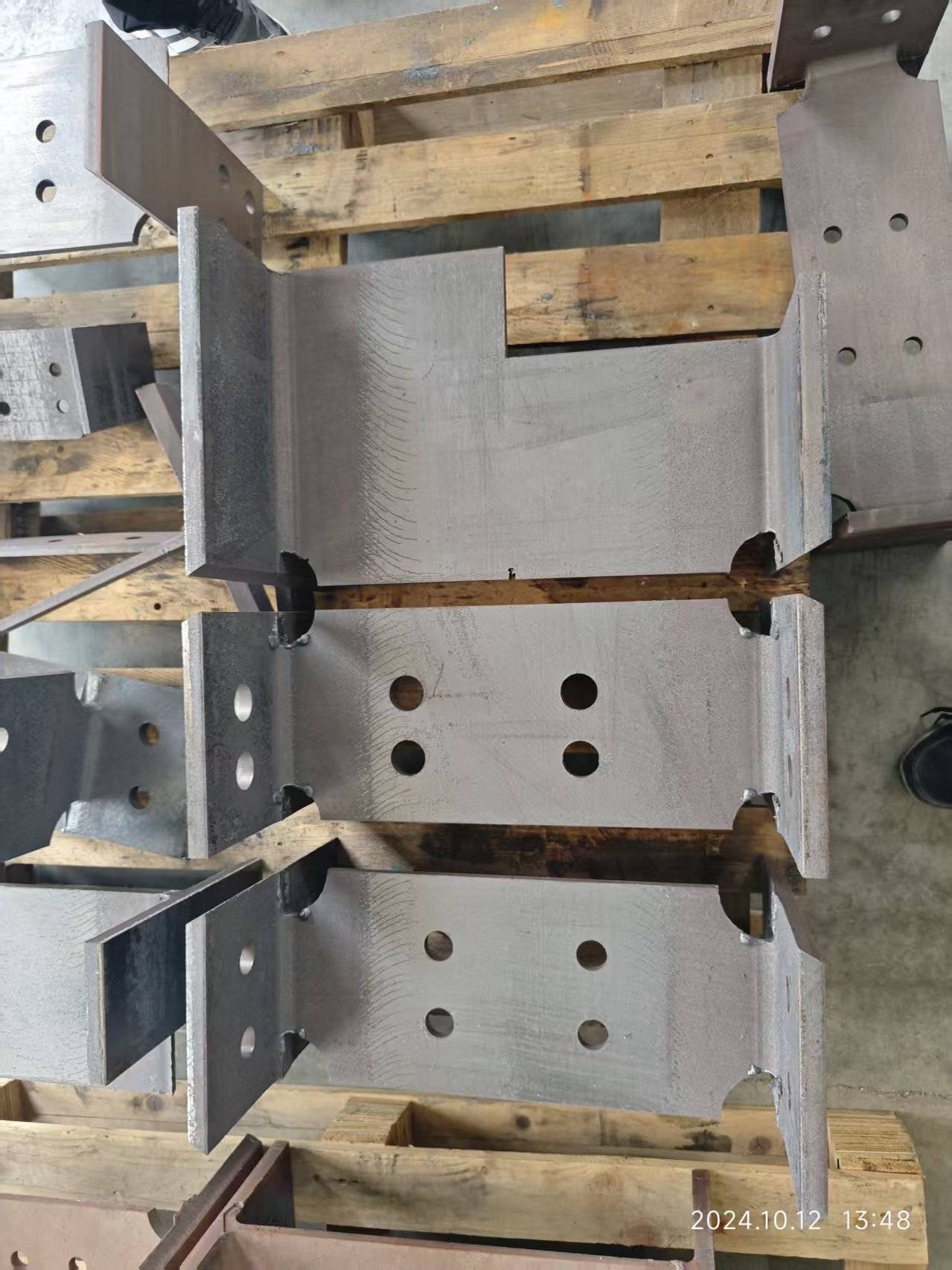
The most transformative feature of this machinery is the 5-axis CNC head capable of ±45° bevel cutting. In shipbuilding, flat edges are rarely sufficient. Most structural joints require V, Y, X, or K-shaped bevels to allow for full-penetration welding. Traditionally, a beam would be cut to length, then moved to a separate station where a technician would manually grind the bevel or use a portable beveling machine.
The 12kW CNC Beam Laser integrates this into the primary cutting cycle. The laser head oscillates with high precision, maintaining a constant standoff distance from the curved or angled surfaces of H-beams and U-channels. By achieving a ±45° tilt, the machine can create complex geometries that allow for seamless interlocking of structural members. This not only reduces labor costs by up to 60% but also ensures that the weld volume is consistent, leading to stronger, X-ray-quality welds that are mandatory for maritime safety certifications.
Processing Beams and Channels: The CNC Architecture
Processing a flat sheet is simple; processing a 12-meter H-beam or a heavy U-channel is a matter of sophisticated material handling and software intelligence. A dedicated beam laser utilizes a “chuck” system—often a 3-chuck or 4-chuck configuration—to rotate and feed the profile through the cutting zone. For a Riyadh-based shipyard supplier, where throughput is key, the 4-chuck system is the gold standard because it allows for “zero-tailing” cutting. This means the laser can cut right to the end of the beam, minimizing expensive scrap material.
The CNC software must also account for the inherent imperfections in structural steel. Beams are rarely perfectly straight; they often have slight bows or twists from the mill. The 12kW system utilizes laser sensors to “map” the actual profile of the beam before the cut begins. The CNC then adjusts the cutting path in real-time to ensure the bevel angle remains consistent relative to the beam’s surface, rather than the theoretical CAD model. This level of compensation is what separates a standard laser from a specialized maritime-grade beam processor.
Riyadh as an Industrial Hub: Environmental and Logistical Considerations
Operating a 12kW high-power laser in Riyadh presents unique environmental challenges. The region is characterized by high ambient temperatures and fine silica dust. For a shipbuilding yard’s fabrication facility in this climate, the machine’s cooling system and filtration are just as important as the laser source itself.
The chiller units must be oversized and tropicalized to handle 45°C+ temperatures without losing the ability to stabilize the temperature of the laser medium and the cutting head. Furthermore, the 12kW source requires an ultra-clean environment. The machine must be equipped with a high-efficiency dust extraction system and a pressurized bellows system to prevent Riyadh’s dust from settling on the sensitive optics. Expert-level maintenance in this region focuses on the integrity of the “optical path”—ensuring that the protective windows and the fiber delivery cable remain pristine despite the external environment.
Synergy with Saudi Vision 2030 and the Maritime Sector
The deployment of such advanced machinery in Riyadh is a direct response to Saudi Arabia’s Vision 2030, particularly the development of the King Salman Global Maritime Industries Complex. While the ships are launched on the coast, the industrial backbone—the fabrication of components—is increasingly centralized in Riyadh due to its logistical connectivity and the presence of advanced manufacturing clusters.
By localizing the ability to cut complex, beveled structural steel, the Kingdom reduces its reliance on imported pre-fabricated components. This high-power laser technology enables local shipyards to compete globally on price and lead time. The 12kW system allows for the rapid fabrication of “sub-assemblies” that can be trucked to the coast for final integration, effectively turning Riyadh into a high-tech engine room for the Saudi maritime industry.
Technical Specifications: What a Fiber Laser Expert Looks For
When evaluating a 12kW system for this specific application, several technical nuances are paramount:
- Beam Parameter Product (BPP): At 12kW, the quality of the beam is vital. A lower BPP allows for a smaller focal spot, which increases the power density, enabling cleaner cuts on thick channels with less dross.
- Acceleration and Dynamics: Because beam cutting involves complex 5-axis movements, the gantry and chucks must have high acceleration (at least 1.0G to 1.5G) to maintain efficiency during the transition between bevel angles.
- Gas Management: High-power cutting requires sophisticated gas control. Using a mix of oxygen and nitrogen, or high-pressure air, the machine must be able to switch dynamically to optimize for speed versus edge quality.
- Software Integration: The machine must support Tekla or AutoCAD Structural Detailing files, allowing for a “BIM to Machine” workflow where the 3D model of the ship is translated directly into laser instructions.
The Economic Impact: Labor, Time, and Quality
The transition from manual methods to a 12kW CNC laser for beam processing represents a paradigm shift in shipyard economics. In traditional fabrication, a single H-beam requiring multiple holes and beveled ends might take several hours to process manually with high risks of human error. The 12kW laser can complete the same task in under 10 minutes with sub-millimeter accuracy.
Furthermore, the precision of the laser-cut bevels reduces the amount of “filler metal” required during the welding process. In a large ship, where there are kilometers of weld lines, reducing the weld gap by even 1mm can save tons of welding wire and thousands of liters of shielding gas, not to mention the reduction in energy consumption and labor hours for the welders. This “downstream saving” is often the most significant part of the ROI calculation for a shipyard.
Conclusion: The Future of Riyadh’s Maritime Fabricators
The 12kW CNC Beam and Channel Laser Cutter with ±45° bevel cutting is not just a tool; it is a statement of industrial intent. For the shipbuilding industry in Riyadh, it represents a bridge between traditional heavy engineering and the future of automated, high-precision manufacturing. As maritime projects in the region grow in complexity—from offshore support vessels to specialized tankers—the ability to process thick structural steel with speed and geometric perfection will be the defining factor of success. By investing in 12kW fiber technology, Saudi fabricators are ensuring they have the power, precision, and flexibility to build the next generation of the Kingdom’s fleet.