The Industrial Context: Katowice as a Hub for Racking Excellence
Katowice and the surrounding Upper Silesian Industrial Region have long been the backbone of European steel processing. However, the modern logistics boom—driven by e-commerce and globalized supply chains—has placed immense pressure on the storage racking industry. Traditional methods of fabricating pallet racks, cantilever systems, and mezzanine structures are no longer sufficient to meet the demand for high-volume, high-precision components.
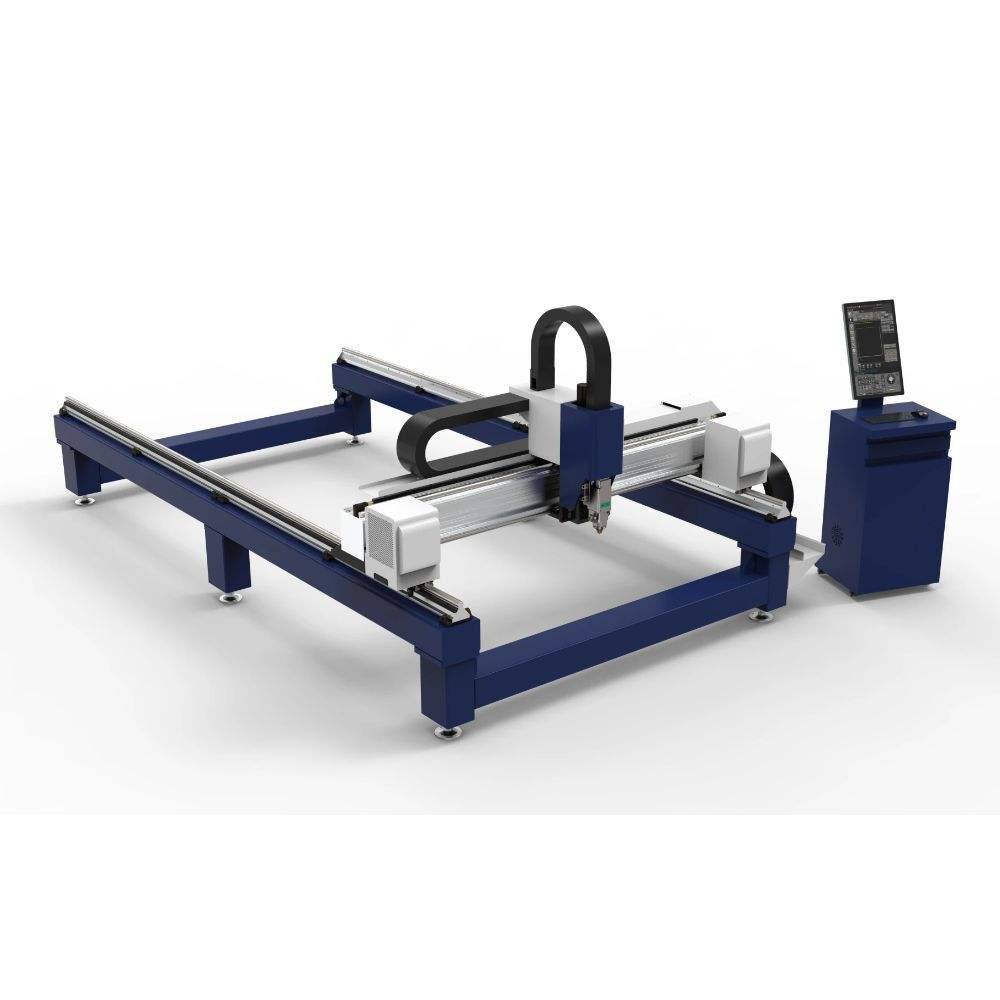
The introduction of the 12kW CNC Beam and Channel Laser Cutter in this region serves as a direct response to these market pressures. In an environment where steel prices fluctuate and labor costs are rising, the ability to produce complex interlocking racking components with zero manual intervention is a significant competitive advantage. Katowice’s strategic location, with its proximity to major European transport corridors, makes it the ideal site for such high-output machinery, serving markets from Germany to the Baltics.
The Power of 12kW: Redefining Speed and Thickness
As an expert in fiber laser technology, I often emphasize that wattage is not just about the ability to cut thicker materials; it is about the “power density” and the resulting speed on mid-range thicknesses. In the storage racking industry, components typically range from 3mm to 12mm in wall thickness. A 12kW fiber source allows for “high-speed nitrogen cutting,” which leaves a clean, oxide-free edge.
This is critical for racking. An oxide-free edge ensures that subsequent powder coating or galvanization adheres perfectly to the steel, preventing the premature corrosion that often plagues warehouse environments. Furthermore, the 12kW source provides the kinetic energy required to pierce heavy C-channels and I-beams in milliseconds, reducing the overall cycle time by up to 40% compared to 6kW or 8kW systems. The beam quality of a 12kW fiber laser is optimized for high-speed vaporous cutting, meaning the Heat Affected Zone (HAZ) is minimized, preserving the structural integrity of the high-tensile steel used in heavy-duty racking.
Advanced CNC Processing of Beams and Channels
Unlike flat-bed lasers, a CNC Beam and Channel Cutter must manage the complexities of three-dimensional geometry. Storage racking relies on U-channels, L-profiles, and custom-rolled sections. The 12kW system in Katowice utilizes a sophisticated multi-chuck system (often a 3-chuck or 4-chuck configuration) that supports the material through the entire cutting zone.
This “through-the-chuck” processing allows for 360-degree rotation, enabling the laser head—often a 5-axis 3D head—to cut bolt holes, slots for interlocking beams, and mitered ends on all sides of the profile. For racking manufacturers, this means that the “uprights” (the vertical members of a rack) can be perforated with highly accurate teardrop or rectangular patterns that are perfectly aligned across the entire 12-meter length of a beam. The precision of CNC ensures that when these racks are assembled on-site, every bolt and safety pin fits with zero tolerance issues, a necessity for seismic-rated storage installations.
Zero-Waste Nesting: The Economic Engine
The term “Zero-Waste Nesting” is often used loosely, but in the context of structural laser cutting, it refers to a specific suite of software and hardware capabilities. Traditional sawing leaves “remnants” or “drops”—short lengths of beams that are too small to be used and are sold for scrap. In a high-volume racking facility, this waste can account for 10-15% of total steel expenditure.
The 12kW systems deployed in Katowice utilize advanced nesting algorithms that perform “common-line cutting” and “remnant-free processing.” The software analyzes the production queue and nests parts of varying lengths back-to-back. The 12kW laser’s precision allows for “zero-gap” cutting, where one cut serves as the tail-end of one part and the leading edge of the next. Additionally, the multi-chuck system can move the material so close to the laser head that the final “tail” of a 12-meter beam is reduced to less than 50mm. For a factory processing hundreds of tons of steel per month, the transition to zero-waste nesting directly translates to tens of thousands of Euros in saved material costs annually.
Engineering for Safety: Precision in Racking Joints
Storage racking is an engineering discipline where safety is paramount. A single failure in a warehouse rack can lead to catastrophic consequences. The 12kW laser’s ability to produce “complex geometries” allows for the design of more secure interlocking joints. Instead of simple butt-welds, manufacturers can now design “tab-and-slot” connections where horizontal beams lock mechanically into the vertical uprights before welding even begins.
This mechanical interlocking, cut with the micron-level precision of a fiber laser, ensures that the load-bearing capacity of the rack is maximized. In Katowice’s specialized facilities, the 12kW laser is also used to cut precise “bevels” for weld preparation. By chamfering the edges of thick-walled channels during the cutting process, the system ensures deeper weld penetration, which is vital for cantilever racks that must support several tons of asymmetrical weight.
The Integration of Industry 4.0 in Silesia
The 12kW CNC laser systems in Katowice are rarely standalone units. They are integrated into the broader Industry 4.0 ecosystem. These machines are connected to the factory’s ERP (Enterprise Resource Planning) system, allowing for real-time tracking of material usage and production status.
As the laser cuts, it can also use a lower-power marking function to etch QR codes or part numbers onto each beam. This is essential for storage racking, which often involves hundreds of similar-looking but slightly different components. In the warehouse assembly phase, workers can scan these codes to ensure that the correct gauge of steel is being used for the correct level of the racking system. This digital thread—from the nesting software in the office to the 12kW laser in Katowice to the final assembly site—drastically reduces human error.
Maintenance and Reliability of High-Power Fiber Lasers
From an expert perspective, maintaining a 12kW system requires a different approach than lower-power units. The optical path must be kept under ultra-clean conditions, as any microscopic dust particle can be incinerated by the 12kW beam, damaging the protective windows or the cutting head.
The facilities in Katowice typically employ “smart” cutting heads equipped with sensors that monitor the temperature of the internal optics and the “back-reflection” of the laser. When cutting highly reflective materials or thick structural steel, back-reflection can be a risk; however, modern fiber laser sources are designed with optical isolators that protect the diodes. The reliability of these 12kW systems is now at a point where they can operate in 24/7 shifts, which is exactly what the racking industry requires during peak demand cycles.
Conclusion: The Future of Structural Fabrication
The deployment of 12kW CNC Beam and Channel Laser Cutters in Katowice represents the pinnacle of modern structural steel fabrication. By merging the raw power of high-wattage fiber lasers with the surgical precision of zero-waste nesting software, manufacturers are achieving a level of efficiency that was previously unthinkable.
For the storage racking industry, this technology provides the “triple crown” of manufacturing: lower costs, higher safety standards, and faster delivery times. As the logistics hubs of Europe continue to expand, the precision-cut beams and channels emerging from the industrial heart of Poland will form the literal framework of the global supply chain. The 12kW laser is no longer just a tool; it is the fundamental engine of a new era in structural engineering.