12kW CNC Beam and Channel Laser Cutter Zero-Waste Nesting for Power Tower Fabrication in Mexico City

The Dawn of High-Power Fiber Lasers in Mexican Infrastructure

Mexico City has long been the industrial heartbeat of Latin America, but the recent push toward energy independence and grid modernization has placed a unique strain on local fabricators. The production of power towers—those towering lattices of galvanized steel that carry high-voltage lines across the Sierra Madre—requires a level of precision and volume that traditional plasma cutting and mechanical drilling can no longer sustain.

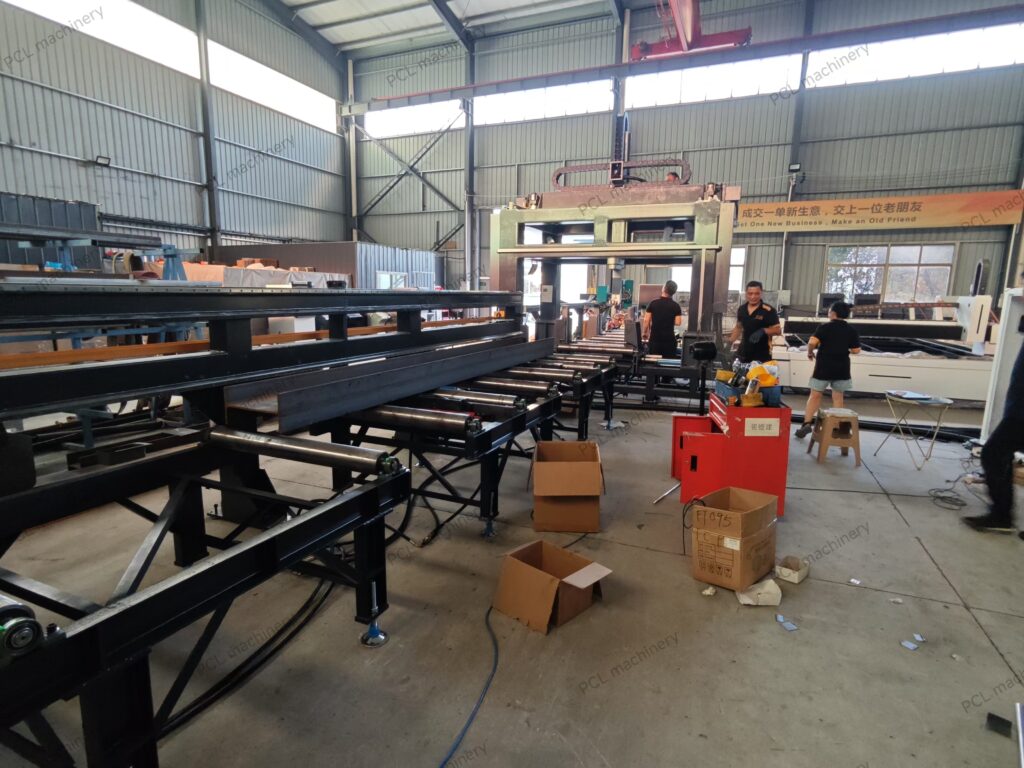
Enter the 12kW CNC Beam and Channel Laser Cutter. In the world of fiber lasers, 12,000 watts represents a “sweet spot” for structural steel. It provides enough power to pierce 1-inch carbon steel plates in milliseconds while maintaining the beam quality necessary for intricate bolt-hole patterns in structural C-channels and I-beams. For fabricators in the industrial zones of Vallejo or Tlalnepantla, this technology isn’t just an upgrade; it is a total reimagining of the workflow.

Technical Superiority: Why 12kW is the Standard for Power Towers

In the fabrication of power towers, the primary materials are structural angles, C-channels, and heavy-duty beams. Historically, these were processed using a combination of band saws, ironworkers, and CNC drills. This multi-stage process introduced cumulative errors and high labor costs.

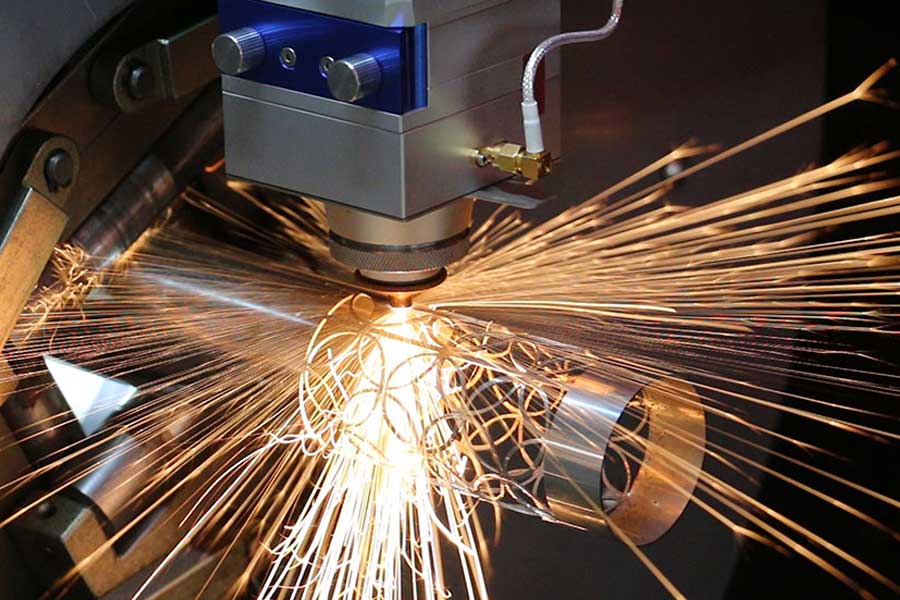
A 12kW fiber laser changes the math entirely. At this power level, the laser acts as a universal tool. It can cut the profile to length, notch the flanges, and “drill” the bolt holes in a single continuous operation. The “fiber” aspect is crucial here; unlike older CO2 lasers, the 1,070nm wavelength of a fiber laser is absorbed more efficiently by steel, allowing for cutting speeds that are 3x to 5x faster than traditional methods.

Furthermore, the 12kW power reserve allows for “FlyCut” technology—a method where the laser head moves at high speed across a grid of holes without stopping, essentially “shooting” the holes into the beam. For a power tower that requires thousands of bolt connections, this reduces processing time from hours to minutes.

3D Kinematics: Processing Beams and Channels

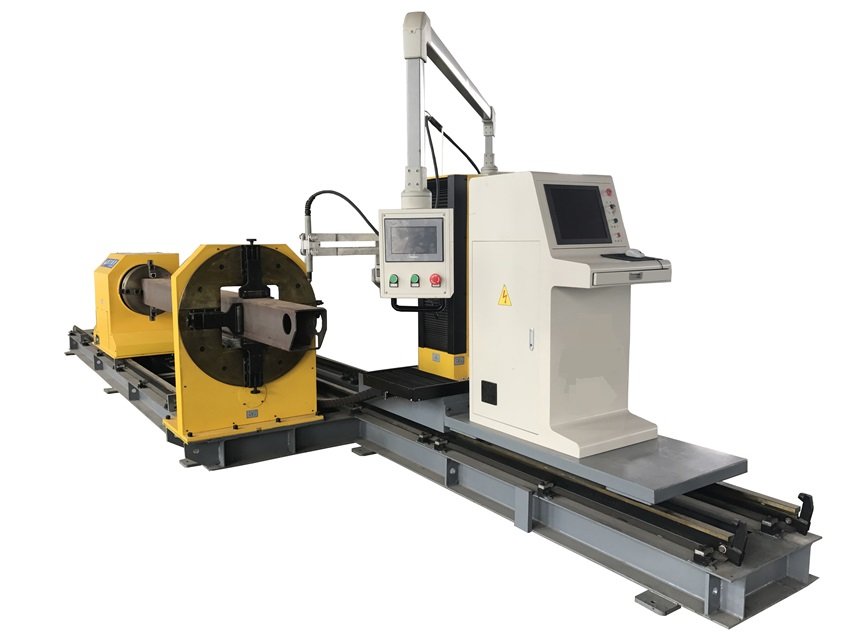
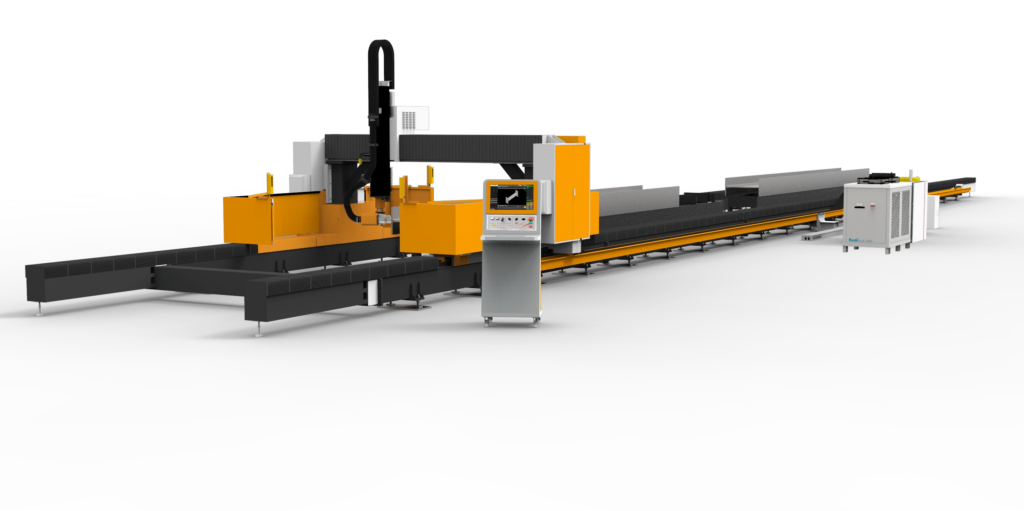
A standard flat-bed laser cannot handle the geometry of a structural beam. The 12kW systems deployed in Mexico City feature advanced 5-axis or 6-axis head movement and a heavy-duty rotary chuck system.

When a 12-meter I-beam is loaded into the machine, the CNC controller maps the beam’s surface using non-contact sensors. Because structural steel often has slight deviations or “twists” from the mill, the laser’s software compensates in real-time. The 12kW head can then tilt to cut bevels—essential for welding preparations—and reach into the web of a channel to cut access holes. This eliminates the need for secondary grinding, which is a major bottleneck in Mexican fabrication shops.

The “Zero-Waste” Revolution: Nesting Algorithms

In the current economic climate, the price of steel in Mexico is subject to global volatility. Waste is no longer just a nuisance; it is a drain on the bottom line. This is where “Zero-Waste Nesting” software becomes the silent hero of the 12kW system.

Traditional nesting often results in “skeletons” or large offcuts that are sold for scrap at a fraction of their purchase price. Advanced nesting for beam cutters utilizes 3D spatial algorithms to “stitch” parts together. For example, the angled cut of one tower brace can serve as the starting cut for the next.

Moreover, the software can nest smaller components—such as gusset plates or connection brackets—directly into the “web” or “flanges” of larger beams where holes are being cut anyway. By utilizing the “common line cutting” technique, the laser makes one pass to separate two parts, saving both time and material. In high-volume power tower production, this can increase material utilization from 75% to over 96%, effectively paying for the machine’s operation through material savings alone.

Mexico City: A Strategic Hub for Power Tower Fabrication

The choice of Mexico City as a theater for this technology is strategic. The city’s high altitude (2,240 meters) presents unique challenges for some industrial processes, but fiber lasers, being solid-state, are remarkably resilient to atmospheric changes compared to gas-based lasers.

Furthermore, Mexico’s “Plan de Negocios de la CFE” (Federal Electricity Commission) demands a massive expansion of the national grid. This creates a sustained internal market for power towers. By adopting 12kW technology, Mexico City-based firms can compete not only domestically but also export structural components to the United States and Canada under the USMCA trade agreement. The “Zero-Waste” aspect also aligns with the growing ESG (Environmental, Social, and Governance) requirements of international contractors who demand lower carbon footprints for their infrastructure projects.

Thermal Management and the “Heat Affected Zone”

A common concern in structural engineering is the Heat Affected Zone (HAZ). When steel is heated, its metallurgical properties can change, potentially making it brittle around the cut site. In power towers, which must withstand extreme wind loads and seismic activity common in the Valley of Mexico, structural integrity is non-negotiable.

The 12kW fiber laser mitigates this through sheer speed. Because the beam moves so quickly, the total “heat input” into the material is significantly lower than that of plasma cutting or lower-power lasers. The result is a narrow kerf and a negligible HAZ. This ensures that the bolt holes in the tower legs remain ductile and the structural angles retain their specified yield strength.

Operational Efficiency in the Mexican Context

Operating a 12kW laser in an urban industrial hub like Mexico City requires attention to the local power grid. While 12kW is the output power, fiber lasers are incredibly efficient, often boasting wall-plug efficiencies of over 40%. This is a fraction of the power consumed by older plasma systems or CO2 lasers, making it easier for factories to stay within their peak-demand quotas set by the CFE.

Additionally, the modular nature of modern fiber laser sources means that if one 2kW module fails, the machine can often continue running at a lower power (e.g., 10kW) while the part is replaced. For a fabricator in Mexico City, this reliability is the difference between meeting a project deadline and facing heavy penalties.

Conclusion: Building the Future of Mexico

The deployment of 12kW CNC Beam and Channel Laser Cutters with Zero-Waste Nesting is transforming Mexico City into a powerhouse of structural innovation. By moving away from manual, multi-step fabrication and embracing the “all-in-one” capability of high-power fiber lasers, local manufacturers are setting a new global standard for infrastructure production.

These machines are doing more than just cutting steel; they are providing the speed, precision, and economic efficiency required to electrify the nation. As the power towers rise from the ground to carry energy across the Mexican landscape, they stand as a testament to the power of 12kW fiber technology—a perfect synergy of light, geometry, and industrial ambition. In the race to modernize North American infrastructure, the fabricators of Mexico City, armed with zero-waste laser technology, are now leading the charge.CNC Beam and Channel Laser Cutter

ONE MACHINE CUT ALL

tube laser cnc machine
5 axis cnc tube laser cutting machine
pipe profile
8 Axis cnc plasma cutting machine
h beam laser
HF H beam plate laser cutting machine
PCL TV

SHANDONG PCL GROUP Intelligent Equipment CO.,LTD

GET A OFFER TODAY