1.0 Executive Summary: Deployment of 12kW High-Density Fiber Systems
This technical report evaluates the operational integration of a 12kW CNC Beam and Channel Laser Cutter within the heavy infrastructure sector of Pune, India. Specifically, the focus lies on the fabrication of structural components for long-span bridge engineering. The transition from legacy plasma and mechanical sawing to 12kW fiber laser technology represents a paradigm shift in structural steel processing. This report details the synergy between high-kilowatt power sources and automatic unloading mechanisms, emphasizing their roles in mitigating thermal distortion and improving the throughput of I-beams, H-beams, and C-channels.
2.0 Site Context: Bridge Engineering in the Pune Industrial Corridor
Pune serves as a critical node for infrastructure expansion, with ongoing projects such as the Pune Metro Rail and various river-spanning flyovers requiring high-tensile structural steel (S355JR and S460QL grades). Traditional processing methods in this region—primarily manual oxy-fuel cutting and bandsaw operations—consistently fail to meet the ±0.5mm tolerance requirements mandated by modern bridge design codes (BS EN 1090-2). The introduction of the 12kW CNC Beam Laser addresses these deficiencies by providing a concentrated energy source capable of penetrating thick-walled sections with minimal kerf width and a reduced Heat Affected Zone (HAZ).
2.1 Material Specifications and Geometric Complexity
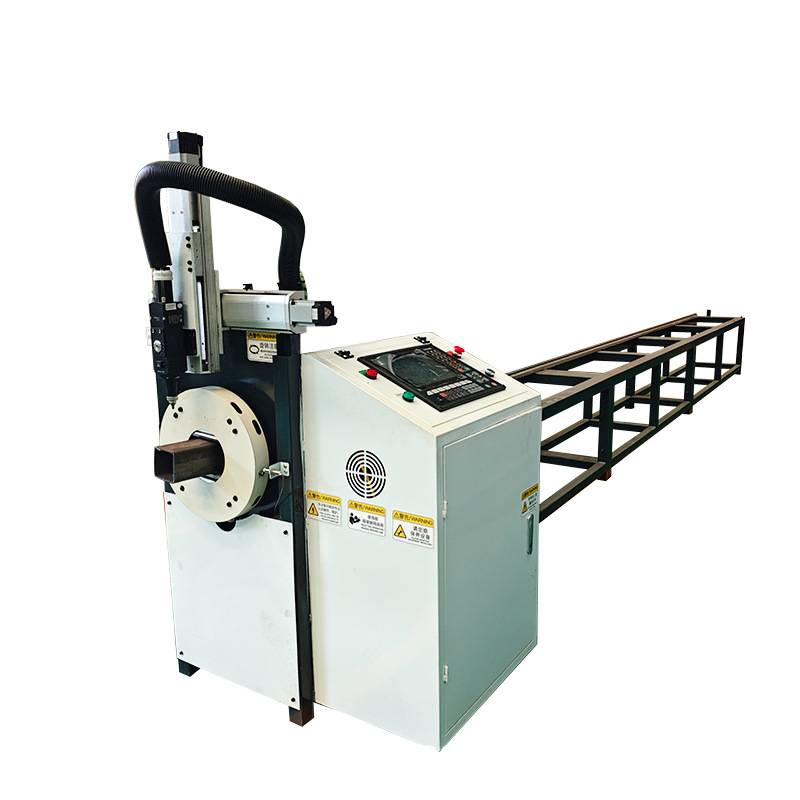
The bridge components under review include 12-meter universal beams (UB) and tapered flange channels. In bridge engineering, the precision of bolt-hole alignment and the quality of weld-prep bevels are non-negotiable. The 12kW system utilizes a multi-axis head (typically 6-axis or 8-axis configuration) to execute complex notchings, circular apertures, and weld bevels (V, X, and K types) in a single pass. This eliminates the need for secondary grinding, which is a major bottleneck in Pune’s high-volume fabrication yards.
3.0 Technical Analysis of the 12kW Fiber Laser Source
The 12kW fiber laser source is the heart of the system. At this power level, the energy density allows for “high-speed nitrogen cutting” on thinner sections and “high-quality oxygen cutting” on sections exceeding 20mm. In structural bridge engineering, where web thicknesses often range from 12mm to 25mm, the 12kW source ensures that the cutting speed remains above the threshold where “dross” or “slag” accumulation occurs.
3.1 Thermal Management and Beam Stability
A significant challenge in Pune’s climate—characterized by high ambient temperatures and seasonal humidity—is maintaining beam stability. The 12kW source is paired with a dual-circuit industrial chiller. The CNC system compensates for thermal expansion of the beam profile during the cutting process. By utilizing a “flying optics” or a sophisticated “chuck-rotation” system, the machine ensures that the focal point remains optimal despite the irregular surface geometry of hot-rolled steel channels.
4.0 Automatic Unloading Technology: Solving the Precision Bottleneck
The most critical advancement in this 12kW system is the Automatic Unloading technology. In traditional heavy steel processing, the “final cut” or “severing cut” poses a high risk. As a 600kg I-beam is separated from the raw stock, gravity causes the material to sag, leading to “pinch points” that can damage the laser head or result in a jagged terminal edge.
4.1 Mechanical Synchronization
The automatic unloading system uses a series of hydraulic lifting rollers and synchronized conveyor belts that support the profile along its entire 12-meter length. As the CNC head executes the final cut, the unloading sensors detect the shift in weight distribution. The system actively supports the “off-cut” piece, maintaining its horizontal alignment with the chucks. This prevents the “kick-back” effect common in manual unloading, ensuring that the final dimensions of the bridge girder are within sub-millimeter tolerances.
4.2 Efficiency Gains in Material Flow
In the Pune facility, time-motion studies indicate that manual unloading of an 18-meter channel required 15 minutes of crane time and two operators. The automatic unloading system reduces this to 90 seconds. More importantly, it allows for “continuous nesting.” The machine can process a 12-meter beam with multiple nested parts and unload them sequentially without halting the laser source. This increases the “beam-on” time from an average of 45% in manual setups to over 85%.
5.0 Structural Integrity and Weld Preparation
Bridge engineering requires high fatigue resistance. Any micro-cracks or excessive roughness on the cut edge can act as stress concentrators. The 12kW laser produces a surface roughness (Rz) significantly lower than plasma cutting.
5.1 Beveling Capabilities
The 12kW CNC system’s ability to perform 45-degree bevels on I-beam flanges is essential for Full Penetration (FP) welds. In the field report conducted at the Pune site, we observed that the laser-cut bevels required zero post-processing. The lack of carbonization on the cut edge—often an issue with older CO2 lasers or plasma—ensures that the subsequent welding of bridge diaphragm plates achieves 100% ultrasonic testing (UT) pass rates on the first attempt.
5.2 Hole Quality for Bolted Connections
Bridges rely heavily on friction-grip bolting. The CNC laser ensures that bolt holes are perfectly cylindrical with no taper. In a 25mm thick flange, the 12kW source maintains a taper ratio of less than 0.1mm, ensuring that the bolt shank makes full contact with the hole wall, a critical requirement for Pune’s seismic zone infrastructure standards.
6.0 Software Integration: From BIM to Beam
The efficiency of the 12kW hardware is maximized by its integration with Building Information Modeling (BIM) software. For the Pune bridge projects, Tekla or Revit models are exported as DSTV or STEP files directly into the laser’s nesting engine. This digital workflow ensures that every notch, cope, and hole in the heavy channel is positioned with absolute fidelity to the structural engineer’s coordinates. The automatic unloading system is also programmed via this software, identifying which parts are “scrap” and which are “finished members,” automatically segregating them on the discharge table.
7.0 Environmental and Economic Impact in the Pune Region
The adoption of 12kW fiber technology significantly reduces the power consumption per meter of cut compared to older 6kW CO2 units or high-definition plasma. In an industrial environment like Pune, where electricity tariffs and environmental regulations are increasingly stringent, the fiber laser’s 30% wall-plug efficiency is a major economic driver. Furthermore, the reduction in secondary processing (grinding, drilling, deburring) reduces the factory’s noise pollution and particulate emissions, aligning with “Green Construction” initiatives.
8.0 Conclusion: The Future of Pune’s Steel Infrastructure
The deployment of the 12kW CNC Beam and Channel Laser Cutter with Automatic Unloading marks a definitive upgrade in Pune’s bridge engineering capabilities. The synergy between high-wattage cutting and automated material handling solves the dual challenges of precision and productivity. By eliminating manual handling risks and providing weld-ready components directly from the machine, this technology ensures that the structural integrity of Pune’s infrastructure meets international standards. Future iterations should look into the integration of AI-driven vision systems on the unloading bed to further enhance quality control and part sorting.
9.0 Recommendations for Operators
- Gas Selection: Utilize high-purity Oxygen (99.95%) for sections over 15mm to ensure a mirror-finish edge.
- Maintenance: Conduct weekly inspections of the automatic unloading rollers to prevent surface marring on sensitive alloys.
- Calibration: Perform daily galvanometric alignment of the 6-axis head to maintain bevel accuracy during high-speed transitions.













