The Dawn of High-Power Fiber Lasers in Houston’s Industrial Landscape
Houston, Texas, has long been the beating heart of the global energy industry. As offshore platforms migrate into deeper waters and harsher environments, the demands on structural steel fabrication have reached unprecedented levels. Traditional methods—mechanical sawing, drilling, and plasma cutting—are increasingly viewed as legacy processes that lack the speed and precision required for modern engineering. Enter the 12kW 3D Structural Steel Processing Center.
At 12kW, the fiber laser enters a “sweet spot” of industrial capability. It provides enough power to penetrate the thick-walled sections of H-beams, I-beams, and large-diameter hollow sections (HSS) common in offshore jackets and topsides, while maintaining a beam quality that minimizes the Heat Affected Zone (HAZ). For Houston-based fabricators, this technology is not just an upgrade; it is a necessity for remaining competitive in a global market where lead times are shrinking and material costs are volatile.
Understanding the 12kW Advantage for Structural Steel
The jump from 6kW or 8kW to 12kW is transformative. In the context of 3D structural processing, power translates directly to feed rate and the ability to handle wall thicknesses up to 1.5 inches with “knife-like” precision. Fiber lasers operate at a wavelength of approximately 1.06 microns, which is absorbed more efficiently by steel than the 10.6 microns of traditional CO2 lasers.
For offshore platforms, where structural components must withstand hurricane-force winds and relentless wave action, the quality of the cut is paramount. A 12kW fiber laser produces a narrower kerf and a cleaner edge. This eliminates the need for secondary grinding or edge cleanup that is typically required after plasma cutting. When you are processing miles of structural tubing for a deep-water semi-submersible, the labor savings realized by moving directly from the laser bed to the welding station are astronomical.
3D Processing: Beyond the Flat Plate
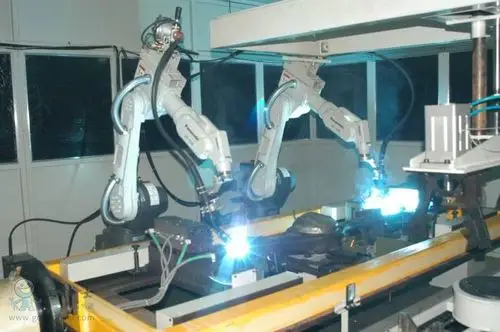
While flat-sheet laser cutting has been a staple of manufacturing for decades, 3D structural processing is a more complex beast. These centers utilize multi-axis cutting heads—often 5-axis or 6-axis robotic configurations—that can move around a stationary or rotating beam. This allows for complex geometries such as:
1. **Beveling for Weld Preparation:** The laser can cut V, Y, X, and K-type bevels in a single pass. In offshore construction, weld volume is a major cost driver; precise beveling ensures the perfect amount of filler metal is used, reducing both time and material.
2. **Interlocking “Bird-Mouth” Joints:** For tubular structures, the laser can cut complex saddle joints that allow pipes to fit together with zero gap, facilitating automated robotic welding.
3. **Bolt Hole Precision:** Unlike plasma, which can struggle with “taper” in thick holes, the 12kW fiber laser produces bolt holes with such high tolerance that they meet stringent AISC (American Institute of Steel Construction) standards without the need for subsequent reaming.
The Science of Zero-Waste Nesting
In the offshore world, the steel used is often high-strength, low-alloy (HSLA) or specialized marine-grade plate that carries a premium price tag. Material utilization is the difference between a profitable project and a loss. Zero-Waste Nesting is a software-driven approach that optimizes the layout of parts on a given length of beam or sheet to an extreme degree.
Traditional nesting often leaves “skeletons” or significant drops (unused ends of beams). Advanced 12kW centers utilize “Common Line Cutting,” where two parts share a single cut path. Because the fiber laser’s kerf is so thin, this is possible without compromising the dimensions of either part. Furthermore, the software can “nest” smaller brackets or gusset plates into the scrap areas of larger structural cutouts.
In Houston’s high-volume shops, moving from 85% material utilization to 96% utilization via Zero-Waste algorithms can save hundreds of thousands of dollars annually. It also aligns with the growing “Green Energy” mandates, as less scrap means a lower carbon footprint for the overall project.
Optimizing Offshore Platform Integrity in the Gulf of Mexico
Offshore platforms in the Gulf of Mexico face a unique set of challenges: high salinity, humidity, and the constant threat of fatigue-induced cracking. The 12kW fiber laser addresses these challenges through superior metallurgy. Because the laser moves so quickly, the total heat input into the steel is lower than with plasma or oxy-fuel cutting. This results in a much smaller Heat Affected Zone.
A smaller HAZ means the base metal retains its original mechanical properties—tensile strength and ductility—right up to the edge of the cut. For engineers designing offshore rigs, this provides a higher factor of safety. Furthermore, the precision of the 12kW laser allows for the implementation of “tab-and-slot” assembly. Large structural members can be designed to snap together like a puzzle before welding, ensuring perfect alignment of massive components and reducing the reliance on expensive jigs and fixtures.
The Houston Advantage: Localized Logistics and Expertise
Locating a 12kW 3D Processing Center in Houston provides a logistical masterstroke. With proximity to the Port of Houston and the massive steel inventories held in the region, fabricators can move from raw material to finished, “kit-packed” structural components in a fraction of the time it would take to outsource.
These centers often function as the “hub” of a spoke-and-hub manufacturing model. Raw beams arrive via rail or barge, are processed with zero-waste efficiency, and are then shipped as “ready-to-weld” kits to assembly yards along the Texas and Louisiana coasts. This “just-in-time” delivery for offshore modules reduces the need for massive storage space at the shipyards and minimizes the risk of corrosion while parts sit idle.
Automation and the Future of the Workforce
A 12kW 3D Structural Steel Processing Center is not just a tool; it is an automated ecosystem. Many of these systems are equipped with automated loading and unloading towers and integrated conveyors. In a city like Houston, where skilled labor—particularly high-end welders and fitters—is in high demand, the laser acts as a force multiplier.
By automating the measuring, marking, cutting, and beveling, the fabricator shifts the burden of precision from the manual laborer to the programmer. This allows the skilled welders to focus on high-value joining rather than the tedious prep work. The integration of IoT (Internet of Things) sensors within the 12kW head also allows for real-time monitoring of lens condition, gas pressure, and cut quality, ensuring that the machine runs at peak efficiency 24/7.
Conclusion: The New Standard for Offshore Fabrication
The 12kW 3D Structural Steel Processing Center represents the pinnacle of current laser technology. For the Houston offshore industry, it offers a triple-threat of benefits: the raw power to handle heavy-duty structural sections, the 3D dexterity to perform complex weld preparations, and the algorithmic intelligence to ensure zero-waste material usage.
As we look toward the future of energy—including the expansion of offshore wind farms in the Gulf—the requirement for precision-cut structural steel will only grow. The 12kW fiber laser is no longer a luxury for the few; it is the foundational technology upon which the next generation of offshore infrastructure will be built. By embracing zero-waste nesting and high-power fiber optics, Houston fabricators are ensuring that the city remains the global leader in energy infrastructure for decades to come.