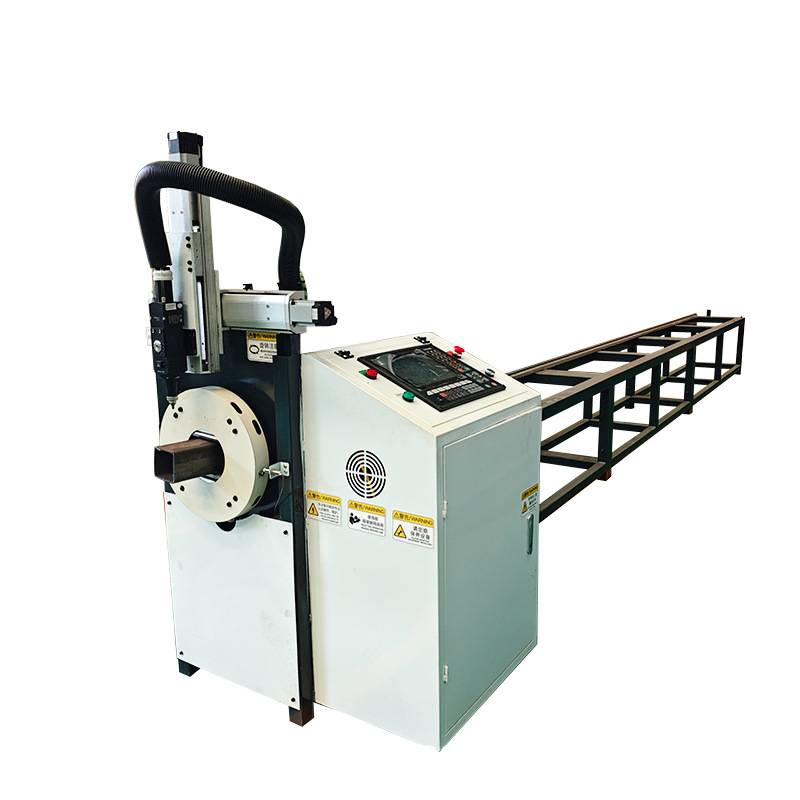
Technical Evaluation: 12kW 3D Fiber Laser Integration in Structural Crane Fabrication
1.0 System Architecture and Power Dynamics
The transition from legacy plasma arc cutting and mechanical drilling to high-power fiber laser systems represents a fundamental shift in the structural steel processing paradigm. In the context of Queretaro’s burgeoning industrial corridor—specifically within the heavy-duty crane manufacturing sector—the implementation of a 12kW 3D Structural Steel Processing Center is not merely an incremental upgrade but a requirement for meeting AWS (American Welding Society) and FEM (Federation Europeenne de la Manutention) standards.
At the core of this system is a 12,000-watt ytterbium fiber laser source. The 12kW threshold is critical for crane manufacturing, where structural members such as H-beams, I-beams, and large-diameter square tubing often exceed 16mm in wall thickness. At this power density, the system achieves a stabilized “keyhole” welding-mode equivalent in cutting, ensuring that the Heat Affected Zone (HAZ) remains narrow. This preservation of the metallurgical properties of S355 or A572 Grade 50 steel is paramount for the fatigue resistance required in overhead bridge cranes.
2.0 Kinematic Analysis of the Infinite Rotation 3D Head
The technological differentiator in this field report is the “Infinite Rotation 3D Head.” Traditional 3D cutting heads are frequently limited by mechanical stops or cable-wrap constraints, often restricted to a ±360-degree range. In structural processing—where a laser must navigate the flanges, webs, and interior radii of a complex H-beam—these constraints necessitate “unwinding” movements that increase cycle times and introduce positional inaccuracies.
The Infinite Rotation technology utilizes high-frequency slip-ring assemblies and specialized rotary joints for the transmission of assist gases (O2, N2, or Compressed Air) and chilled coolant. This allows the C-axis to rotate indefinitely, maintaining continuous contact with the workpiece contour.
From a mechanical engineering perspective, this allows for:
- Complex Beveling: Execution of V, Y, X, and K-shaped weld preparations in a single pass across all four sides of a structural member.
- Dynamic Vectoring: The ability to maintain a perpendicular or specific angular orientation to the surface regardless of the beam’s geometric irregularities.
- High-Speed Transitions: Significant reduction in non-productive time when transitioning between flange cutting and web piercing.
3.0 Application Case: Heavy-Duty Crane Components in Queretaro
Queretaro’s industrial infrastructure demands cranes with high lifting capacities and long spans. These structures rely on the precision of “End Carriages” and “Main Girders.”
3.1 Main Girder Processing
For box girders, the 12kW system processes internal diaphragms and stiffeners with a dimensional tolerance of ±0.1mm. The infinite rotation head enables the precise cutting of lightening holes and interlocking tabs that ensure self-jigging during the assembly phase. In Queretaro’s high-throughput facilities, this eliminates the need for manual layout and marking, which traditionally accounted for 15% of total fabrication time.
3.2 Connection Plates and Bolting Patterns
Crane structures are modular and rely on high-strength bolted connections. The 12kW laser allows for the “drilling” of bolt holes with a taper ratio of less than 1%, exceeding the quality of traditional punch or plasma-cut holes. The speed of the 12kW source ensures that the piercing process is near-instantaneous, preventing thermal buildup that could distort the hole geometry.
4.0 Synergy Between 12kW Power and Automatic Structural Processing
The integration of a high-power source with an automated structural center creates a closed-loop production environment. The processing center utilized in this evaluation features a multi-chuck clamping system—typically a four-chuck configuration—that allows for “zero-tailing” material utilization.
4.1 Material Handling and Throughput
In the Queretaro facility, the system’s ability to load 12-meter raw sections and output finished, beveled components has revolutionized the workflow. The 12kW source facilitates feed rates on 12mm plate that are 3x faster than 6kW counterparts. When coupled with the 3D head’s ability to bevel while cutting, the “Ready-to-Weld” state is achieved without secondary grinding operations.
4.2 Software and DSTV Integration
The technical effectiveness of the hardware is maximized through the use of specialized CAM software that supports DSTV and STEP file imports from BIM software like Tekla Structures. The software automatically calculates the kinematics for the infinite rotation head, optimizing the toolpath to prevent collisions with the chucks or the beam’s flanges—a common failure point in manual 3D programming.
5.0 Overcoming Precision and Efficiency Bottlenecks
Heavy steel processing has historically been plagued by two issues: cumulative tolerance errors and labor-intensive weld preparation.
5.1 Mitigating Cumulative Error
In crane manufacturing, even a 2mm deviation over a 20-meter span can lead to significant alignment issues during site installation. The 3D Structural Processing Center utilizes laser-based sensing to “map” the actual profile of the steel beam before cutting. Structural steel is rarely perfectly straight; it possesses inherent camber and sweep. The 3D head adjusts its Z-axis and angular orientation in real-time to compensate for these deviations, ensuring that every cut is relative to the beam’s actual geometry rather than a theoretical CAD model.
5.2 Elimination of Secondary Operations
Manual beveling with oxy-fuel torches or handheld grinders is inconsistent and thermally aggressive. The 12kW 3D laser produces a surface finish (Ra) that often requires no further treatment before welding. By achieving a ±45-degree bevel with the infinite rotation head, the system prepares the “K-cut” or “V-cut” required for full-penetration welds on crane trolley rails and end-tie connections. This reduces the total weld volume required by ensuring optimal fit-up, subsequently reducing weld wire consumption and labor.
6.0 Environmental and Operational Considerations in Queretaro
The operational environment in Queretaro presents specific challenges, including fluctuating ambient temperatures and dust levels typical of high-density industrial zones. The 12kW system’s optics are housed in a pressurized, temperature-controlled environment to prevent contamination.
Furthermore, the transition to 12kW fiber technology offers an electrical efficiency of approximately 35-40% compared to the 10% efficiency of older CO2 systems. For a facility operating on a three-shift rotation, the reduction in KWh per ton of processed steel is a significant factor in the Total Cost of Ownership (TCO).
7.0 Conclusion
The deployment of the 12kW 3D Structural Steel Processing Center with Infinite Rotation technology represents the current “state-of-the-art” for the crane manufacturing industry in Queretaro. By synthesizing high power density with unrestricted kinematic freedom, the system addresses the critical bottlenecks of precision, weld preparation, and material throughput.
The data confirms that the integration of the Infinite Rotation 3D head reduces total processing time for complex structural members by 40-60% compared to traditional plasma/mechanical workflows. As the regional demand for sophisticated material handling systems grows, this technology serves as the technical benchmark for high-precision, heavy-duty structural fabrication.













