The Dawn of High-Power Fiber Lasers in Heavy Infrastructure
As the industrial landscape of Rosario, Santa Fe, continues to evolve, the demand for sophisticated structural steel fabrication has never been higher. The centerpiece of this evolution is the 12kW 3D Structural Steel Processing Center. In the realm of fiber laser technology, 12,000 watts serves as a critical threshold where the physics of photon-matter interaction moves beyond simple sheet metal work into the territory of heavy structural engineering.
For the expansion of airport facilities—such as new terminals, hangars, and logistics hubs—the structural integrity of the steel skeleton is paramount. A 12kW source provides a high-density energy beam that can penetrate carbon steel sections up to 30mm or more with ease. Unlike traditional plasma cutting, which often leaves a wide heat-affected zone (HAZ) and significant dross, the fiber laser offers a concentrated kerf. This precision is vital for the Rosario airport project, where large-scale modular components must fit together perfectly on-site to maintain structural safety and aesthetic requirements.
Advanced 3D Processing: Geometry Without Limits
What distinguishes a “3D” processing center from standard laser cutters is its ability to manipulate the cutting head or the workpiece across multiple axes. In structural steel, we are rarely dealing with flat surfaces. We are dealing with H-beams, I-beams, U-channels, and large-diameter square and round tubes. These profiles are the “bones” of airport architecture.
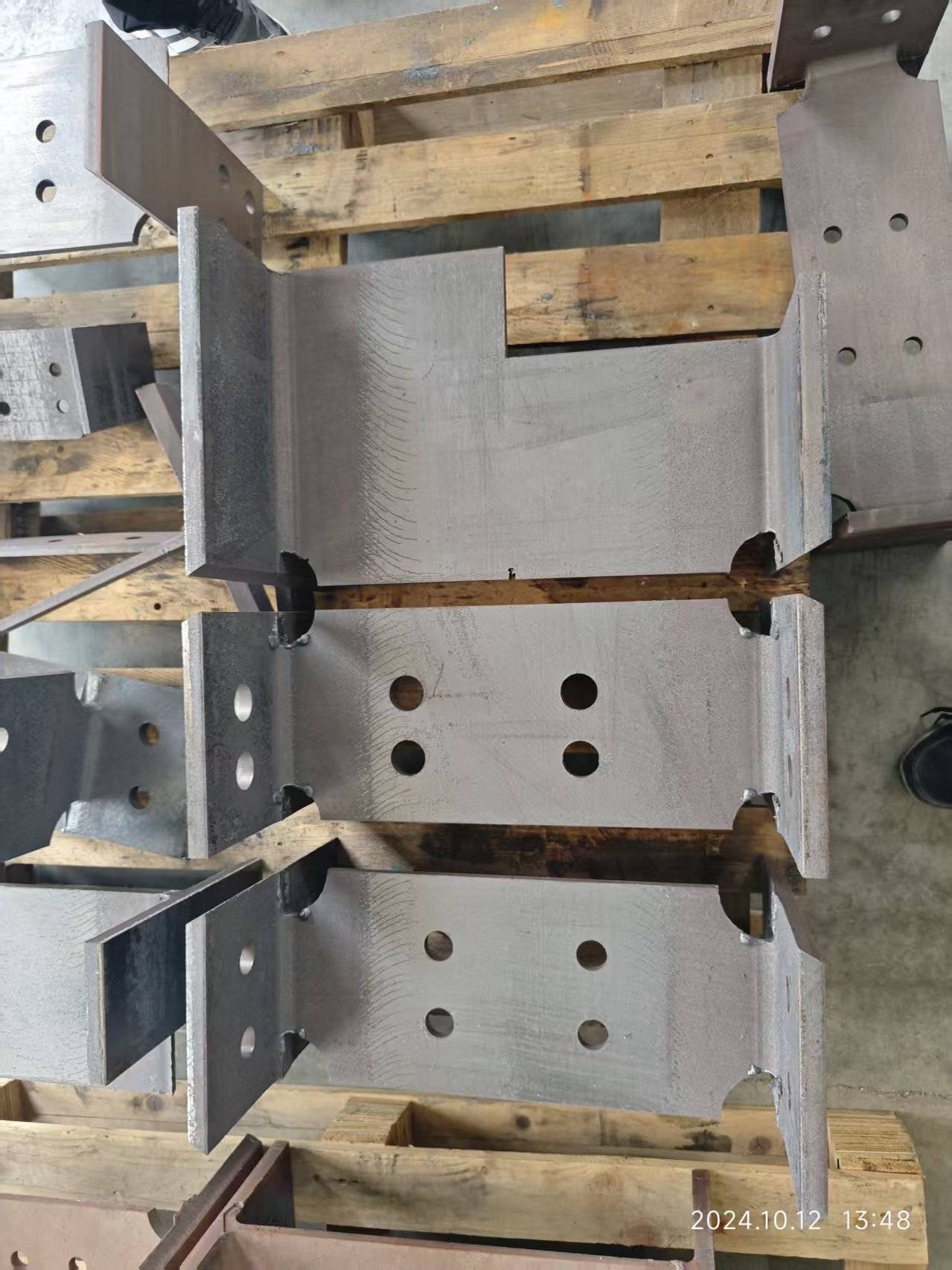
The 3D cutting head is equipped with high-precision servos that allow for bevel cutting and complex intersecting geometries. In airport construction, architectural designs often call for “bird-mouth” joints or intricate notches where multiple beams converge at non-orthogonal angles. Historically, these would require manual marking, oxy-fuel cutting, and hours of grinding. With a 12kW 3D system, these cuts are executed in seconds directly from a CAD/CAM file. The system calculates the compensation for the beam thickness and provides a weld-ready edge (K, V, or Y-type bevels) in a single pass.
The 12kW Advantage: Speed, Precision, and Economy
From an expert perspective, the choice of 12kW is strategic. While 6kW or 8kW systems can cut structural steel, they often do so at speeds that create a bottleneck in a high-demand project like an airport. At 12kW, the “sweet spot” for cutting speed on 12mm to 20mm structural sections is significantly higher. This increased velocity doesn’t just save time; it reduces the total heat input into the material, minimizing thermal distortion.
In the context of Rosario’s climate and the specific metallurgical requirements of Argentine steel standards, maintaining the mechanical properties of the steel is crucial. The high-speed processing of a 12kW laser ensures that the structural characteristics of the beams remain uncompromised. Furthermore, the wall-plug efficiency of modern fiber lasers means that the cost-per-part is lower than older CO2 or plasma technologies, making the Rosario project more economically sustainable.
The Role of Automatic Unloading in Continuous Production
A 12kW laser cuts so fast that manual material handling becomes the primary cause of downtime. To address this, the integration of an automatic unloading system is essential. As the 3D laser completes its path on a 12-meter structural beam, the system must support the finished piece while moving the remaining raw stock forward.
The unloading system in the Rosario facility uses a series of synchronized conveyors and hydraulic lifters designed to handle the immense weight of structural profiles. By automatically sorting finished parts and moving them to a collection zone, the laser can begin the next program immediately. This “lights-out” capability means that the airport construction project can maintain a 24/7 fabrication cycle, which is often necessary to meet tight federal deadlines for infrastructure delivery. It also significantly improves safety, as the need for overhead cranes and forklifts in the immediate vicinity of the cutting zone is drastically reduced.
Case Study: Rosario International Airport Expansion
The “Islas Malvinas” International Airport in Rosario is a gateway for the Mercosur region. Its expansion requires a blend of heavy-duty structural support and light-filled, open-concept terminal space. This architectural duality is perfectly served by 3D laser processing.
The terminal’s roof trusses, for instance, utilize hollow structural sections (HSS) that require precise radial cuts to join at various heights. By using the 12kW 3D center, the fabricators can produce these components with “puzzle-piece” accuracy. This level of precision allows for pre-assembly in a controlled shop environment in Rosario before being transported to the airport site. When the components arrive, they bolt together with minimal field welding, reducing the risk of fire at the construction site and ensuring that the structural geometry matches the digital twin created by the architects.
Software Integration: From BIM to Beam
The brain of the 3D processing center is its software suite. For the Rosario project, the workflow typically begins with Building Information Modeling (BIM). Software like Tekla or Revit generates the structural designs, which are then exported as IFC or STEP files.
The processing center’s CAM software takes these complex 3D files and automatically generates the nesting patterns and toolpaths. It accounts for the rotation of the chucks and the tilt of the 3D head to ensure there is no collision with the material. This seamless digital thread—from the architect’s desk to the laser’s nozzle—eliminates human error. In a project as large as an airport, where thousands of unique beams are required, the ability to track each part via laser-etched QR codes (done by the same 12kW head) is an invaluable logistics tool.
Environmental Impact and Industrial Sustainability
Modern infrastructure projects are increasingly judged by their carbon footprint. Fiber laser technology is inherently greener than the alternatives. The 12kW fiber laser consumes significantly less electricity than a CO2 laser of equivalent cutting power. Additionally, because the laser is so precise, nesting algorithms can be tighter, leading to a 10% to 15% reduction in scrap metal waste.
For the city of Rosario, which is a hub for both agriculture and industry, adopting such efficient technology sets a precedent for sustainable development. The reduction in secondary processing (grinding, cleaning, re-working) also means a reduction in noise pollution and airborne particulates, creating a safer and cleaner working environment for the local technicians operating the facility.
Conclusion: Strengthening Rosario’s Industrial Backbone
The deployment of a 12kW 3D Structural Steel Processing Center with Automatic Unloading is more than just an equipment upgrade; it is a strategic investment in Argentina’s construction capabilities. By centralizing the fabrication of airport components in Rosario, the project benefits from the city’s skilled labor force and its logistical advantages as a port city.
As the airport’s new terminal rises, it will stand as a testament to what is possible when high-power fiber laser technology meets ambitious architectural design. The precision, speed, and automation provided by this 12kW system ensure that the structural “skeleton” of the airport is built to last for generations, proving that Rosario is at the forefront of the global “Industry 4.0” revolution in structural engineering.













