1.0 Executive Summary: Advancing Structural Fabrication in the Alberta Industrial Corridor
This technical field report evaluates the deployment of a 12kW 3D Structural Steel Processing Center within the industrial sector of Edmonton, Alberta. Specifically, it examines the integration of ±45° bevel cutting technology in the fabrication of high-density storage racking systems. As Edmonton serves as a primary logistical hub for the Energy and Supply Chain sectors, the demand for high-load-bearing, precision-engineered racking has necessitated a shift from traditional plasma or mechanical processing to high-kilowatt fiber laser oscillation.
The transition to a 12kW fiber source, coupled with multi-axis 3D cutting heads, addresses two critical bottlenecks: the throughput speed of thick-walled structural sections and the elimination of secondary manual beveling for weld preparation. This report analyzes the technical parameters, metallurgical outcomes, and structural efficiencies observed during the processing of H-beams, C-channels, and heavy-walled rectangular hollow sections (RHS).
2.0 Technical Specifications of the 12kW 3D Processing Environment
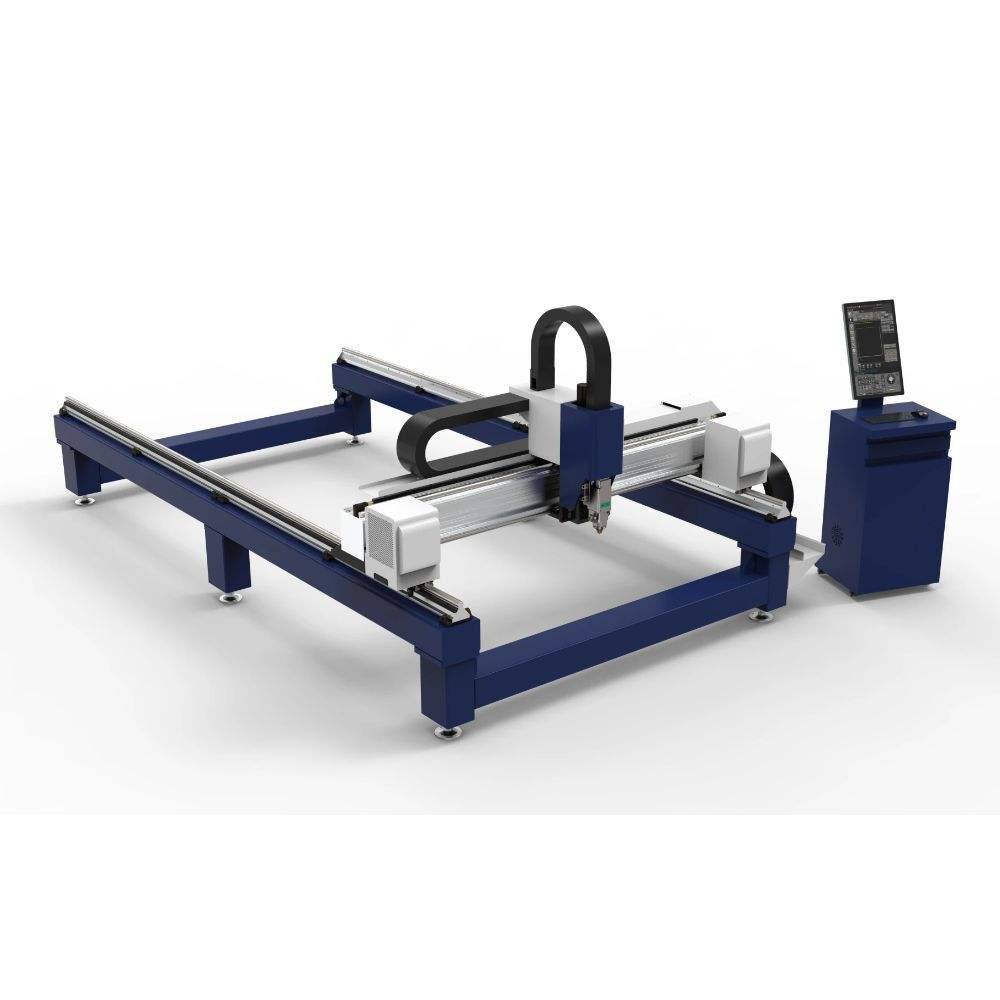
The 12kW 3D Structural Steel Processing Center represents a paradigm shift in photon-density-based fabrication. Unlike 2D plate lasers, the 3D center utilizes a specialized 5-axis cutting head capable of navigating the complex geometries of structural profiles.
2.1 Power Dynamics and Material Interaction
The 12kW ytterbium fiber laser source provides a significant increase in power density over the previous 6kW standards. In the context of Edmonton’s heavy-duty racking—often requiring S355 or Grade 350W structural steel with thicknesses exceeding 12mm—the 12kW source ensures a stable vapor capillary (keyhole) during the cutting process. This results in:
- Reduced Heat Affected Zone (HAZ): High-speed traversal at 12kW minimizes thermal conduction into the base material, preserving the martensitic structure and mechanical properties of high-strength steel.
- Surface Roughness (Rz): Achievable surface finishes of less than 30μm on sections up to 20mm, significantly exceeding the tolerances of CNC plasma cutting.
2.2 The 3D Kinematic System
Processing structural profiles requires a sophisticated chucking system. The center utilizes a four-chuck synchronized drive to manage the rotation and longitudinal feed of 12-meter profiles. The synergy between the 12kW source and the 3D head allows for the execution of complex intersections—such as “saddle cuts” or “fish-mouth joints”—with zero-clearance fit-ups, essential for automated robotic welding lines.
3.0 Application in Edmonton’s Storage Racking Sector
Edmonton’s logistics infrastructure, particularly in the Nisku and Leduc industrial zones, requires racking systems capable of withstanding extreme temperature fluctuations and massive static loads. These systems often utilize heavy-walled RHS and custom-rolled channels.
3.1 Precision in High-Density ASRS Components
Automated Storage and Retrieval Systems (ASRS) demand tolerances within ±0.1mm over the length of an upright. Traditional mechanical punching of racking uprights introduces internal stresses and potential deformation. The 12kW laser center processes these bolt patterns and slot configurations without mechanical contact, ensuring the structural linearity required for high-altitude racking (exceeding 30 meters).
3.2 Material Adaptability
In Alberta’s climate, the use of cold-weather-rated steel (e.g., CSA G40.21) is standard. The 12kW laser parameters are tuned to handle the high carbon equivalence found in these grades, preventing micro-cracking during the rapid cooling phase of the laser cut.
4.0 The Critical Role of ±45° Bevel Cutting Technology
The implementation of ±45° beveling is the most significant technological advancement in this processing center. In heavy structural steel, a square edge is rarely sufficient for load-bearing joints. Weld preparation is mandatory.
4.1 Solving the “Weld Prep” Bottleneck
Previously, structural beams were cut to length, then moved to a secondary station where a technician used a manual oxy-fuel torch or a portable beveller to create V, Y, or K-shaped grooves. This introduced human error and inconsistent root faces. The 12kW 3D center integrates this into the primary cutting cycle.
- V-Groove and K-Groove Accuracy: The ±45° head executes the bevel during the initial cut. Because the laser remains in a single coordinate system, the alignment between the bevel and the beam’s web/flange is mathematically perfect.
- Increased Effective Throat Thickness: By achieving a precise 45-degree bevel, the subsequent welding process can achieve full penetration with significantly less filler metal and fewer passes, reducing the overall heat input into the joint.
4.2 Complex Intersections in Racking Bracing
Racking “diagonal” braces must meet uprights at acute angles. A standard 2D cut results in a gap that must be “filled” with weld wire. The ±45° 3D head allows for “contoured beveling,” where the angle of the cut changes dynamically as the head orbits the profile. This results in a “snap-fit” assembly, reducing the reliance on heavy jigging and fixture setups.
5.0 Synergy Between Power and Precision: The 12kW Advantage
The 12kW threshold is not merely about “speed”; it is about “capability.” In the structural world, 12kW allows for high-pressure nitrogen cutting on thicker sections, which leaves an oxide-free edge. For Edmonton manufacturers, this is critical because it allows for immediate painting or galvanizing without the need for acid pickling or abrasive blasting of the cut edge.
5.1 Kerf Management and Beam Stability
At 12kW, the kerf width is optimized to ensure that the structural integrity of the web is not compromised when cutting large access holes or cable management ports in the racking uprights. The software’s nesting algorithms account for the thermal expansion of the 12-meter beam during the cut, adjusting the beam’s position in real-time to maintain dimensional accuracy across the entire length.
6.0 Economic and Engineering Impact Analysis
Data from the Edmonton field site indicates a significant shift in production metrics following the installation of the 12kW 3D center.
6.1 Throughput Metrics
| Process Step | Legacy Method (Plasma + Manual) | 12kW 3D Laser Method |
|---|---|---|
| Cut-to-length & Piercing | 12 minutes | 2.5 minutes |
| ±45° Beveling (per end) | 15 minutes | Included in primary cut |
| Secondary Grinding | 10 minutes | 0 minutes |
| Total Processing Time | 37 minutes | 2.5 minutes |
6.2 Quality Assurance and Compliance
The precision of the 12kW laser ensures compliance with CSA W59 (Welded Steel Construction). The consistency of the bevel angle and the smoothness of the root face provide the ideal conditions for Ultrasonic Testing (UT) and Radiographic Testing (RT) of critical welds. In high-load racking applications, where a single joint failure can lead to catastrophic progressive collapse, this level of manufacturing repeatability is a vital risk mitigation factor.
7.0 Conclusion: The Future of Alberta Structural Fabrication
The integration of a 12kW 3D Structural Steel Processing Center with ±45° beveling technology represents the current apex of steel fabrication. For the Edmonton storage racking sector, it provides the ability to manufacture higher-quality, safer, and more complex structures while simultaneously reducing labor-intensive secondary processes. The synergy of high-power fiber laser oscillation with multi-axis motion control solves the long-standing friction between precision and volume in heavy steel processing. As industrial requirements continue to evolve toward automation and tighter tolerances, this technology will be the baseline for any Tier-1 structural fabrication facility.
End of Report
Field Observation logged by: Senior Engineering Lead, Laser Systems Division.













