Introduction to 1.5kW Tube laser cutting in the Tijuana Manufacturing Sector
The manufacturing landscape in Tijuana, Mexico, has evolved into one of the most sophisticated industrial hubs in North America. As a primary center for the “Maquiladora” industry, the region demands high-precision, high-efficiency fabrication tools to meet the rigorous standards of international supply chains. Among these tools, the 1.5kW tube laser cutting machine has emerged as a cornerstone technology, particularly for processing stainless steel components used in medical devices, aerospace, automotive, and food processing equipment.
A 1.5kW fiber laser source provides the optimal balance of power, precision, and operational cost for small to medium-diameter tubing. While higher wattage machines exist, the 1.5kW variant is specifically engineered for high-speed processing of thin-to-medium wall thicknesses, which constitutes the bulk of stainless steel applications in the region. This guide explores the technical nuances, operational requirements, and strategic advantages of deploying 1.5kW laser cutting technology within the unique economic context of Tijuana.

Technical Specifications and Performance on Stainless Steel
Stainless steel is prized for its corrosion resistance and aesthetic appeal, but it presents specific challenges during the laser cutting process. Its high thermal expansion coefficient and lower thermal conductivity compared to carbon steel require precise control over the heat-affected zone (HAZ). A 1.5kW fiber laser utilizes a 1.07-micron wavelength, which is highly absorbed by stainless steel, allowing for efficient energy transfer and clean vaporization of the material.
Material Thickness and Cutting Speeds
For a 1.5kW system, the “sweet spot” for stainless steel typically ranges from 0.5mm to 4.0mm wall thickness. In this range, the machine can maintain exceptional feed rates while ensuring a burr-free edge. For instance, 1.5mm stainless steel tubing can often be processed at speeds exceeding 15 meters per minute, depending on the complexity of the geometry. While the machine can cut up to 6mm or 8mm stainless steel at lower speeds, the 1.5kW threshold is most efficient for high-volume production of thinner wall components commonly found in medical furniture and exhaust systems.
The Role of Assist Gases: Nitrogen vs. Oxygen
In the Tijuana industrial market, the choice of assist gas is critical for maintaining the quality of stainless steel. For 1.5kW laser cutting, Nitrogen is the industry standard. Nitrogen acts as a shielding gas, preventing oxidation at the cut edge and ensuring the stainless steel retains its silver, corrosion-resistant finish. This eliminates the need for secondary cleaning or pickling processes. While Oxygen can be used to cut thicker sections by inducing an exothermic reaction, it leaves a dark oxide layer that must be removed if the part is to be welded or used in a visible application.
Strategic Advantages for Tijuana-Based Fabricators
Operating in Tijuana offers a unique geographical advantage—the proximity to the San Diego and Southern California markets. This “nearshoring” strategy relies on the ability to produce high-quality parts with short lead times. Integrating a 1.5kW tube laser into a Tijuana facility provides several competitive edges.
Precision for High-Tech Industries
The medical device sector in Tijuana is one of the largest in the world. This industry requires extreme precision in tube components, often involving intricate slotting and hole patterns. A 1.5kW laser cutting system offers a positioning accuracy of ±0.03mm, allowing manufacturers to meet the tight tolerances required by ISO 13485 standards. The non-contact nature of laser cutting also ensures that thin-walled stainless tubes are not deformed during processing, a common issue with traditional mechanical sawing or punching.
Efficiency in the Maquiladora Model
The Maquiladora model thrives on efficiency and waste reduction. Traditional tube fabrication involves multiple steps: cutting to length, drilling, milling, and deburring. A fiber laser combines these into a single automated process. By utilizing advanced nesting software, Tijuana shops can maximize material utilization of expensive stainless steel stock, significantly reducing the cost per part and improving the overall ROI of the equipment.
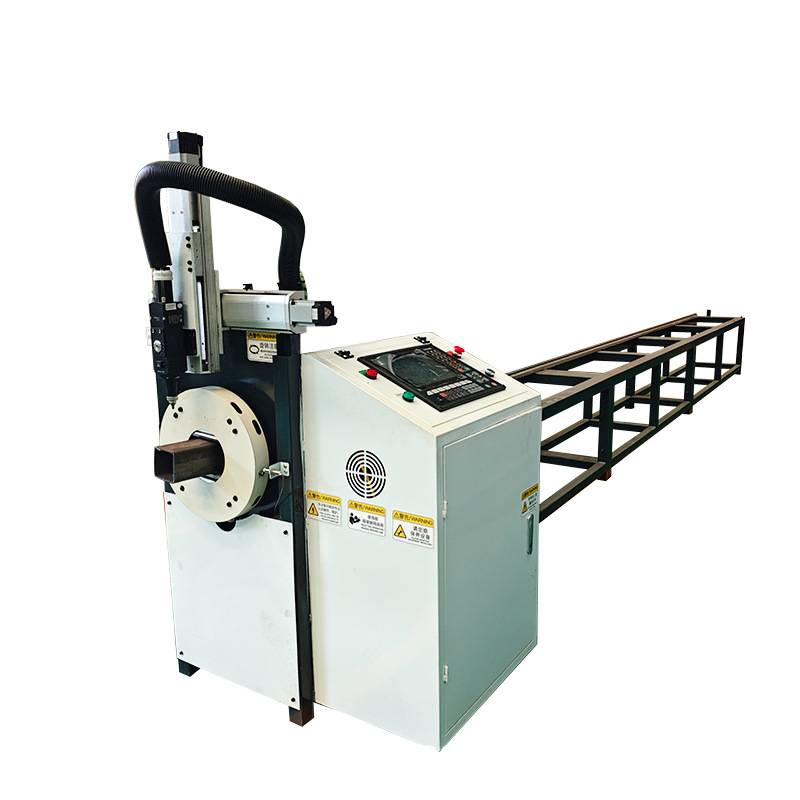
Mechanical Components of the 1.5kW Tube Laser
To achieve high-quality results on stainless steel, the machine’s mechanical architecture must be as robust as its laser source. The 1.5kW tube laser is typically equipped with features designed to handle the specificities of cylindrical, square, and rectangular profiles.
Automated Chuck Systems
The chucks are the heart of tube laser cutting. Most 1.5kW systems utilize pneumatic or electric self-centering chucks. For stainless steel, which often has a polished or brushed surface, it is vital that the chucks provide a firm grip without marring the material. Advanced systems in Tijuana facilities often incorporate specialized jaw inserts to protect the finish while maintaining the torque necessary for high-speed rotation and rapid acceleration.
Fiber Laser Source and Cutting Head
The 1.5kW fiber source (often from manufacturers like IPG, Raycus, or nLIGHT) provides a stable beam with high wall-plug efficiency. This is paired with an autofocus cutting head. Autofocus is essential when working with stainless steel tubes that may have slight deviations in straightness or concentricity. The sensor maintains a constant standoff distance between the nozzle and the tube surface, ensuring a consistent focal point and uniform cut quality around the entire circumference of the workpiece.
Operational Best Practices for Stainless Steel
Achieving engineering-grade results with a 1.5kW laser cutting machine requires more than just high-end hardware; it requires meticulous operational protocols, especially in the dusty or humid environments sometimes found in coastal industrial zones like Tijuana.
Thermal Management and Cooling
Stainless steel has a lower rate of thermal conductivity, meaning heat stays localized at the cut site. If the laser cutting parameters are not finely tuned, this can lead to “dross” or slag buildup on the inside of the tube. Operators must balance the laser power, frequency, and duty cycle to minimize heat input. Furthermore, a high-quality industrial chiller is mandatory to maintain the temperature of the fiber source and the optics, preventing beam drift during long production shifts.
Software and Nesting Optimization
The transition from 2D CAD to 3D tube processing is a critical step. Modern tube laser cutting software allows for the “nesting” of multiple parts on a single length of tubing (typically 6 meters). In the Tijuana context, where stainless steel is often imported and subject to fluctuating commodity prices, reducing scrap by even 5% can result in thousands of dollars in annual savings. The software also handles complex “fish-mouth” cuts and interlocking joints, which simplify the subsequent welding of stainless steel frames.
Maintenance and Longevity in the Tijuana Environment
The proximity to the Pacific Ocean in Tijuana introduces salt air and humidity, which can be detrimental to precision electronics and optical components. A rigorous maintenance schedule is the only way to ensure the 1.5kW laser cutting machine maintains its value over a 10-to-15-year lifespan.
Optical Path Integrity
While fiber lasers have a sealed optical path, the protective window in the cutting head is a consumable that must be inspected daily. Any contamination—dust, oil, or metal splatter—will absorb laser energy and can lead to the destruction of the lens. In Tijuana’s industrial parks, high-quality air filtration systems for the control cabinet and clean-room-standard procedures for lens replacement are highly recommended.
Lubrication and Calibration
The rack and pinion systems, as well as the linear guides, require regular lubrication to handle the high-speed movements of the laser cutting process. Due to the fine metallic dust generated when cutting stainless steel, bellows and covers must be checked for integrity. Monthly calibration of the chuck alignment ensures that long tubes remain concentric during rotation, preventing “walking” of the cut pattern over the length of the tube.
Conclusion: The Future of Fabrication in Tijuana
The adoption of 1.5kW tube laser cutting technology represents a significant step forward for the Tijuana manufacturing sector. By moving away from manual fabrication and toward automated, high-precision laser cutting, local shops are positioning themselves as vital partners for the U.S. market. For stainless steel applications, the 1.5kW fiber laser offers the perfect intersection of speed, edge quality, and cost-effectiveness.
As the “Industry 4.0” trend continues to grow, the integration of these machines with cloud-based monitoring and automated loading systems will further enhance the productivity of Tijuana’s Maquiladoras. For engineers and factory owners in the region, investing in 1.5kW laser cutting is not just an upgrade in equipment; it is a commitment to the precision and reliability demanded by the global economy.













