Introduction to 1.5kW Sheet Metal laser cutting in Leon
The industrial landscape of Leon has undergone a significant transformation over the last decade, transitioning from traditional manufacturing roots into a hub for high-precision engineering and metallic fabrication. Central to this evolution is the adoption of fiber laser technology. Among the various power configurations available, the 1.5kW sheet metal laser has emerged as a versatile workhorse, particularly for small to medium enterprises (SMEs) specializing in aluminum alloy fabrication. This guide explores the technical nuances, operational strategies, and regional advantages of utilizing 1.5kW laser cutting systems for aluminum alloys within the Leon industrial sector.
Laser cutting technology, specifically fiber-based systems, offers a unique set of advantages for processing non-ferrous metals. Aluminum, known for its high reflectivity and thermal conductivity, was historically difficult to process with older CO2 laser systems. However, the 1.06-micron wavelength of a 1.5kW fiber laser is absorbed much more efficiently by aluminum, allowing for cleaner cuts, narrower kerfs, and higher production speeds. For manufacturers in Leon, where the demand for automotive components, aerospace parts, and architectural fixtures is rising, mastering this technology is essential for maintaining a competitive edge.
Technical Specifications of the 1.5kW Fiber Laser
A 1.5kW fiber laser represents a strategic entry point for precision sheet metal work. While higher power units (such as 6kW or 12kW) exist for heavy plate processing, the 1.5kW variant excels in the 0.5mm to 5mm thickness range for aluminum. This power level provides a stable beam profile that balances energy density with thermal management, preventing the excessive melting that can occur with high-wattage systems on thinner gauges.
Material Thickness and Cutting Capacity
When processing aluminum alloys, the 1.5kW laser cutting system typically achieves optimal results on sheets up to 4mm thick. While it is possible to cut 6mm aluminum with a 1.5kW source, the feed rate drops significantly, and the edge quality may require post-processing. For the majority of industrial applications in Leon—such as signage, electronic enclosures, and HVAC ducting—the 3mm to 4mm threshold covers nearly 80% of production requirements. The efficiency of the 1.5kW source ensures that energy consumption remains low while maintaining a throughput that satisfies local supply chain demands.
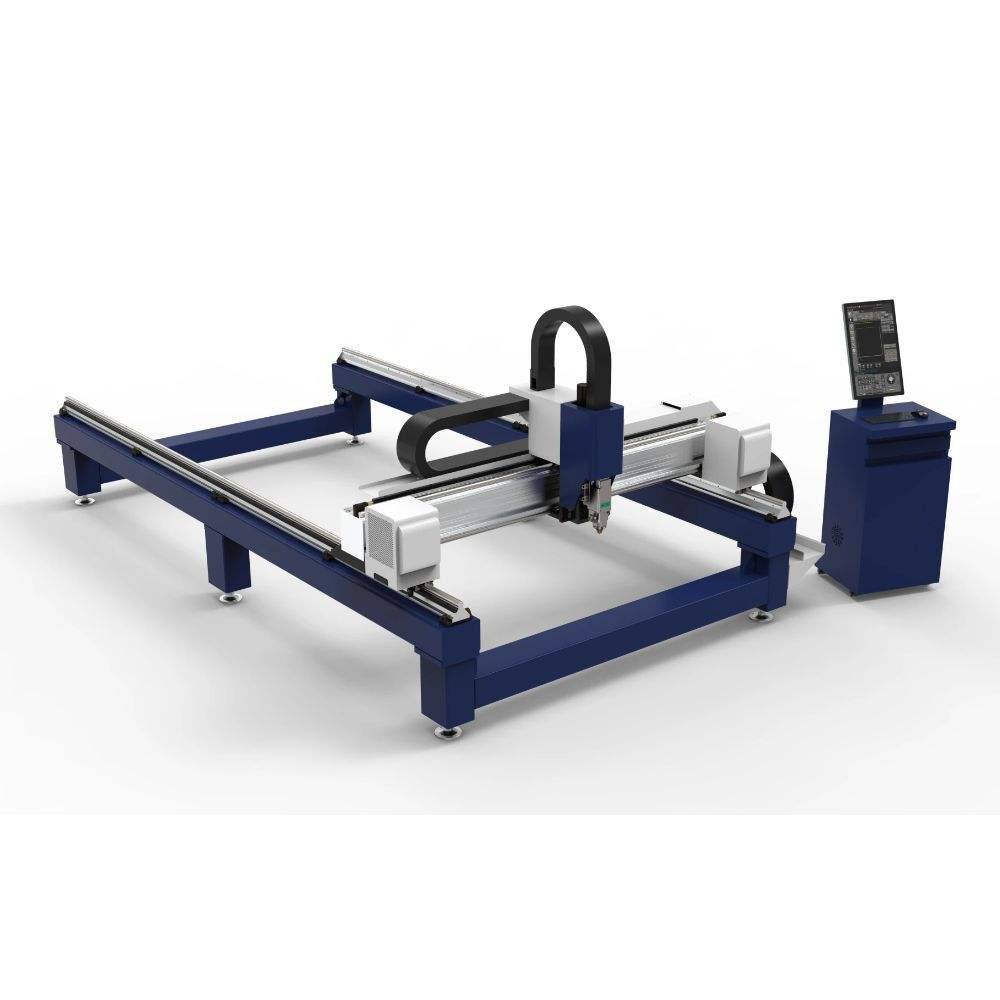
 laser cutting machine” style=”width: 100%; max-width: 800px; height: auto; margin: 20px 0;”>
Challenges in Aluminum Alloy Laser Cutting
Aluminum is often categorized as a “highly reflective” material. In the context of laser cutting, this means that a significant portion of the initial laser energy can be reflected back into the cutting head, potentially damaging the optical fiber or the laser source itself. Modern 1.5kW systems are equipped with back-reflection isolators and protective sensors to mitigate this risk, but operators must still understand the material’s behavior.
Thermal Conductivity and Heat-Affected Zones (HAZ)
Aluminum dissipates heat much faster than carbon steel. While this might seem advantageous, it actually requires a higher energy density to initiate the “keyhole” effect during the cutting process. If the laser cutting speed is too slow, the heat spreads laterally across the sheet, leading to a larger Heat-Affected Zone (HAZ), which can compromise the structural integrity of the alloy or cause warping. A 1.5kW system provides enough power to maintain a high-speed “vaporization” cut on thin sheets, ensuring that the heat is removed with the molten material before it can migrate into the surrounding substrate.
Dross and Burr Formation
One of the primary quality metrics in laser cutting is the presence of dross (solidified molten metal) on the underside of the cut. Aluminum’s low melting point and high viscosity when molten make it prone to dross formation. To achieve a “burr-free” finish, operators in Leon must meticulously calibrate the focal position and the pressure of the assist gas. Typically, a slightly negative focus—where the beam’s narrowest point is just below the surface of the material—is preferred for aluminum to ensure a wider exit path for the melt.
Optimizing Parameters for Leon’s Industrial Applications
In the Leon region, where industrial standards often align with European aerospace and automotive benchmarks, precision is non-negotiable. Achieving these standards with a 1.5kW laser requires a deep understanding of assist gas selection and nozzle dynamics.
The Role of Assist Gases: Nitrogen vs. Oxygen
For aluminum alloy laser cutting, Nitrogen is the preferred assist gas. Nitrogen acts as a shielding agent, preventing the oxidation of the cut edge. This results in a bright, clean finish that is ready for welding or painting without additional cleaning. The 1.5kW laser uses high-pressure Nitrogen (often between 12 and 18 bar) to mechanically blow the molten aluminum out of the kerf. While Oxygen can be used to increase cutting speed via an exothermic reaction, it often leaves a rough, oxidized surface on aluminum, which is generally unacceptable for high-end manufacturing in Leon.
Nozzle Selection and Height Control
The use of a double-layer nozzle is standard for aluminum processing. This design helps stabilize the gas flow and protects the internal optics from spatters. Furthermore, the capacitive height sensing system must be highly responsive. Aluminum sheets often have slight undulations; if the nozzle-to-sheet distance fluctuates even by 0.2mm, the focus will shift, leading to inconsistent cut quality. Leon-based fabricators benefit from using machines with high-speed servo motors that can maintain a constant standoff distance even at high traversing speeds.
Case Study: The Leon Automotive and Aerospace Supply Chain
Leon has become a strategic location for Tier 2 and Tier 3 suppliers in the automotive and aerospace sectors. These industries frequently utilize 5000 and 6000 series aluminum alloys due to their excellent strength-to-weight ratios and corrosion resistance. A 1.5kW laser cutting machine is perfectly suited for producing brackets, heat shields, and internal structural components from these alloys.
5000 Series (Magnesium Alloys)
Alloys like 5052 or 5083 are common in marine and automotive applications. They cut relatively cleanly with a 1.5kW fiber laser. However, the magnesium content can create a slightly grainier edge. By fine-tuning the pulse frequency of the laser cutting source, operators can achieve a smoother finish that meets the strict tolerances required by aerospace contractors in the region.
6000 Series (Silicon/Magnesium Alloys)
The 6061 and 6063 alloys are the backbone of the construction and architectural sectors in Leon. These alloys are more sensitive to heat. When laser cutting 6061-T6, the 1.5kW system must be operated at its peak efficiency to avoid over-tempering the edges. Leon’s fabrication shops often employ “cool-cutting” techniques, involving rapid piercing and high-frequency modulation, to preserve the mechanical properties of the 6000 series extrusions and sheets.
Maintenance and Safety Protocols
Operating a 1.5kW laser cutting system in a high-output environment requires a rigorous maintenance schedule. Aluminum dust is not only abrasive but also potentially explosive if allowed to accumulate in large quantities. Leon’s industrial safety regulations (following EU standards) mandate robust dust extraction systems.
Optical Care and Dust Management
Because aluminum is reflective, the protective windows in the cutting head are under constant stress. Operators must inspect these windows daily for “burn spots” or dust contamination. Even a microscopic particle of aluminum dust on the lens can absorb laser energy, heat up, and shatter the optic. Furthermore, the chiller system must be kept in pristine condition. A 1.5kW fiber laser generates significant heat within the source and the cutting head; any fluctuation in water temperature can cause the beam to drift, resulting in inconsistent laser cutting performance.
Operator Training in Leon
The local technical colleges and industrial associations in Leon have begun offering specialized training for CNC laser operators. Understanding the software—specifically the nesting algorithms and lead-in/lead-out strategies—is just as important as understanding the hardware. Proper nesting reduces material waste, which is critical given the fluctuating price of aluminum alloys in the global market.
Economic Viability and ROI
For a workshop in Leon, the investment in a 1.5kW sheet metal laser offers a compelling Return on Investment (ROI). Compared to traditional punching or waterjet cutting, the fiber laser provides significantly lower cost-per-part on gauges up to 5mm. The speed of laser cutting reduces labor costs, while the precision of the fiber beam minimizes scrap rates.
Furthermore, the 1.5kW power class is known for its electrical efficiency. It consumes far less power than CO2 lasers or higher-wattage fiber systems, which is a major consideration given the energy costs in the European industrial sector. By focusing on the 1mm to 4mm aluminum market, Leon-based businesses can carve out a profitable niche, providing fast-turnaround services for the regional manufacturing ecosystem.
Conclusion
The 1.5kW sheet metal laser is a cornerstone of modern aluminum fabrication in Leon. By combining the inherent advantages of fiber laser technology with localized engineering expertise, manufacturers can overcome the challenges of reflectivity and thermal conductivity associated with aluminum alloys. Whether producing intricate aerospace components or robust automotive parts, the 1.5kW system provides the precision, speed, and reliability necessary to thrive in today’s competitive industrial environment. As the Leon region continues to grow as a center for technological excellence, the role of high-precision laser cutting will only become more central to its economic success.













