Introduction to 1.5kW Fiber Laser Technology in León
The industrial landscape of León has undergone a significant transformation over the last decade, transitioning from traditional manufacturing methods to high-precision, automated solutions. At the forefront of this evolution is the 1.5kW fiber laser cutting machine. This specific power rating has emerged as a “sweet spot” for small to medium enterprises (SMEs) in the region, offering a perfect balance between capital investment and operational capability. In a city where automotive components, aerospace parts, and specialized construction hardware are manufactured, the ability to process non-ferrous metals—specifically aluminum alloys—is paramount.
Fiber laser technology utilizes an optical fiber doped with rare-earth elements as the gain medium. Unlike CO2 lasers, which rely on gas mixtures and complex mirror paths, fiber lasers deliver the beam through a flexible fiber optic cable directly to the cutting head. This results in a machine that is not only more energy-efficient but also significantly more capable of handling the high reflectivity associated with aluminum alloys. For manufacturers in León, adopting 1.5kW laser cutting systems means achieving higher throughput with lower maintenance overhead.
The Industrial Landscape of León
León serves as a critical node in the global supply chain, particularly for the automotive and heavy machinery sectors. The demand for lightweight, high-strength materials has led to an explosion in the use of aluminum alloys. However, aluminum presents unique challenges in thermal processing. The 1.5kW fiber laser provides the necessary power density to overcome the material’s natural reflectivity while maintaining a narrow kerf width, ensuring that local fabricators can meet the stringent tolerances required by international clients.
Technical Fundamentals of the 1.5kW Fiber Laser
A 1.5kW fiber laser operates at a wavelength of approximately 1.06 microns. This wavelength is roughly ten times shorter than that of a CO2 laser, which is a critical advantage when working with aluminum. Shorter wavelengths are absorbed much more efficiently by metallic surfaces. In the context of laser cutting, higher absorption translates to faster processing speeds and a reduced risk of “back-reflection,” which can damage the internal components of the laser source.
The beam quality, often measured by the M2 factor, is exceptionally high in 1.5kW systems. This allows the laser to be focused into an incredibly small spot size, concentrating the energy to vaporize the metal almost instantaneously. For aluminum alloys, which possess high thermal conductivity, this concentration of energy is vital to prevent the heat from dissipating into the surrounding material, which would otherwise lead to warping or a large heat-affected zone (HAZ).
 laser cutting machine for Plate and Tube” style=”width: 100%; max-width: 800px; height: auto; margin: 20px 0;”>
Wavelength and Absorption in Aluminum Alloys
Aluminum is notoriously difficult for traditional lasers because it acts like a mirror to infrared light. At a 1.5kW power level, the fiber laser generates enough intensity to initiate a “keyhole” effect. Once the initial surface reflection is overcome and a melt pool is established, the absorption rate increases dramatically. This allows the laser cutting process to proceed at high linear speeds, often exceeding several meters per minute on thinner gauges (1mm to 3mm).
Cutting Aluminum Alloys: Challenges and Solutions
Processing aluminum alloys such as 5052, 6061, or 7075 requires a nuanced understanding of the material’s physical properties. Aluminum has a low melting point compared to steel, but its high thermal conductivity means it “sucks” heat away from the cut site very quickly. If the laser cutting parameters are not optimized, this can result in heavy dross (slag) attachment on the underside of the workpiece.
Managing High Reflectivity
The primary concern for any operator in León using a fiber laser on aluminum is back-reflection. Modern 1.5kW fiber laser sources are equipped with back-reflection isolators or “optical isolators.” These components act as one-way valves for light, protecting the sensitive laser diodes from reflected photons. When cutting highly reflective aluminum grades, it is also common practice to tilt the cutting head slightly or use specialized “pierce-through” settings that minimize the time the beam spends perpendicular to a flat, reflective surface before the material is breached.
Thermal Conductivity and Heat-Affected Zones (HAZ)
Because aluminum dissipates heat so rapidly, the speed of the laser cutting process is the best defense against a wide HAZ. A 1.5kW machine provides sufficient “punch” to move quickly. If the speed is too slow, the heat accumulates, leading to a grainy edge finish and potential structural changes in the alloy. Precision cooling systems and optimized gas flow are essential to quench the material immediately after the laser passes, preserving the temper and mechanical properties of the alloy.
Optimizing Parameters for 1.5kW Laser Cutting
Achieving a “burr-free” finish on aluminum requires the perfect orchestration of power, speed, gas pressure, and focus position. For a 1.5kW system, the typical maximum thickness for high-quality aluminum cutting is around 5mm to 6mm, though 1mm to 4mm is the “sweet spot” for production efficiency.
Auxiliary Gas Selection: Nitrogen vs. Oxygen vs. Compressed Air
The choice of auxiliary gas is perhaps the most critical factor in the laser cutting of aluminum. Nitrogen is the industry standard for high-quality finishes. As an inert gas, Nitrogen prevents oxidation of the cut edge, leaving a clean, shiny surface that is ready for welding or painting without further processing. The gas pressure must be high (often 12-18 bar) to mechanically blow the molten aluminum out of the kerf.
Alternatively, compressed air can be used for thinner sheets to reduce operational costs. While it introduces some oxidation, the high speed of 1.5kW laser cutting often makes this acceptable for non-aesthetic structural components. Oxygen is rarely used for aluminum because it can lead to a violent exothermic reaction, resulting in a poor surface finish and excessive dross.
Focus Position and Nozzle Calibration
For aluminum, the focus position is usually set “negative,” meaning the focal point of the beam is located inside or even at the bottom of the material. This creates a slightly wider kerf at the bottom, which facilitates the removal of the molten metal. Nozzle selection is equally important; a double-layer nozzle is often preferred for 1.5kW laser cutting to provide a stable, high-volume gas flow that surrounds the beam, ensuring the melt is evacuated efficiently.
Machine Architecture and Components
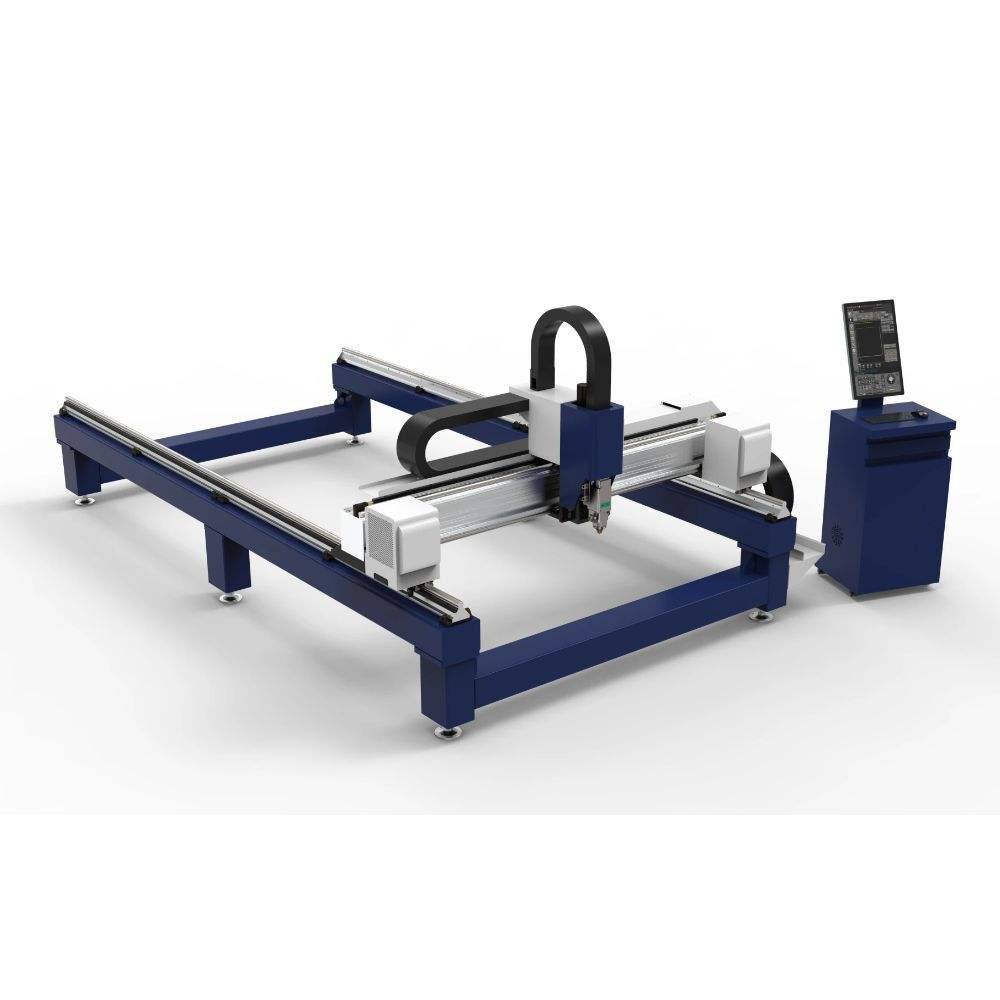
A 1.5kW fiber laser cutting machine is a complex integration of optics, mechanics, and electronics. For a workshop in León, the reliability of these components determines the long-term ROI. The machine typically consists of a heavy-duty gantry, a high-precision rack and pinion drive system, and a specialized cutting head equipped with autofocus sensors.
Fiber Laser Source and Beam Delivery
The heart of the system is the laser source (often brands like IPG, Raycus, or Max). At 1.5kW, the source is usually air-cooled or uses a small water chiller. The fiber delivery system is hermetically sealed to prevent dust contamination—a critical factor in industrial environments. Because the beam is contained within the fiber, there are no mirrors to align, which significantly reduces the technical expertise required for daily maintenance compared to older laser technologies.
CNC Control Systems and Software Integration
Modern laser cutting machines utilize sophisticated CNC systems that can handle complex geometries with ease. Software integration allows for “nesting,” which optimizes the layout of parts on an aluminum sheet to minimize waste. In León’s competitive market, reducing material scrap by even 5% can lead to significant annual savings. The CNC also manages “fly-cutting” and “frog-jump” maneuvers, which minimize the non-cutting movement of the head, further increasing productivity.
Maintenance Protocols for High-Performance Cutting
To maintain the precision of a 1.5kW fiber laser, a strict maintenance schedule is required. The most vulnerable part of the system is the protective window (cover glass) in the cutting head. During the laser cutting of aluminum, tiny droplets of molten metal can splash upward. If the protective window is dirty or damaged, it will absorb laser energy, heat up, and eventually crack or distort the beam.
- Daily: Clean the nozzle and check the protective window for pits or dust.
- Weekly: Inspect the X and Y-axis rails for debris and ensure the lubrication system is functioning.
- Monthly: Check the chiller’s water levels and conductivity. Fiber lasers require deionized water to prevent internal corrosion.
- Bi-Annually: Calibrate the beam-to-nozzle centering to ensure perfectly vertical cuts.
Conclusion: The Future of Metal Fabrication in León
The 1.5kW fiber laser cutting machine represents a pivotal technology for the manufacturing sector in León. By providing the ability to process aluminum alloys with high precision and efficiency, it enables local shops to compete on a global scale. As industries continue to trend toward lightweight materials and just-in-time manufacturing, the versatility of the fiber laser will only become more vital. For any engineering firm or fabrication shop looking to upgrade their capabilities, mastering the nuances of laser cutting aluminum is not just an advantage—it is a necessity for modern production.
In summary, while aluminum presents thermal and reflective challenges, the high power density and wavelength advantages of a 1.5kW fiber laser, combined with proper gas management and maintenance, provide a robust solution for high-quality metal fabrication. As the technology continues to mature, we can expect even greater integration of AI-driven parameter optimization, making the process faster and more accessible than ever before.













